Calcium Carbonate Masterbatch: The Complete Buyer's Guide (2026)
Calcium carbonate masterbatch cuts plastic production costs 12-22%. Loading levels, coated vs uncoated grades, pricing per ton, and why the 2026 Hormuz crisis makes CaCO3 filler masterbatch essential.

Pedro Zaccaria
Head of Technology

What Is CaCO3 Filler Masterbatch?
Key Takeaways
- $4.8 billion market in 2025, projected $8.1 billion by 2034 at 6.0% CAGR
- 12–22% raw material cost savings by substituting 20–40% of virgin PE/PP resin
- CaCO3 masterbatch costs $450–$700/MT vs. PE resin at $1,050–$1,250/MT (pre-crisis baseline)
- 2026 Hormuz crisis has widened the price gap further — PE prices up 50–80%, making filler masterbatch even more essential
- Packaging accounts for 52% of consumption, followed by construction, agriculture, and automotive
- Asia Pacific dominates with 46.2% of global market share; Vietnam is the world’s largest production hub
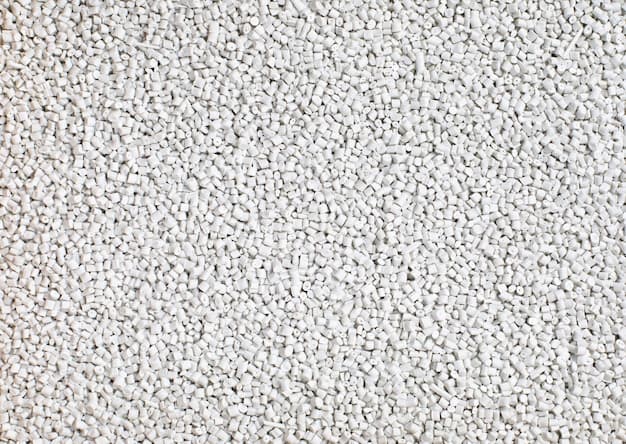
Calcium carbonate masterbatch (also called CaCO3 filler masterbatch) is a concentrated mixture of mineral calcium carbonate powder (typically 60–80% by weight), a carrier polymer resin (PE or PP), and processing aids such as coupling agents, lubricants, and dispersants. It is manufactured via co-rotating twin-screw extrusion, which ensures uniform dispersion of CaCO3 particles within the carrier matrix.
When blended into a host polymer at 5–40% loading rates, Calcium carbonate masterbatch partially replaces virgin resin — cutting material costs, improving stiffness and surface quality, and increasing opacity. It is the single most widely used filler in the plastics industry, deployed across blown film, cast film, injection molding, extruded pipes, woven bags, nonwoven fabrics, and breathable hygiene films.
The global calcium carbonate masterbatch market was valued at $4.8 billion in 2025 and is projected to reach $8.1 billion by 2034, growing at a 6.0% CAGR, according to DataIntelo. CaCO3-based products account for roughly 68% of total filler masterbatch volume worldwide and command 60–65% market share by revenue, according to Business Research Insights and Debao Masterbatch market analysis. The broader calcium carbonate market itself reached $65.13 billion in 2025, per Fortune Business Insights, with the plastics sector as one of its largest end-use segments.
How CaCO3 Masterbatch Is Manufactured
Understanding the manufacturing process helps buyers evaluate supplier quality. Calcium carbonate masterbatch production involves five key stages:
- Raw material preparation: Calcium carbonate mineral is quarried, ground to target particle size (typically 1–5 μm), and optionally coated with stearic acid or other coupling agents. The carrier resin (PE or PP) is selected based on the end application.
- Pre-mixing: CaCO3 powder, carrier resin, and processing aids (dispersants, lubricants, antioxidants) are blended in a high-speed mixer at precise ratios. Typical formulations contain 60–83% CaCO3 by weight.
- Twin-screw extrusion: The mixture is fed into a co-rotating twin-screw extruder — the dominant manufacturing technology for filler masterbatch, as confirmed by Kerke Extruder’s technical guide. Co-rotating twin-screw extruders deliver superior mixing, dispersion, and throughput compared to single-screw alternatives. Industrial lines process 900–1,000 kg/h for 70% CaCO3-loaded PP masterbatch, according to Useon engineering data.
- Strand pelletizing: The extruded material is cut into uniform cylindrical pellets for easy handling and precise dosing during downstream processing.
- Cooling and packaging: Pellets are cooled, screened for consistency, and packaged in 25 kg bags or 1-ton bulk bags for shipment.
“The core of calcium carbonate filled masterbatch production is to achieve uniform dispersion, sufficient plasticization and stable molding.”
— Kerke Extruder Technical Guide, February 2026
Quality varies significantly across producers. Key quality indicators to evaluate include: CaCO3 dispersion uniformity (no agglomerates), consistent melt flow index (MFI), moisture content below 0.1%, and whiteness index above 90%. Poor dispersion during manufacturing is the root cause of most downstream defects in blown film and injection molding applications.

Cost Savings: The Real Reason Manufacturers Use It
The primary driver behind calcium carbonate masterbatch adoption is straightforward economics. In 2024–2025, global polyethylene prices averaged $1,050–$1,250 per metric ton, while high-quality CaCO3 masterbatch was available at $450–$700 per metric ton — 40–60% cheaper than the resin it replaces.
By substituting 20–40% of the polymer load with CaCO3 masterbatch, processors achieve raw material cost savings of 12–22% per kilogram of finished product without compromising tensile strength, elongation at break, or melt flow index, according to DataIntelo market analysis. Beyond raw material costs, CaCO3 also shortens production cycles and increases extruder productivity while reducing machine load, saving energy costs in the process.
| Metric | Without CaCO3 Filler | With 25% CaCO3 Loading |
|---|---|---|
| Resin cost per kg | $1.05–$1.25 | $0.82–$0.98 |
| Material cost savings | — | 12–22% |
| Film gauge reduction potential | — | 10–20% |
| Stiffness improvement | Baseline | +15–30% |
| Injection molding cycle time | Baseline | Reduced (faster cooling) |
These economics are especially compelling for thin-film packaging and blow-molded container manufacturers operating on tight margins. According to Debao Masterbatch’s 2026 market report, filler masterbatch achieves plastic cost reduction of 20–40%, making it indispensable for price-sensitive industries. Fortune Business Insights confirms that PP woven bags, jumbo bags, and raffia tapes use 20–30% filler masterbatch to deliver significant cost advantages to manufacturers.
The 2026 Hormuz Crisis Makes Filler Masterbatch Even More Critical
The ongoing Strait of Hormuz crisis has disrupted approximately 20% of global oil supply, sending PE and PP prices surging 50–80% since the conflict began in late February 2026. Reuters reported on March 26 that the Iran war has choked petrochemical supply and sent plastic prices soaring.
As of April 2026, polyethylene prices in China stand at 8,512 CNY/ton, up 15.86% year-over-year. ICIS confirmed that North American PE producers raised contract prices by 10 cents/lb in March alone, while Argus Media reported LyondellBasell warned of further PE and PP price increases. In India, Reliance raised all PE (HDPE/LDPE/LLDPE) domestic prices by INR 1,000/MT effective April 7, 2026. According to The Investor, HDPE prices have risen roughly 45% since the start of 2026.
With PE resin now far above the 2024–2025 baseline, the price gap between virgin resin and CaCO3 masterbatch has widened dramatically. Manufacturers who increase their filler loading from 10% to 25–30% can offset a significant portion of the resin price spike — turning a supply chain crisis into a cost optimization opportunity.
“Resin prices could remain elevated into 2026 as ongoing Middle East disruptions tighten global polyolefins supply.”
— Plastics News, March 2026
The crisis also affects CaCO3 masterbatch supply chains indirectly: the PE carrier resin used in the masterbatch itself costs more. However, because CaCO3 masterbatch is 60–80% mineral and only 20–40% polymer, the price impact is diluted compared to virgin resin — making the savings ratio even more favorable during supply disruptions. Plastics Today reports that rising oil prices are driving up resin costs across the entire manufacturing sector, reinforcing the economic case for maximizing filler content wherever technically feasible.
How to Choose the Right Calcium Carbonate Masterbatch Grade
Not all calcium carbonate masterbatch is the same. Three factors determine which grade suits your application: surface treatment, particle size, and CaCO3 loading percentage.
Coated vs. Uncoated Calcium Carbonate
This is the most critical specification decision. Coated CaCO3 (treated with stearic acid or coupling agents) and uncoated CaCO3 behave very differently in polymer matrices.
| Property | Coated CaCO3 | Uncoated CaCO3 |
|---|---|---|
| Surface character | Hydrophobic | Hydrophilic |
| Polymer compatibility | Excellent (PE, PP) | Limited |
| Melt flow improvement | Yes — reduces processing energy | Minimal |
| Dispersion quality | Superior, fewer agglomerates | Prone to clumping |
| Impact on mechanical properties | Maintains or improves | May reduce elongation |
| Cost | Higher | Lower |
| Best for | Film, injection molding, pipes | Low-end applications, cost priority |
Coated CaCO3 treated with stearic acid enhances compatibility with PE and PP polymers, improves melt flow, and reduces processing energy. A 2023 ResearchGate study demonstrated that coated CaCO3 systems exhibit higher mechanical properties and improved compatibility with LDPE compared to uncoated equivalents. For blown film and injection molding applications, always specify coated grades.
Particle Size: The Hidden Performance Driver
Particle size directly affects surface finish, mechanical properties, and processability:
- Standard grades (3–5 μm): Cost-effective for woven bags, thick films, general-purpose applications
- Fine grades (1.5–3 μm): Better surface finish, suitable for printed films, injection molding
- Ultra-fine grades (<1 μm): Premium performance — 15–25% impact strength improvement and 10–18% elongation gains vs. standard grades, per DataIntelo. Used in automotive components, medical packaging, stretch films
- Nano-CaCO3 (40–80 nm): Outstanding impact properties for demanding engineering applications. A study published in PMC found that nano-CaCO3 content significantly improves crystallization and mechanical performance in polymer foams. Research shows that properly dispersed nano-CaCO3 can increase tensile strength by 30–50% and impact strength by 40–60% compared to unfilled polymers
Industry guidelines indicate that a 20-micron film layer typically requires particle sizes of 3 μm and above, while thinner films demand finer particles and lower loading rates. According to Business Research Insights, nano-calcium carbonate adoption has increased by approximately 35%, improving dispersion efficiency by nearly 25%.
CaCO3 Loading Percentage
The CaCO3 content within the masterbatch itself (not to be confused with the let-down ratio) typically ranges from 50% to 83%. Higher-loaded masterbatches (80%+) require less material per batch but demand better dispersion technology and processing control. Our CaCO3 product range includes formulations from 50% (specialty compounds) to 83% (high-performance PE film grades).
Loading Level Guide by Application
The optimal loading rate (let-down ratio) varies significantly by end product. Adding too much filler degrades mechanical properties; too little wastes cost-saving potential. Here is a comprehensive guide based on industry loading rate data and Syntex America product specifications.
| Application | Recommended Loading | Particle Size | Base Resin | Key Benefit |
|---|---|---|---|---|
| PE blown film (shopping bags, garbage bags) | 10–30% | 2–3 μm | PE | Cost reduction, opacity, printability |
| PE blown film (food packaging layers) | 15–30% | 1.8–2.2 μm | PE | Barrier improvement, seal temp reduction |
| PP woven bags & sacks | 15–25% | 3–5 μm | PP | Stiffness, cost reduction |
| Injection molding (containers, housewares) | 5–30% | 1.5–3 μm | PP/PE | Cycle time, stiffness, mold release |
| Pipe extrusion (PVC, HDPE) | 25–45% | 2–5 μm | PE/PVC | Stiffness, cost, thermal conductivity |
| Agricultural mulch film | 10–20% | 2–3 μm | PE | Opacity, UV reflection, cost |
| BOPP pearlized film | 8–15% | 1.5–2 μm | PP | Pearlescent effect, stretchability |
| Nonwoven fabric (masks, hygiene) | 5–15% | 2–3 μm | PP | Cost reduction, softness |
| Heavy-duty sacks | 10–15% | 2–3 μm | PE | Tear resistance, cost |
| Breathable diaper/hygiene film | Up to 100% (compound) | 1.5–2 μm | Specialty | Controlled water vapor transmission |
| PLA biopolymer products | 10–50% | 2–3 μm | Biopolymer | Cost reduction, processability |
As Lucobit technical data explains, breathable masterbatches for hygiene applications are typically based on LLDPE or PP and filled with up to 70% calcium carbonate. When stretched during conversion, the CaCO3 particles create micro-pores that allow water vapor transmission while remaining liquid-impermeable — essential for diaper backsheet, feminine care, and medical gown applications.
How CaCO3 Changes Mechanical Properties
Adding CaCO3 filler is not just about cost — it fundamentally alters the polymer’s physical behavior. Here is how CaCO3 loading affects polypropylene properties:
| Property | Unfilled PP | 20% CaCO3 | 40% CaCO3 |
|---|---|---|---|
| Mold shrinkage | 0.010–0.026 | 0.009–0.019 | 0.008–0.0015 |
| Tensile strength (psi) | 4,600–5,900 | 4,500–5,600 | 3,800–4,800 |
| Tensile modulus (Kpsi) | 160–220 | 190–280 | 370–510 |
| Notched Izod impact (ft-lb/in) | 0.4–1.1 | 0.5–1.2 | 0.6–1.1 |
| Deflection temperature (°C) | 120–140 | 130–150 | 150–190 |
| Thermal conductivity | 2.9 | 4.2 | 6.6 |
Key takeaways for buyers:
- Stiffness (tensile modulus) increases dramatically — nearly doubling at 40% loading. This is the primary mechanical benefit, critical for PP and PE structural applications.
- Tensile strength decreases modestly — roughly 15–20% at 40% loading. For most packaging and construction applications, this is acceptable.
- Impact resistance stays stable or improves slightly, especially with surface-treated grades. This is counter-intuitive but well-documented.
- Heat deflection temperature rises significantly — a major advantage for pipe and automotive applications where thermal stability matters.
- Mold shrinkage decreases — improving dimensional accuracy in injection molding. According to FillPlas technical data, CaCO3 in injection molding delivers higher flexural stiffness, less shrinkage, and better isotropic properties.
- Thermal conductivity more than doubles at 40% loading — meaning parts cool faster in the mold, reducing cycle times and improving productivity.
Source: Syntex America CaCO3 product page (technical data from laboratory testing).

Troubleshooting: Common Defects When Using CaCO3 Filler
Even experienced processors encounter quality issues when working with calcium carbonate masterbatch. Based on Mascom Global’s defect analysis and Kerke Extruder’s technical troubleshooting guide, here are the most common problems and their solutions:
| Defect | Cause | Solution |
|---|---|---|
| White spots on film surface | Poor CaCO3 dispersion; carrier resin mismatch | Use coated CaCO3 with matching carrier resin MFI; improve mixing |
| Reduced film gloss | Oversized particles; excessive loading | Select finer grades (<2 μm); reduce loading rate |
| Film tearing / low tear strength | Loading exceeds application limit | Reduce loading 5–10%; switch to surface-treated grade |
| Die lip buildup | Incompatible filler; poor coating quality | Switch to better-coated grades; adjust processing temperature |
| Uneven film thickness | Inconsistent filler dispersion in feed | Pre-blend masterbatch with resin; use gravimetric feeder |
| Reduced printability | Filler migration to surface; high loading | Reduce loading to 15–20% max for printed films; use corona treatment |
| PP woven bag: brittle tape | MFI mismatch between filler and PP resin | Match filler MFI to PP base resin; ensure complete melt |
The single most impactful quality decision is matching the carrier resin MFI of your filler masterbatch to your base polymer. If the filler masterbatch has an MFI significantly different from your PP or PE resin, incomplete melting and poor dispersion are almost guaranteed.
Applications by Industry
Packaging alone accounts for approximately 52% of global CaCO3 masterbatch consumption, but the material serves a remarkably wide range of industries. The global plastics market is projected to grow from $560.38 billion in 2026 to $832.62 billion by 2034 — and CaCO3 filler will ride that wave across every segment.
Packaging (52% of Market)
Flexible packaging films, stretch films, refuse sacks, and rigid containers all incorporate CaCO3 masterbatch. In multi-layer food packaging, 15–30% CaCO3 content in specific layers enhances barrier performance, reduces seal initiation temperatures, and improves optical properties, per DataIntelo. The e-commerce boom — projected to surpass $8.0 trillion in global sales by 2027 — is driving unprecedented demand for protective packaging, void-fill films, and mailer bags, all of which benefit from CaCO3’s opacity, cost, and mechanical advantages. Plastic packaging prices are rising in 2026 across PET, PP, and PS, making filler-based cost reduction strategies more urgent.
Construction & Pipes

PVC pipes, HDPE geomembranes, profiles, and cable insulation compounds routinely incorporate 25–45% CaCO3 loading by weight. According to IntelMarketResearch’s 2026 report, calcium carbonate acts as an efficient extender in PVC formulations, allowing manufacturers to maintain product quality while reducing raw material costs. TechMicom confirms that CaCO3 increases stiffness, improves impact resistance, controls viscosity, and acts as a flame retardant in PVC compounds. Building sector recovery across emerging markets in Asia, Latin America, and the Middle East is generating strong pull-through demand.
Agriculture
Mulch films, greenhouse films, and drip irrigation tape benefit from CaCO3’s opacity (blocking weed-promoting light), UV reflection properties, and cost reduction. Loading rates of 10–20% are typical, according to industry data. CaCO3 filler not only cuts production costs by replacing a part of virgin polymer but also improves the mechanical properties needed for field durability.
Automotive
Lightweighting mandates — driven by US CAFE standards and EU CO2 emission targets (95 g/km for passenger cars) — are accelerating the replacement of glass-filled or unfilled polymer parts with CaCO3-filled compounds that offer a superior stiffness-to-weight ratio at lower cost. A 2020 study in ScienceDirect demonstrated that nano-CaCO3 up to 3 wt% enhanced tensile, flexural properties, and fracture toughness in polymer composites — properties critical for automotive interior panels, bumper components, and under-hood parts using polypropylene.
Hygiene & Medical
Breathable films for diapers, feminine care products, and surgical gowns represent a specialized but high-growth segment. According to Mascom Global, ultra-fine CaCO3 is added to PP nonwoven fabrics to improve softness and breathability in hygiene and medical applications. CaCO3-filled PE compound at up to 100% usage (our CA-BR77 product) delivers controlled water vapor transmission for diaper backsheet applications.
Consumer Goods & Housewares
Injection-molded containers, furniture, toys, and household items use CaCO3 to improve surface finish, reduce cycle times, and lower material costs. Loading levels of 5–30% are common. Products using polystyrene, ABS, and polyolefins all benefit from CaCO3 filler additions, though PE and PP remain the dominant carrier resins.
2026 Global Market Dynamics
Where CaCO3 Masterbatch Is Produced
Asia Pacific dominates with 46.2% of global market revenue, driven by China (28% of global consumption alone) and the rapid rise of Vietnam and Indonesia as manufacturing hubs. The raw calcium carbonate mineral market itself reached 10.2 million tons in 2025 and is projected to reach 15.7 million tons by 2034, exhibiting a 4.65% CAGR, according to IMARC Group.
| Region | Market Share | CAGR (to 2034) | Key Driver |
|---|---|---|---|
| Asia Pacific | 46.2% | 7.4%+ | China consumption, Vietnam/Indonesia production growth |
| Europe | 23.3% | ~5.3% | EU PPWR sustainability mandates |
| North America | ~18% | ~5.3% | Shift to surface-treated, ultra-fine grades |
| Latin America | ~6% | 5.5% | Brazil & Mexico packaging/construction growth |
| Middle East & Africa | ~6% | 7.1% | Petrochemical investments, Saudi/UAE |
Source: DataIntelo 2025 market analysis.
Vietnam: The World’s Filler Masterbatch Hub
Vietnam has emerged as the world’s largest filler masterbatch production center, thanks to abundant high-calcium limestone reserves that industry reports from March 2026 describe as a structural raw material advantage in the global masterbatch industry. The country is home to several of the world’s top five filler masterbatch producers. Vietnam and Indonesia are the fastest-growing markets, each recording CAGRs exceeding 8% during 2019–2025.
The Hormuz Effect on Global Filler Masterbatch Demand
As CNN reported on March 30, 2026: “Plastic is the hidden cost of the war in Iran.” With PE prices surging 50–80% from pre-crisis levels, the economic incentive to maximize CaCO3 filler loading has never been stronger. Manufacturers who were using 10% filler are now evaluating 20–30% loading to absorb the resin price shock. Americover reports PE contract target increases of up to $0.10/lb for March 2026 and up to 20% increases in plastic additive and stabilizer prices.
Latin American manufacturers are particularly exposed. Brazil imposed anti-dumping duties of $199–$734/ton on US and Canadian PE imports, further constraining supply options. For processors in the region, maximizing CaCO3 filler content is one of the few levers available to manage costs without sacrificing product performance. Syntex America serves these markets directly from our Miami logistics hub, with customs clearance support for seamless cross-border delivery.

Sustainability: The Environmental Case for CaCO3
Calcium carbonate masterbatch is not just a cost play — it delivers measurable environmental benefits that align with tightening global regulations.
- Lower carbon footprint: CaCO3 is a naturally occurring mineral with a very low carbon footprint. Impact Plastics reports that using CaCO3 in plastics reduces petrochemical and energy usage during manufacturing, minimizing greenhouse gas emissions. A ResearchGate study describes calcium carbonate as a “renewable raw material” that enables production of more sustainable polymer solutions.
- Reduced virgin resin consumption: Every kilogram of CaCO3 that replaces PE or PP is a kilogram less of petroleum-derived polymer produced. Mascom Global notes that reducing reliance on petroleum-based resins lowers the overall carbon footprint of plastic products.
- Film gauge reduction: CaCO3 enables 10–20% thinner films with equivalent functional performance, reducing total plastic per unit of packaging.
- EU PPWR compliance: The EU Packaging and Packaging Waste Regulation mandates 30% recycled content by 2030 and 55% by 2040. CaCO3 filler directly supports this goal by reducing total virgin plastic content per package. European demand is distinctly shaped by these sustainability mandates, with the continent holding a 23.3% market share.
- Recyclability: CaCO3-filled polyolefins remain recyclable through standard mechanical recycling streams. Cemix confirms that ground calcium carbonate is compatible with circular economy principles.
- Automotive lightweighting: Automotive CO2 emission targets are driving replacement of heavier polymer compounds with CaCO3-filled alternatives. Lighter parts mean lower fuel consumption and reduced emissions over the vehicle’s lifetime.
A 2024 study published in ScienceDirect examining life cycle assessment of CaCO3-filled polypropylene found that mineral fillers reduce the environmental impact of injection-molded parts compared to unfilled equivalents. As AMI Plastics reports, calcium carbonate, talc, and other mineral products can reinforce and improve properties while also providing a route to reduce both cost and carbon footprint.
How Syntex America Helps You Source Calcium Carbonate Masterbatch
Syntex America supplies a comprehensive range of CaCO3 filler masterbatch in both PE and PP base resins, with CaCO3 loading from 50% to 83% and particle sizes from nano (40–80 nm) to standard (3–5 μm). Our product line includes grades for every application covered in this guide — from blown film (CA-E17, CA-E80) to PP woven bags (CA-P12, CA-P75K) to BOPP pearlized film (CA-B33P), specialty breathable films (CA-BR77), and biopolymer compounds (Bio-K80J). We also supply additive masterbatches, titanium dioxide, and the full range of commodity and engineering resins your facility needs.
Resin Supply Credit Program
Through our Resin Supply Credit Program, qualified manufacturers can:
- Receive the CaCO3 masterbatch first — with flexible payment terms
- Produce and sell your products — using the filler to lower your production costs
- Pay after your operational cycle — improving your cash flow when it matters most
This is particularly valuable during the current Hormuz crisis, when resin procurement budgets are under extreme pressure and cash flow management is critical for manufacturers across every region.
Integrated Logistics from Miami to Your Facility
We handle the full supply chain from our Miami headquarters: international trading, freight forwarding, customs clearance, last-mile transportation, and integrated logistics center operations. Whether you’re sourcing from Asia, Europe, or the Americas, we deliver CaCO3 masterbatch to your facility with a single point of contact.
Request a structured supply proposal →
Or contact our trading team directly at syntexamerica.com/contact to discuss your CaCO3 masterbatch requirements, volume, and delivery timeline.
Resin Supply Credit Program
With PE prices up 50–80% from the Hormuz crisis, tying up cash in raw materials before you’ve sold finished goods can shut your line down. CaCO3 filler masterbatch is your fastest lever to cut per-unit costs — and our credit program makes it even easier.
We ship the CaCO3 masterbatch (all grades), along with PE, PP, PVC, PET, and engineering grades. You produce and sell. You pay us after your customers have paid you. No upfront payment. Credit lines from $50K to $500K+, structured around your production cycle.
572 converters in 18 countries source through us. Whether you need CaCO3 filler masterbatch, additive masterbatches, or thermoplastic resins, we deliver with integrated logistics from Miami to your facility.
Credit program · CaCO3 masterbatch · Thermoplastic resins · About us
Frequently Asked Questions
High-quality CaCO3 filler masterbatch typically costs $450–$700 per metric ton FOB, depending on CaCO3 loading percentage, particle size, and surface treatment. This is 40–60% cheaper than PE resin ($1,050–$1,250/MT in 2024–2025). During the 2026 Hormuz crisis, PE prices have surged 50–80%, making the price gap even wider and CaCO3 filler more cost-effective. As of April 2026, HDPE prices have risen roughly 45% since the start of the year.
For PE blown film, the recommended loading rate is 10–30% with particle sizes of 2–3 microns. A standard 20-micron film layer works well with 15–30% CaCO3 loading. For thinner films, use finer particles (1.8 microns or less) and lower loading rates (10–15%) to maintain surface quality and mechanical properties. Too high a loading can cause white spots, rough surfaces, and reduced tear strength.
Coated CaCO3 (treated with stearic acid) is hydrophobic, has excellent compatibility with PE and PP, improves melt flow, and delivers superior dispersion with fewer agglomerates. Uncoated CaCO3 is hydrophilic, less compatible with polymers, and cheaper. For blown film, injection molding, and pipe applications, always specify coated grades for better performance. Uncoated grades are acceptable for low-end applications where cost is the primary concern.
By substituting 20–40% of the polymer load with CaCO3 masterbatch, processors typically achieve raw material cost savings of 12–22% per kilogram of finished product. Some manufacturers report overall plastic production cost reductions of 20–40% depending on filler loading level and application. Additionally, CaCO3 enables 10–20% film gauge reduction while maintaining equivalent performance, and shortens injection molding cycle times by improving thermal conductivity.
Yes. CaCO3 filler masterbatch is widely used in food packaging applications, particularly in multi-layer film structures where 15–30% CaCO3 content enhances barrier performance, reduces seal initiation temperatures, and improves optical properties. Ensure you use food-grade certified masterbatch that meets FDA or EU food contact regulations for your specific application.
The most common defects include: (1) white spots and rough surfaces from poor CaCO3 dispersion or mismatched carrier resin, (2) reduced film gloss from oversized particles or excessive loading, (3) film tearing from loading rates that exceed the application limit, and (4) die lip buildup from incompatible filler grades. Solutions include selecting coated grades with proper particle size, matching the carrier resin MFI to your base polymer, and staying within recommended loading ranges for your film thickness.


