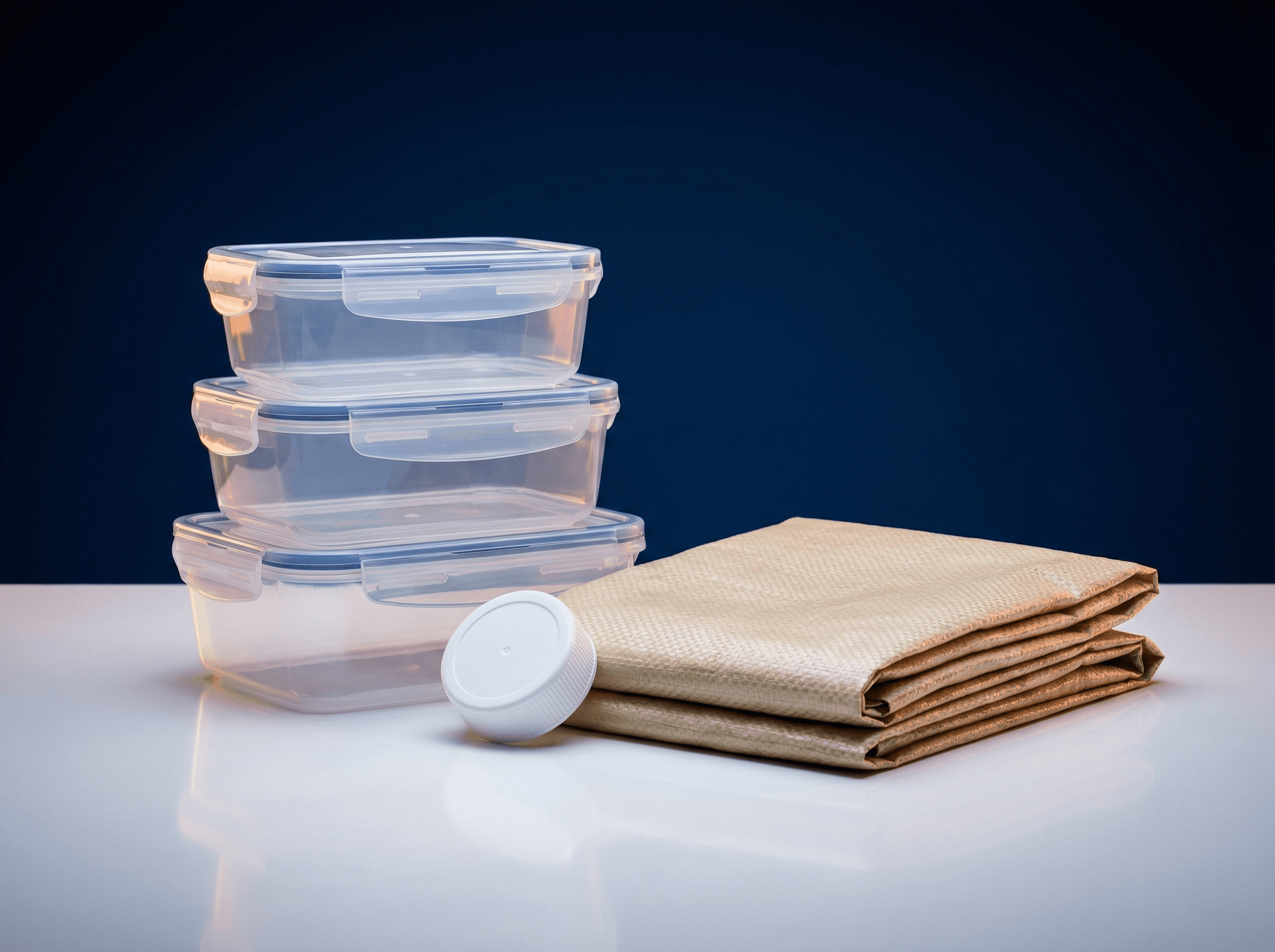
Key Benefits
- Lowest density of any commodity plastic — lighter parts
- Excellent chemical and moisture resistance
- Impact copolymer and homopolymer grades available
- Easy injection moulding and extrusion
- Food-contact grades available (depending on grade)
Resin Portfolio
Syntex America supplies the full polypropylene range — homopolymer, random copolymer and impact copolymer — for applications in flexible packaging, raffia sacks, nonwovens, automotive parts, housewares, appliance components, bottles, organizers and more.
PPHOMO — Polypropylene Homopolymer
Stiff, hard, and high-crystallinity.
Applications: BOPP & CPP film, raffia & woven bags, staple fibre & nonwoven, thin-wall injection, housewares, caps & closures.
| Grade | Manufacturer | MFI (g/10 min) | Density (g/cm³) | Application | Actions |
|---|---|---|---|---|---|
| F03D | Sinopec | 2.8 g/10 min @ 230 °C / 2.16 kg | — | BOPP film — biaxially oriented PP film | |
| FH03 | Sinopec | 3 g/10 min @ 230 °C / 2.16 kg | — | BOPP film — biaxially oriented PP film | |
| FC03 | Sinopec | 3 g/10 min @ 230 °C / 2.16 kg | — | BOPP film — capacitor-grade membrane | |
| F08 | Sinopec | 8 g/10 min @ 230 °C / 2.16 kg | — | CPP film — homopolymer cast film | |
| F08MX | Sinopec | 8 g/10 min @ 230 °C / 2.16 kg | — | CPP film — homopolymer cast film | |
| FH08 | Sinopec | 8 g/10 min @ 230 °C / 2.16 kg | — | CPP film — homopolymer cast film | |
| FC801MX | Sinopec | 8 g/10 min @ 230 °C / 2.16 kg | — | CPP film — aluminized cast film | |
| T03 | Sinopec | 3 g/10 min @ 230 °C / 2.16 kg | — | Yarn / raffia — woven bags | |
| T30S | Sinopec | 3 g/10 min @ 230 °C / 2.16 kg | — | Yarn / raffia — woven bags | |
| T04 | Sinopec | 4 g/10 min @ 230 °C / 2.16 kg | — | Yarn / raffia — woven bags | |
| PPH-T03 | Hengli Petrochemical | 3 g/10 min @ 230 °C / 2.16 kg | — | Yarn / raffia — woven bags, ropes, fishing nets | |
| Y24 | Sinopec | 24 g/10 min @ 230 °C / 2.16 kg | — | Fiber spinning — ultra-fine staple fibers | |
| Y26 | Sinopec | 25 g/10 min @ 230 °C / 2.16 kg | — | Fiber spinning — ultra-fine staple fibers | |
| Y37 | Sinopec | 36 g/10 min @ 230 °C / 2.16 kg | — | Fiber — non-woven clothing | |
| Y40 (Sinopec) | Sinopec | 37 g/10 min @ 230 °C / 2.16 kg | — | Fiber — non-woven clothing | |
| Y40X | Sinopec | 38 g/10 min @ 230 °C / 2.16 kg | — | Fiber — advanced non-woven fabrics | |
| PPH-Y40 (H39S) | Hengli Petrochemical | 40 g/10 min @ 230 °C / 2.16 kg | — | Fiber — non-woven fabrics | |
| PPH-Y26 (Z30S) | Hengli Petrochemical | 25 g/10 min @ 230 °C / 2.16 kg | — | Fiber — non-woven fabric bags | |
| PPH-Y45 | Hengli Petrochemical | 45 g/10 min @ 230 °C / 2.16 kg | — | Fiber — non-woven fabrics | |
| CM01 | Sinopec | 0.7 g/10 min @ 230 °C / 2.16 kg | — | Injection / thermoforming — vacuum-forming trays for food packaging | |
| HP500N | Sinopec | 12 g/10 min @ 230 °C / 2.16 kg | — | Injection moulding — toys, household appliances | |
| CJS700 | Sinopec | 12 g/10 min @ 230 °C / 2.16 kg | — | Injection moulding — toys, household appliances | |
| S700 | Sinopec | 12 g/10 min @ 230 °C / 2.16 kg | — | Injection moulding — toys, household appliances | |
| M17 | Sinopec | 17 g/10 min @ 230 °C / 2.16 kg | — | Injection moulding — toys, household appliances | |
| V30G | Sinopec | 17 g/10 min @ 230 °C / 2.16 kg | — | Injection moulding — toys, household appliances | |
| M60T | Sinopec | 60 g/10 min @ 230 °C / 2.16 kg | — | Thin-wall injection moulding — high-flow rigid parts | |
| MM60 | Sinopec | 60 g/10 min @ 230 °C / 2.16 kg | — | Thin-wall injection moulding — high-flow rigid parts | |
| MN60 | Sinopec | 60 g/10 min @ 230 °C / 2.16 kg | — | Thin-wall injection moulding — high-flow rigid parts | |
| MM70 | Sinopec | 70 g/10 min @ 230 °C / 2.16 kg | — | Thin-wall injection moulding — high-flow rigid parts | |
| M70 | Sinopec | 70 g/10 min @ 230 °C / 2.16 kg | — | Thin-wall injection moulding — high-flow rigid parts | |
| PPH-MM70 | Hengli Petrochemical | 70 ± 3 g/10 min @ 230 °C / 2.16 kg | — | Thin-wall injection — fast-food boxes, cups, food containers | |
| PPH-MM70X | Hengli Petrochemical | 70 ± 3 g/10 min @ 230 °C / 2.16 kg | — | Thin-wall injection — low-temperature (winter) formula | |
| PPH-MM90 | Hengli Petrochemical | 90 ± 3 g/10 min @ 230 °C / 2.16 kg | — | Thin-wall injection — fast-food boxes, cups, food containers | |
| Y40 | Oriental Energy (Donghua Energy) | 40 g/10 min @ 230 °C / 2.16 kg | — | High-flow homopolymer injection — rigid thin-wall parts, large-cavity tools requiring high stiffness |
PP homopolymer grades spanning BOPP and CPP film, raffia/woven tape, staple fibre and nonwoven, and injection moulding — from Oriental Energy plus Sinopec and Hengli. The application of each grade is shown in its row. Published typical values per the producer brochures; homopolymer density is ~0.905 g/cm³ for the class and shown as — where the producer does not publish a grade-specific figure.
PPCOPO — Polypropylene Impact Copolymer
Tough, ductile, and impact-resistant.
Applications: automotive trim, battery cases, appliance housings, crates & pallets, furniture & toys, household storage.
| Grade | Manufacturer | MFI (g/10 min) | Density (g/cm³) | Application | Actions |
|---|---|---|---|---|---|
| P640J | SCGC™ | 10 g/10 min @ 230 °C / 2.16 kg | 0.910 g/cm³ | High-impact stiffness — automotive parts, electrical appliance parts, furniture, toys, industrial uses | |
| P740J | SCGC™ | 27 g/10 min @ 230 °C / 2.16 kg | 0.910 g/cm³ | Medium-flow injection — refrigerator top tables, washing-machine cabinets, automotive trim, complicated industrial parts | |
| P840J | SCGC™ | 43 g/10 min @ 230 °C / 2.16 kg | 0.910 g/cm³ | High-flow complex injection — automotive battery cases, electrical appliance parts, parts requiring high flowability | |
| P945J | SCGC™ | 65 g/10 min @ 230 °C / 2.16 kg | 0.910 g/cm³ (typical) | Very-high-flow large parts — household storage boxes, large household appliances, thin-wall industrial parts | |
| M02D | Sinopec | 1.8 g/10 min @ 230 °C / 2.16 kg | — | Injection moulding — toys, household electrical appliances | |
| K8003 | Sinopec | 2.5 g/10 min @ 230 °C / 2.16 kg | — | Injection moulding — toys, household appliances, battery case | |
| MP03-G | Sinopec | 2.2 g/10 min @ 230 °C / 2.16 kg | — | Injection moulding — toys, battery case | |
| SP179 | Sinopec | 9 g/10 min @ 230 °C / 2.16 kg | — | Injection moulding — automotive parts | |
| M09 | Sinopec | 9 g/10 min @ 230 °C / 2.16 kg | — | Injection moulding — household appliances | |
| K8009 | Sinopec | 10 g/10 min @ 230 °C / 2.16 kg | — | Injection moulding — household appliances, suitcase | |
| K9017H | Sinopec | 17 g/10 min @ 230 °C / 2.16 kg | — | Injection moulding — automotive parts, household electrical appliances | |
| ZH9017 | Sinopec | 17 g/10 min @ 230 °C / 2.16 kg | — | Injection moulding — automotive parts, household electrical appliances | |
| K7726H | Sinopec | 30 g/10 min @ 230 °C / 2.16 kg | — | Injection moulding — household electrical appliances | |
| EP548R | Sinopec | 30 g/10 min @ 230 °C / 2.16 kg | — | Injection moulding — household electrical appliances | |
| M30RH | Sinopec | 30 g/10 min @ 230 °C / 2.16 kg | — | Injection moulding — household electrical appliances | |
| M60RHC | Sinopec | 60 g/10 min @ 230 °C / 2.16 kg | — | Injection moulding — automotive parts | |
| K7760H | Sinopec | 60 g/10 min @ 230 °C / 2.16 kg | — | Injection moulding — automotive parts | |
| PPB-M03 (K8003) | Hengli Petrochemical | 2.5 ± 0.5 g/10 min @ 230 °C / 2.16 kg | — | Low-melting injection — automotive parts, battery shells, packing containers, toys | |
| PPB-ML03 (K8303) | Hengli Petrochemical | 2.5 ± 0.5 g/10 min @ 230 °C / 2.16 kg | — | Low-melting injection — UV-resistant grade for outdoor parts | |
| PPB-M09 (K8009) | Hengli Petrochemical | 8.5 ± 1.5 g/10 min @ 230 °C / 2.16 kg | — | Injection moulding — automotive parts, battery shells, electrical products | |
| PPB-M26 (K8025) | Hengli Petrochemical | 25 ± 3 g/10 min @ 230 °C / 2.16 kg | — | Injection moulding — automotive parts, food containers, cups | |
| PPB-M30 (K8030) | Hengli Petrochemical | 30 ± 3 g/10 min @ 230 °C / 2.16 kg | — | Injection moulding — washing-machine parts, automotive interior parts, modified materials |
PP impact (block) copolymer grades for injection moulding where low-temperature toughness matters — the SCGC™ P-series plus Sinopec and Hengli grades. ASTM methods per the SCGC™ datasheets; Sinopec/Hengli grades are listed against the producer's published typical values (notched Izod and flexural modulus per the Sinopec brochure where given). For SCGC P945J, several physical properties are not on the public product card — Syntex America provides the current datasheet on request.
PPR — Polypropylene Random Copolymer
Clear, glossy, and easy-sealing.
Applications: transparent containers, heat-seal film layers, PP-R pressure pipe, thermoforming sheet, housewares, stationery.
| Grade | Manufacturer | MFI (g/10 min) | Density (g/cm³) | Application | Actions |
|---|---|---|---|---|---|
| F5005 | Sinopec | 6 g/10 min @ 230 °C / 2.16 kg | — | BOPP film — ternary heat-seal layer, cigarette film | |
| F5006 | Sinopec | 6 g/10 min @ 230 °C / 2.16 kg | — | BOPP film — ternary heat-seal layer, cigarette film | |
| F800E | Sinopec | 8 g/10 min @ 230 °C / 2.16 kg | — | CPP film — binary heat-seal layer | |
| F08E | Sinopec | 8 g/10 min @ 230 °C / 2.16 kg | — | CPP film — binary heat-seal layer | |
| C5608 | Sinopec | 8 g/10 min @ 230 °C / 2.16 kg | — | CPP film — terpolymer heat-seal layer | |
| C5908 | Sinopec | 8 g/10 min @ 230 °C / 2.16 kg | — | CPP film — aluminized terpolymer heat-seal layer | |
| T5015M | Sinopec | 3 g/10 min @ 230 °C / 2.16 kg | — | Sheet extrusion — pressure thermal-forming | |
| M800E | Sinopec | 8 g/10 min @ 230 °C / 2.16 kg | — | Injection moulding — drawing and blowing | |
| HT9025NX | Sinopec | 25 g/10 min @ 230 °C / 2.16 kg | — | Injection moulding — highly transparent parts | |
| M26ET | Sinopec | 25 g/10 min @ 230 °C / 2.16 kg | — | Injection moulding — transparent containers | |
| MT45 | Sinopec | 45 g/10 min @ 230 °C / 2.16 kg | — | Injection moulding — transparent containers and stationery | |
| MT75 | Sinopec | 75 g/10 min @ 230 °C / 2.16 kg | — | Thin-wall injection moulding — milk-tea cups | |
| 4220 | Sinopec | 0.26 g/10 min @ 230 °C / 2.16 kg | — | PP-R pipe — cold & hot water pressure pipe |
PP random-copolymer and terpolymer grades for transparent injection moulding, BOPP/CPP heat-seal skin layers, and PP-R hot- and cold-water pressure pipe — from Sinopec. The application of each grade is shown in its row. Published typical values per the Sinopec brochure; density is shown as — where not published.
End Markets
Industries We Serve
- Packaging & Flexible Films
- Food & Beverage Packaging
- Construction & Pipe Systems
- Agriculture Applications
- Automotive Components
- Industrial Manufacturing
Frequently Asked Questions
PP homopolymer (PPHOMO) is rigid and hard but brittle in the cold, while PP impact copolymer (PPCOPO) adds an ethylene–propylene rubber phase for impact resistance down to about –20 °C. Syntex America supplies both — the SCGC™ P-series (PPCOPO) and Oriental Energy Y40 (PPHOMO).
Yes, depending on the grade — the SCGC™ P640J, P740J and P840J grades are documented as FDA 21 CFR 177.1520 and EU 10/2011 compliant. Documentation can be provided upon request.
MOQ depends on the grade and availability. Contact us for details.
Yes. We can support exports and provide logistics documentation.
Ready to spec a grade?
Market Intelligence & Supply Insights
Stay informed with updated perspectives on:
- Polypropylene market trends
- Freight market dynamics
- Regional availability
- Global supply conditions
- Import / export developments

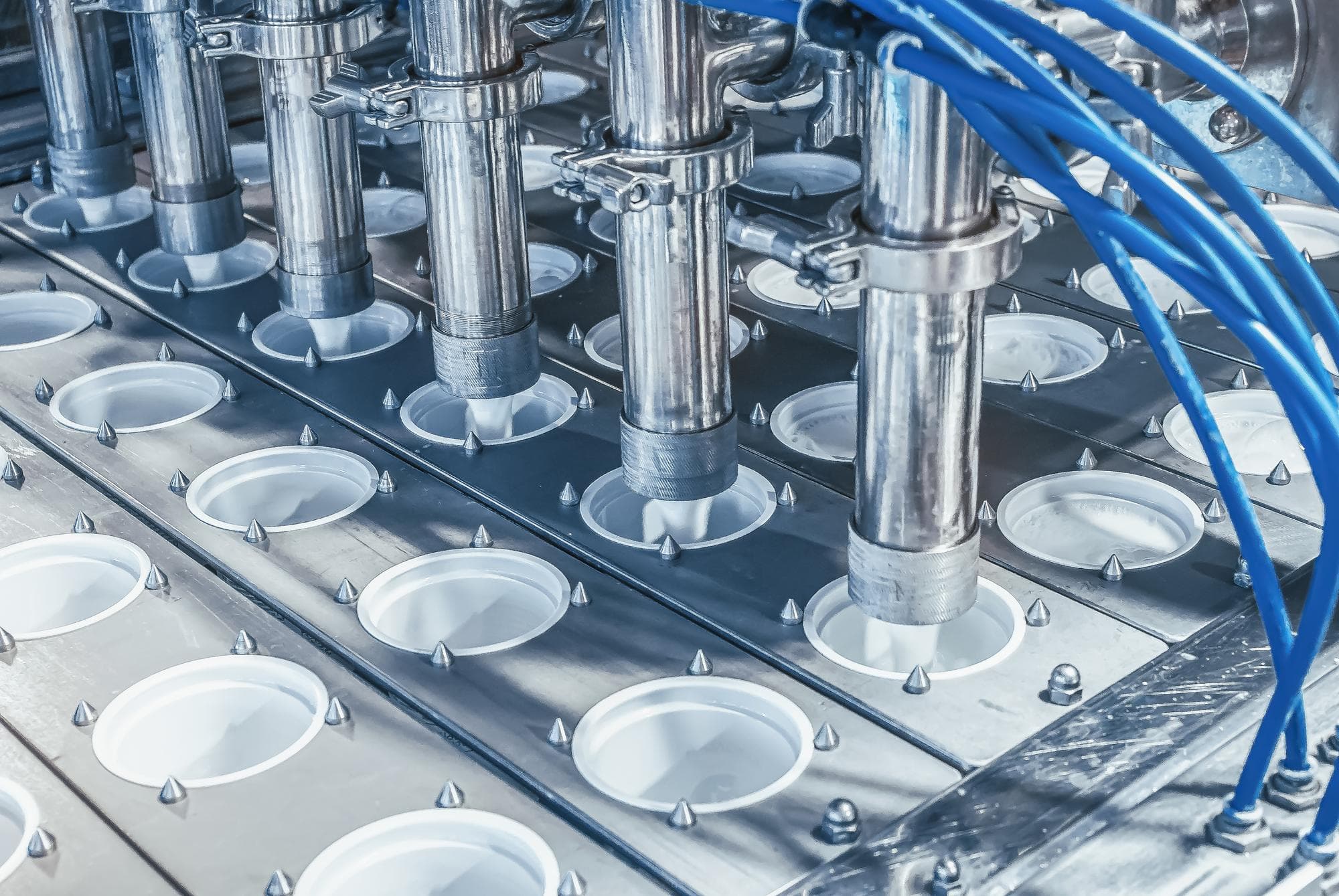
Syntex America combines commercial responsiveness with market intelligence to help customers make better sourcing decisions.
PPHOMO vs PPCOPO vs PPR
| Property | PPHOMO | PPCOPO | PPR |
|---|---|---|---|
| Comonomer structure | Propylene only (no comonomer) | Homopolymer matrix + ethylene–propylene rubber (EPR) phase | Propylene with a small amount of randomly distributed ethylene comonomer |
| Low-temperature impact (~–20 °C) | Brittle below 0 °C | Excellent — retained ductility through rubber phase | Improved over homopolymer; below the impact copolymer |
| Stiffness / flexural modulus | Highest in the PP family | Moderate — rubber phase reduces stiffness | Lower than homopolymer — more flexible |
| Optical character | Translucent — highest crystallinity in PP | Opaque | Transparent — best clarity in the PP family |
| MFI offered by Syntex | 0.7–90 g/10 min (film, raffia, fibre, injection) | 1.8–65 g/10 min (SCGC, Sinopec, Hengli) | 0.26–75 g/10 min (PP-R pipe → transparent injection) |
| Typical use | Rigid thin-wall injection, BOPP/CPP film, raffia and fibre | Automotive trim, appliances, crates, battery cases, household parts | Transparent containers and housewares; PP-R hot/cold-water pressure pipe; heat-seal film |
| Brand / manufacturer | Oriental Energy, Sinopec, Hengli | SCGC™, Sinopec, Hengli | Sinopec |
| NCM | 3902.10 | 3902.30 | 3902.30 |
Specifications
| Material Classification | ASTM D4101 (Standard Classification System for Polypropylene Injection and Extrusion Materials); ISO 1873-1 / ISO 1873-2 |
|---|---|
| Test Methods | ASTM D1238 (MFR), ASTM D1505 (density), ASTM D638 (tensile), ASTM D790 (flexural modulus), ASTM D256 (notched Izod); ISO 1133 / ISO 1183 / ISO 527 equivalents |
| Resin Identification Code | 5 (ASTM D7611) |
| Food-Contact Compliance | FDA 21 CFR 177.1520 and EU Regulation (EU) No 10/2011 (documented at producer level — SCGC P640J / P740J / P840J), plus RoHS 2, REACH and UL Yellow Card E202743 — written Statement of Compliance supplied per production lot at order |
| NCM Tariff Classification | 3902.10 (PP homopolymer); 3902.30 (random & impact copolymer) |
Industry Standards & Food-Contact Compliance
The SCGC P-series technical datasheets cite ASTM test methods throughout: D1238 (MFI), D1505 (density), D638 (tensile), D790 (flexural modulus), D256 (notched Izod), D648 (HDT), D1525 (Vicat), D2117 (melting point), D785 (Rockwell hardness), and UL-94 (flammability). The materials are classified under ASTM D4101 (Standard Classification System for Polypropylene Injection and Extrusion Materials) and ISO 1873-1 / ISO 1873-2 for designation and test specimens.
Food-contact compliance is documented per grade. P640J, P740J, and P840J are listed by the manufacturer as compliant with U.S. FDA 21 CFR 177.1520 and EU Regulation (EU) No 10/2011, and additionally meet RoHS 2 (Directive 2011/65/EU), REACH (EC 1907/2006), and Packaging Directive 94/62/EC; UL Yellow Card E202743 applies. P945J food-contact compliance is not displayed on the manufacturer's public product card — request a written compliance statement from Syntex America before specifying for food-contact use. Y40 is supplied as a Chinese-origin homopolymer; food-contact compliance is not part of the producer's published datasheet, so a written compliance statement should be requested before any food-contact application. All five grades carry Resin Identification Code 5 (ASTM D7611) and are mechanically recyclable into recycled PP (rPP) through industrial reclaim streams.
The Sinopec and Hengli homopolymer, random-copolymer and impact-copolymer grades are supplied against the producer's published typical values (Sinopec Chemical Commercial HK synthetic-resins brochure; Hengli Petrochemical catalog) together with the production-lot certificate of analysis. Their test methods follow ISO/GB equivalents — ISO 1133 / GB/T 3682 (MFR), ISO 1183 (density), ISO 527 (tensile). Request the available food-contact and regulatory documentation per grade; Syntex America provides the written Statement of Compliance for the production lot at order.
Related Products
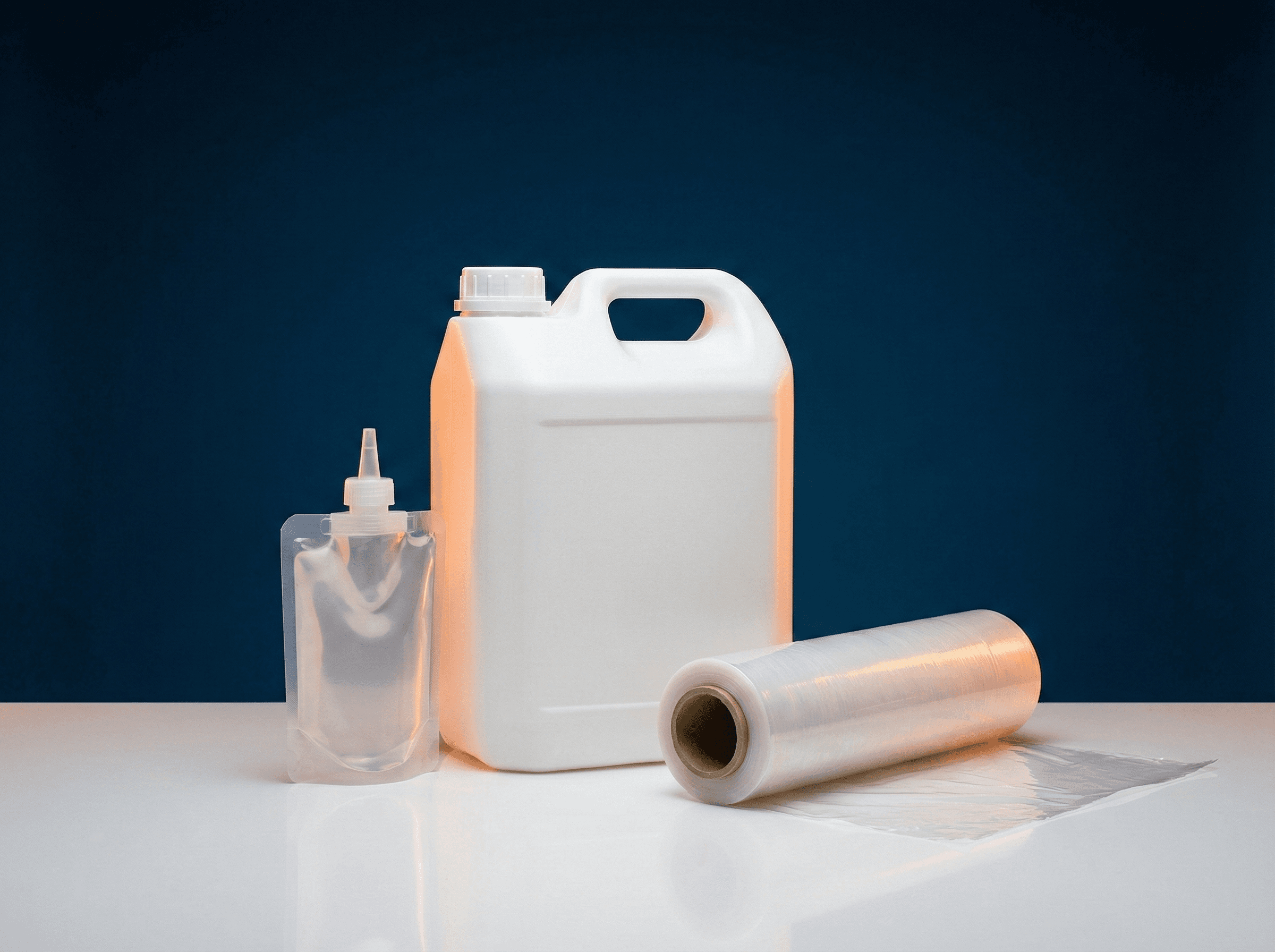
Polyethylene (PE) Resins
Polyethylene resin catalog — HDPE, mLLDPE, LLDPE and LDPE for blown & cast film, blow moulding, injection, PE100/PE80 pipe, filament, rotomoulding and extrusion coating. Grades from ExxonMobil, SABIC, Dow, NOVA, SCGC, Chevron Phillips, BASF, SIDPEC, Sinopec, Hengli, ZPC and Wanhua, with fast quotes and datasheets.
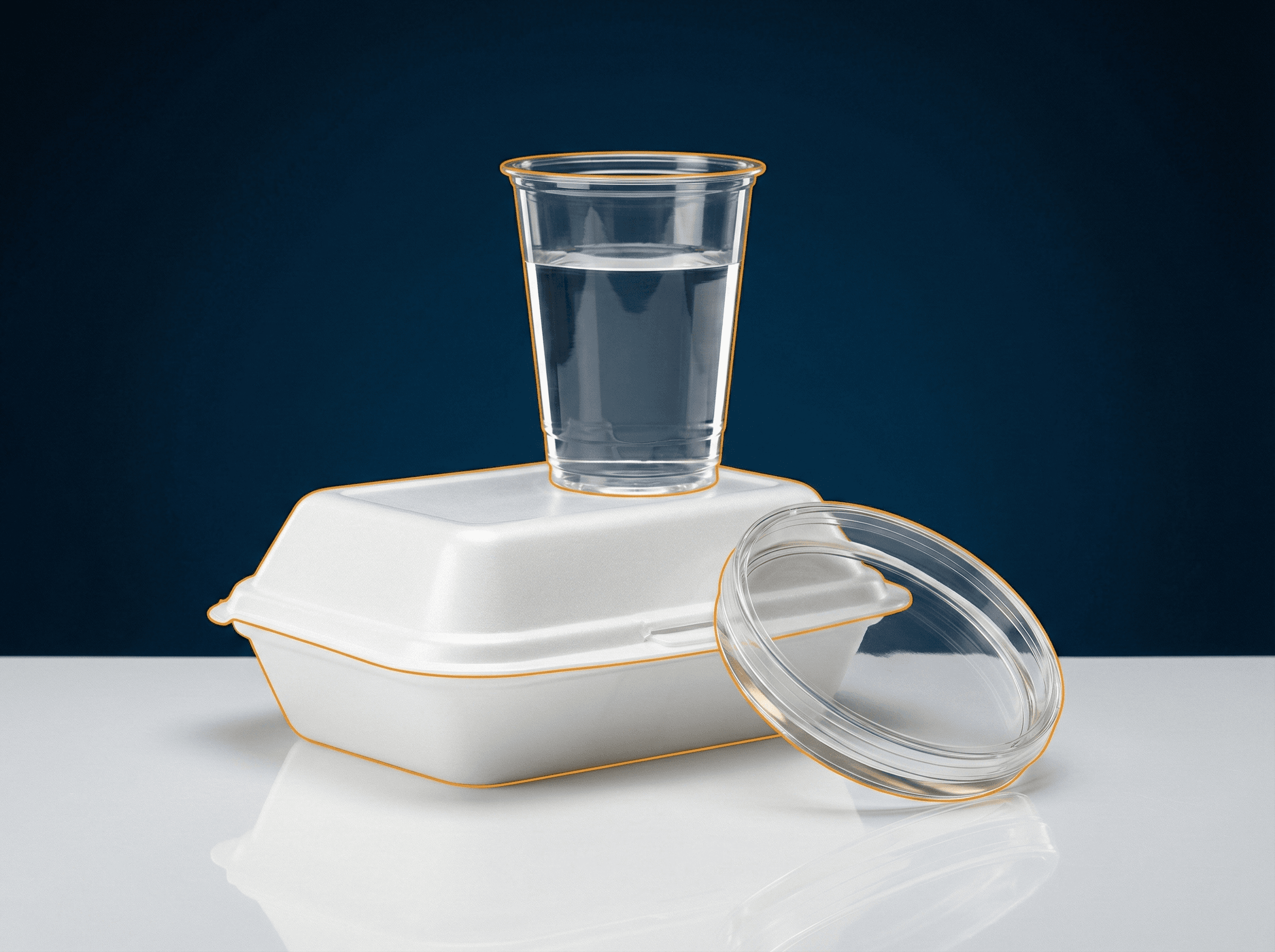
PS - Polystyrene
Polystyrene is a versatile thermoplastic resin ideal for disposable cups, household items, and packaging. Available in crystal, heat-resistant, high-impact, and expanded forms.