Key Benefits
- Easy processing by hot molding
- Easy to color
- Low cost
- Glass-like clarity and brightness
- High resistance to alkalis and acids
- Low density and low moisture absorption
End Markets
Industries We Serve
- Packaging & Flexible Films
- Food & Beverage Packaging
- Construction & Pipe Systems
- Agriculture Applications
- Automotive Components
- Industrial Manufacturing
Frequently Asked Questions
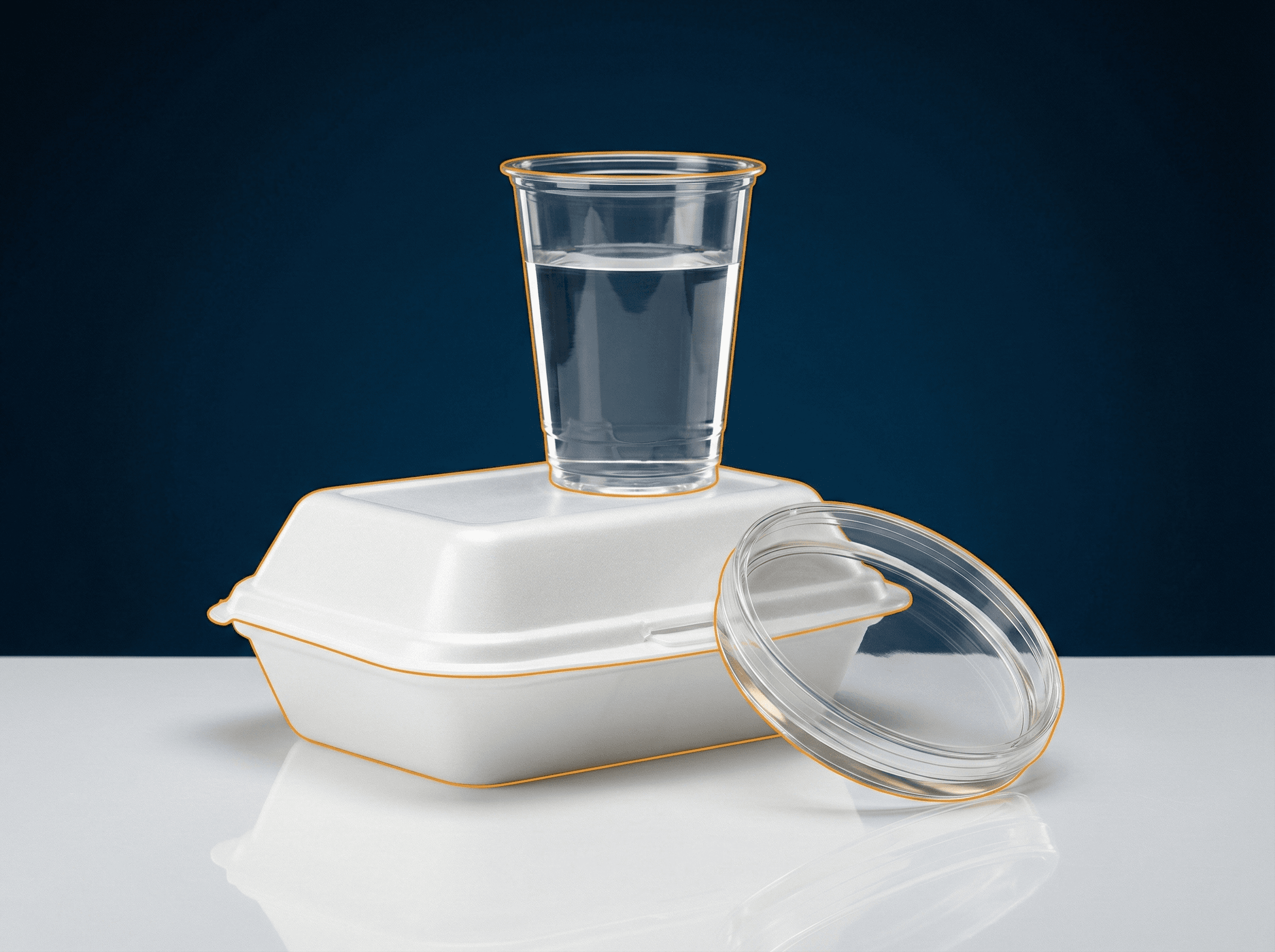
Polystyrene (PS) is a versatile thermoplastic homopolymer resulting from polymerization of styrene monomer, with global production exceeding 14 million tonnes annually. It is characterized by easy moldability under heat and is used for disposable cups and tableware, food packaging, household items, CD cases, toys, appliance parts, construction insulation (EPS), and protective packaging.
Syntex America offers four main types of polystyrene: PS Crystal (GPPS) - an amorphous, hard homopolymer with excellent brightness for disposable items; PS Heat Resistant - high molecular weight grade for automotive and electronics components; High Impact PS (HIPS) - containing 5-10% elastomer for refrigerator parts and toys; and Expanded PS (EPS) - foam insulation for construction and protective packaging.
GPPS (General Purpose Polystyrene or PS Crystal) is an amorphous, transparent homopolymer with excellent brightness and high refractive index, ideal for low-cost disposable items but with lower impact resistance. HIPS (High Impact Polystyrene) contains 5-10% elastomer (rubber) that significantly increases impact resistance, making it suitable for durable applications like refrigerator parts, toys, and appliance housings, though it loses transparency.
Expanded Polystyrene (EPS) is a lightweight foam material used for: construction thermal insulation (offering R-4 per inch insulation value), protective packaging for electronics and fragile items, food coolers and isothermal containers, food service trays and containers, flotation devices for surfboards and marine applications, and acoustic insulation. EPS represents approximately 10% of total polystyrene consumption.
Yes, Polystyrene meets FDA 21 CFR 177.1640 regulations for food contact applications. PS Crystal and food-grade EPS are widely used for disposable cups, food packaging trays, and beverage containers. The material is non-toxic, chemically inert with food products, and is approved for direct food contact when manufactured according to FDA guidelines.
Ready to spec a grade?
Specifications
| PS Crystal | Amorphous homopolymer, hard, excellent brightness and high refractive index. May receive lubricant additives to processing aid. Used in low cost items, particularly disposable parts such as cups. |
|---|---|
| PS Heat Resistant | High molecular weight, which makes processing more difficult. Suitable for making machine or cars components, radios and TV cabinets, air conditioning parts, internal and external parts of appliances and electronics, fans and blowers. |
| High Impact PS | Contains 5 to 10% of elastomer (rubber), which is incorporated by mechanical mixture or directly in the polymerization process. Widely used in the manufacture of home appliances (refrigerator parts) and toys. |
| Expanded PS | Semi-rigid foam. The plastic is polymerized in the presence of the blowing agent otherwise it may be subsequently absorbed. During processing of heated material it volatilizes generating cells in the material. Low density and good thermal insulation. Applications: trays of grocery packaging, protective equipment, thermal insulation, flotation for surfboards, isothermal refrigerators, etc. |
Industry Standards & Compliance
Polystyrene complies with ASTM D4203 specifications for styrene-rubber thermoplastic blends and ISO 1622 standards for plastics-polystyrene molding materials. For food contact applications, PS meets FDA 21 CFR 177.1640 regulations — making PS Crystal and food-grade EPS suitable for disposable cups, food packaging trays, and beverage containers.
ASTM D4203
Standard specification for styrene-rubber thermoplastic blends.
ISO 1622
Standard for plastics-polystyrene molding and extrusion materials.
FDA 21 CFR 177.1640
U.S. food-contact regulation covering polystyrene resins, met by PS Crystal and food-grade EPS.
Applications
- Disposable cups and tableware
- Closures for beer barrels
- Household items
- Packaging materials
- CD jewel boxes
- Stationery
- Home appliances parts
- Toys
- Construction insulation
- Food and beverage coolers
- Protective equipment
- Thermal insulation
- Surfboard flotation
- Machine components
- Electronic device cabinets
- Air conditioning parts