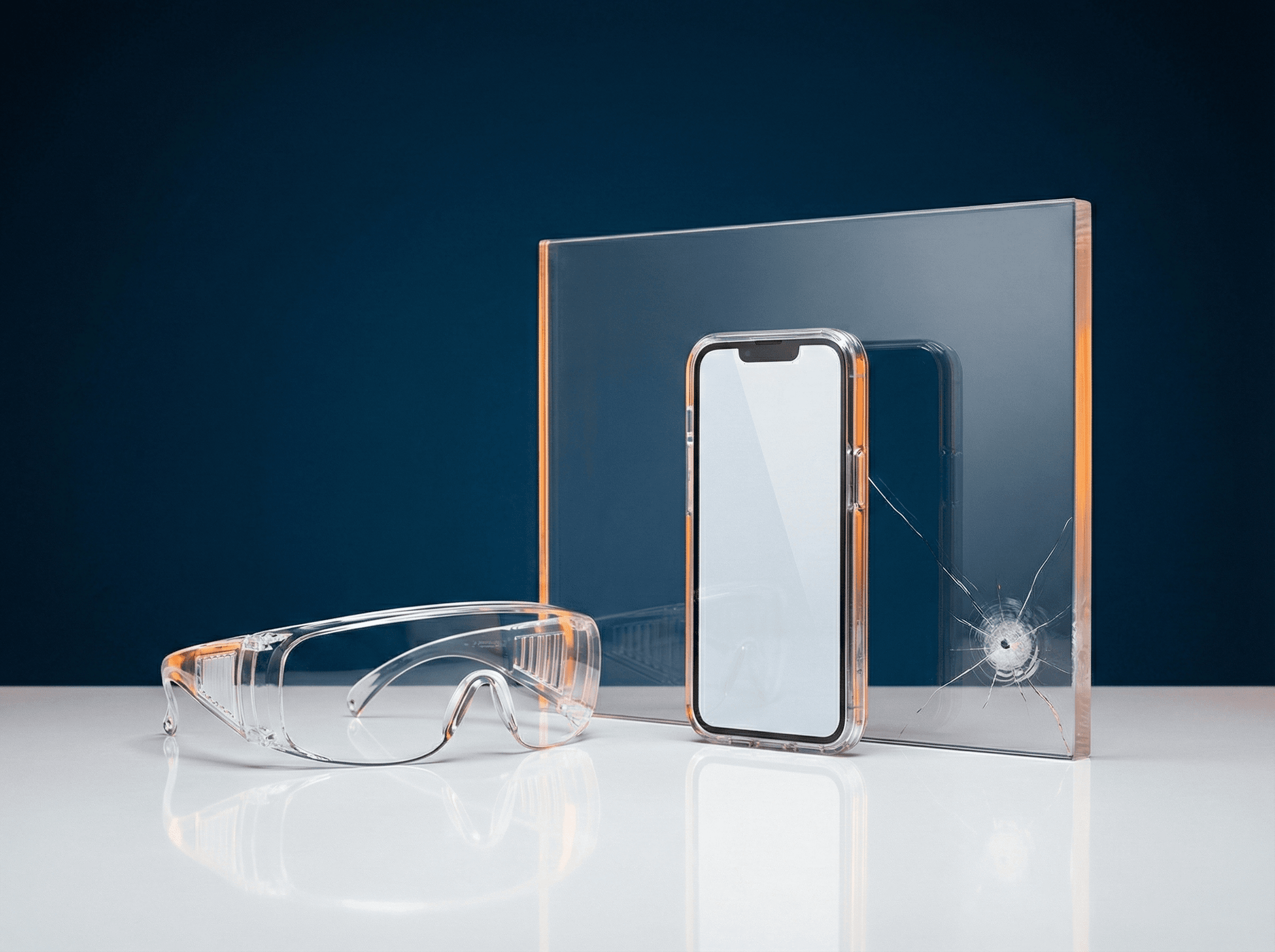
Hauptvorteile
- Praktisch unzerbrechliche Schlagfestigkeit — Izod gekerbt ueber 600 J/m, 250-mal zaeher als Glas von -40°C bis 130°C
- Optische Klarheit mit 88–90 % Lichtdurchlaessigkeit und geringer Truebung, bietet glasaehnliche Transparenz fuer Linsen, Verglasungen und Beleuchtung
- Hohe Hitzebestaendigkeit — Waermeformbestaendigkeitstemperatur von 130–145°C ermoeglicht Dauerbetrieb oberhalb der meisten transparenten Polymere
- Inhaerente Flammwidrigkeit — selbstloeschend ohne Additive (UL 94 V-2), mit flammhemmenden Typen, die V-0 bei 0,5 mm erreichen
- Masspraezision — geringe Schwindung, minimaler Verzug und ausgezeichnete Kriechbestaendigkeit ergeben praezise, stabile Teile
- Designflexibilitaet — komplexe duennwandige Geometrien, Filmscharniere und integrierte optische Merkmale durch fortschrittlichen Spritzguss
Endmärkte
Branchen, die wir bedienen
- Verpackung & Flexfolien
- Lebensmittel- & Getränkeverpackung
- Bau & Rohrsysteme
- Landwirtschaftliche Anwendungen
- Automobilkomponenten
- Industrielle Fertigung
Häufig gestellte Fragen
Polycarbonat vereint drei Eigenschaften, die kein anderer transparenter Kunststoff gleichzeitig bieten kann: optische Klarheit (88–90 % Lichtdurchlaessigkeit), herausragende Schlagfestigkeit (250-mal staerker als Glas und 30-mal staerker als Acryl) und hohe Hitzebestaendigkeit (HDT 130–145°C). Waehrend Acryl (PMMA) eine etwas bessere optische Klarheit bietet, ist es weit sproeder. Transparentes ABS bietet Zaehigkeit, aber geringere Klarheit und Hitzebestaendigkeit. Diese einzigartige Kombination macht Polycarbonat zum Material der Wahl fuer Sicherheitsverglasungen, Automobilbeleuchtung und anspruchsvolle optische Anwendungen.
Syntex America liefert ein umfassendes Sortiment an Polycarbonattypen, darunter Allzweck-PC fuer Spritzguss und Extrusion, optisches und lichtstreuendes PC fuer LED-Beleuchtung und Automobil-Scheinwerfer, flammhemmendes PC (UL 94 V-0) fuer Elektronik- und Elektrogehaeuse, glasfaserverstaerktes PC fuer strukturelle Anwendungen und FDA-konformes Lebensmittelkontakt-PC fuer Lebensmittelverarbeitung und -lagerung.
Standard-Polycarbonat ist empfindlich gegenueber UV-Abbau, der zu Vergilbung und Verlust der Schlagfestigkeit fuehrt. UV-stabilisierte Typen und koextrudierte Platten mit UV-Schutz-Deckschichten werden jedoch breit in Aussenanwendungen eingesetzt, darunter Gewaechshauspaneele, architektonische Verglasungen, Oberlichte und Laermschutzwaende mit einer Lebensdauer von ueber 10 Jahren. Fuer spritzgegossene Aussenteile werden UV-stabilisierte Typen oder UV-Schutzbeschichtungen empfohlen, um Klarheit und mechanische Leistung zu erhalten.
Der groesste Markt fuer Polycarbonat ist Elektro und Elektronik (Gehaeuse, Steckverbinder, LED-Beleuchtung), gefolgt von der Automobilindustrie (Scheinwerferlinsen, Innenverkleidungen, Verglasungen), Bauwesen (Platten fuer Bedachungen, Verglasungen, Laermschutzwaende), Medizinprodukte (chirurgische Instrumente, Dialysegehaeuse, Medikamentenverabreichungssysteme) und Konsumgueter (Brillen, Wasserflaschen, Lebensmittelbehaelter). Das Segment Automobilbeleuchtung ist eine der am schnellsten wachsenden Anwendungen aufgrund der Umstellung auf LED- und adaptive Scheinwerfertechnologien.
Ja, Polycarbonat ist durch mechanische Recyclingverfahren vollstaendig recycelbar. Post-industrieller Abfall (Anguss, Verteiler, Fehlteile) wird routinemaessig regranuliert und wiederverarbeitet, oft zu 20–30 % mit Neuware gemischt, ohne signifikanten Eigenschaftsverlust. Das Post-Consumer-Recycling von Polycarbonat waechst, insbesondere aus optischen Medien (CDs, DVDs), Wasserflaschen und Automobilkomponenten. Chemische Recyclingverfahren zur Rueckgewinnung von Bisphenol-A-Monomer fuer die Kreislaufproduktion befinden sich ebenfalls in der Entwicklung.
Bereit, einen Typ zu spezifizieren?
Spezifikationen
| Dichte | 1,20g/cm³ |
|---|---|
| Zugfestigkeit | 55–70MPa |
| Waermeformbestaendigkeitstemperatur | 130–145°C |
| Schlagzaehigkeit (Izod, gekerbt) | 600–900J/m |
| Lichtdurchlaessigkeit | 88–90% |
| Biegemodul | 2.300–2.400MPa |
| Schwindung | 0,5–0,7% |
| Wasseraufnahme (24 h) | 0,12–0,15% |
Industrienormen & Konformität
Polycarbonatharze entsprechen den ASTM-D3935-Spezifikationen fuer Polycarbonat-Spritzguss- und Extrusionsmaterialien. Ausgewaehlte Typen erfuellen die FDA 21 CFR 177.1580 fuer Lebensmittelkontaktanwendungen, USP-Klasse VI fuer Medizinprodukte und die UL-94-V-0-Klassifizierung bei Wandstaerken bis zu 0,5 mm fuer Elektro- und Elektronikanwendungen. Optische Typen entsprechen ASTM D1003 fuer Lichtdurchlaessigkeits- und Truebungsmessungen.
ASTM D3935
Standardspezifikation fuer Polycarbonat-(PC-)Spritzguss- und Extrusionsmaterialien.
FDA 21 CFR 177.1580
US-Lebensmittelkontaktzulassung, die von ausgewaehlten Polycarbonattypen erfuellt wird.
USP Class VI
Biokompatibilitaetsklassifizierung, die von ausgewaehlten Typen fuer Medizinprodukte erfuellt wird.
UL 94 V-0
Brennbarkeitsklassifizierung, die von flammhemmenden Typen bei Wandstaerken bis zu 0,5 mm erreicht wird.
ASTM D1003
Pruefverfahren fuer Lichtdurchlaessigkeit und Truebung, dem optische Typen entsprechen.
Anwendungen
- Automobil-Scheinwerferlinsen, Lichtleiter und Aussenbeleuchtungsbaugruppen
- Sicherheitsverglasungen, Schutzschilde und durchschusshemmende Laminate
- LED-Beleuchtungsdiffusoren, Linsen und architektonische Lichtpaneele
- Unterhaltungselektronikgehaeuse, Smartphone-Komponenten und Laptop-Rahmen
- Medizinprodukte, chirurgische Instrumentengriffe und Dialysegeraetegehaeuse
- Elektrogehaeuse, Batterieabdeckungen und Telekommunikationsgeraetegehaeuse (UL 94 V-0)
- Wiederverwendbare Wasserflaschen, Lebensmittelbehaelter und Babyflaschen (FDA-Typen)
- Optische Mediensubstrate (CDs, DVDs, Blu-ray Discs)
- Automobil-Instrumententafeln, Innenverkleidungen und Panorama-Schiebedachpaneele
- Gewaechshauspaneele, architektonische Verglasungen und Laermschutzwaende
- Schutzhelme, Gesichtsschilde und Schutzbrillenglaeser
- Stegplatten und Massivplatten fuer Bedachungen, Oberlichte und Ueberdachungsstrukturen