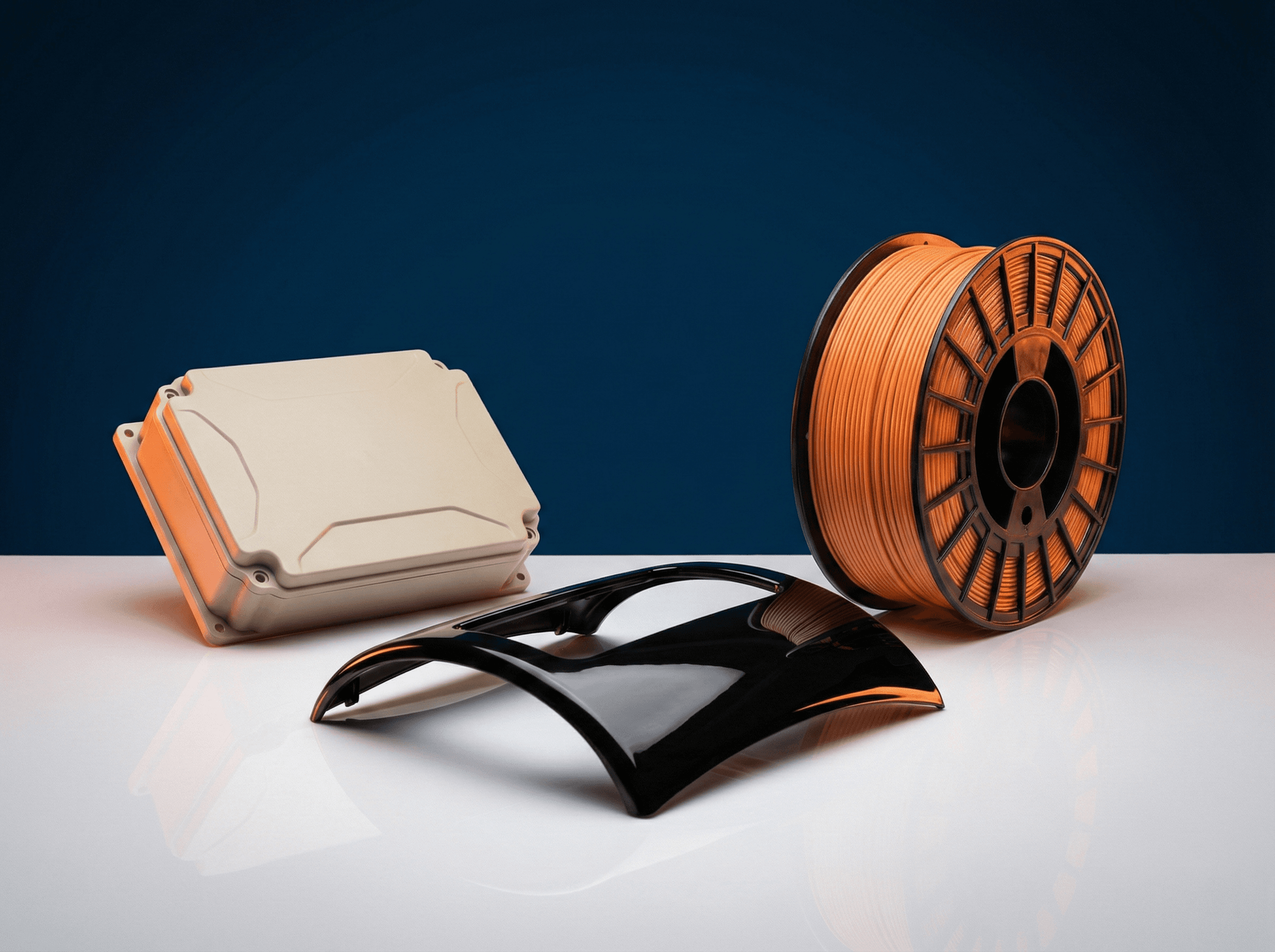
Key Benefits
- High impact strength, retaining toughness even at temperatures down to -20°C
- Excellent dimensional stability with low shrinkage for precise, consistent parts
- High-gloss surface finish that accepts painting, chrome plating, hot stamping, and texturing
- Wide processing window for injection molding, extrusion, thermoforming, blow molding, and 3D printing (FDM)
- Good resistance to aqueous acids, alkalis, concentrated hydrochloric and phosphoric acids, and most alcohols
- Compatible with polycarbonate (PC), nylon (PA), and other polymers to create advanced ABS alloys
End Markets
Industries We Serve
- Packaging & Flexible Films
- Food & Beverage Packaging
- Construction & Pipe Systems
- Agriculture Applications
- Automotive Components
- Industrial Manufacturing
Frequently Asked Questions
ABS (Acrylonitrile Butadiene Styrene) is a tough, rigid amorphous thermoplastic that combines three monomers: acrylonitrile for heat and chemical resistance, butadiene for impact strength, and styrene for surface gloss and processability. Its main advantages include high impact resistance even at low temperatures, excellent dimensional stability, a high-gloss surface finish that can be plated or painted, and easy processing through injection molding, extrusion, and 3D printing.
Syntex America supplies a full range of ABS grades including general purpose ABS for everyday applications, high-impact ABS for automotive and protective components, heat-resistant ABS for high-temperature environments, plating grade ABS for chrome and metal finishing, flame-retardant ABS for electronics and electrical applications, and extrusion/thermoforming grades for sheet applications like luggage and refrigerator liners.
ABS is used across major industries including automotive (interior trim, instrument panels, exterior plated parts), consumer electronics (device housings, keyboard keys), household appliances (vacuum cleaners, kitchen appliances, refrigerator liners), consumer goods (toys, luggage, recreational products), construction (pipe systems, fittings), and medical devices (equipment housings, laboratory components). It is also widely used in 3D printing for prototyping and functional parts.
ABS is the preferred thermoplastic for decorative chrome plating. Plating grade ABS has a controlled rubber particle morphology that provides excellent adhesion for electroless and electrolytic metal deposition. The process involves chemical etching of the butadiene rubber phase to create micro-pores on the surface, enabling strong mechanical bonding with the plated metal layer. This makes ABS ideal for automotive trim, bathroom fixtures, and decorative hardware.
ABS has limited UV resistance and will yellow and degrade with prolonged outdoor exposure. This can be addressed through UV-stabilized grades, painting, or plating. ABS is also not resistant to ketones (acetone), esters, and chlorinated solvents, which must be considered in chemical environments. For applications requiring better weatherability, ASA (Acrylonitrile Styrene Acrylate) is often used as an alternative, or ABS/PC blends provide enhanced heat resistance and impact performance.
Ready to spec a grade?
Specifications
| Density | 1.03–1.07g/cm³ |
|---|---|
| Tensile Strength | 40–55MPa |
| Heat Deflection Temperature | 85–110°C |
| Impact Resistance (Izod, Notched) | 200–500J/m |
| Melt Flow Index | 1–30g/10 min |
| Shrinkage | 0.4–0.7% |
| Water Absorption (24h) | 0.2–0.4% |
Industry Standards & Compliance
ABS complies with ASTM D4673 specifications for acrylonitrile-butadiene-styrene (ABS) molding and extrusion materials. Select grades are approved for food contact under FDA 21 CFR regulations, and flame-retardant grades meet UL 94 V-0 (and V-2) classification for electronics and appliance applications.
ASTM D4673
Standard specification for acrylonitrile-butadiene-styrene (ABS) molding and extrusion materials.
FDA 21 CFR
U.S. food-contact approval covering ABS resins in select grades.
UL 94 V-0 / V-2
Flammability classifications met by flame-retardant grades for electronics and appliance applications.
Applications
- Automotive interior trim, instrument panels, and dashboard components
- Exterior automotive parts with chrome plating or painted finishes
- Consumer electronics housings, keyboard keys, and device enclosures
- Household appliance housings (vacuum cleaners, kitchen appliances, power tools)
- Refrigerator liners and thermoformed appliance interiors
- Toys, building blocks, and recreational products
- Luggage shells and protective cases
- Pipe systems, fittings, and plumbing components
- 3D printing filament for prototyping and functional parts
- Bathroom fixtures and decorative hardware with metal plating
- Electrical enclosures and flame-retardant equipment housings
- Medical device housings and laboratory equipment