Key Benefits
- Excellent processability with consistent characteristics across all grades
- Superior adhesion for hot melt packaging, binding, and labeling
- Excellent electrical insulation for wire, cable, and semiconductive shields
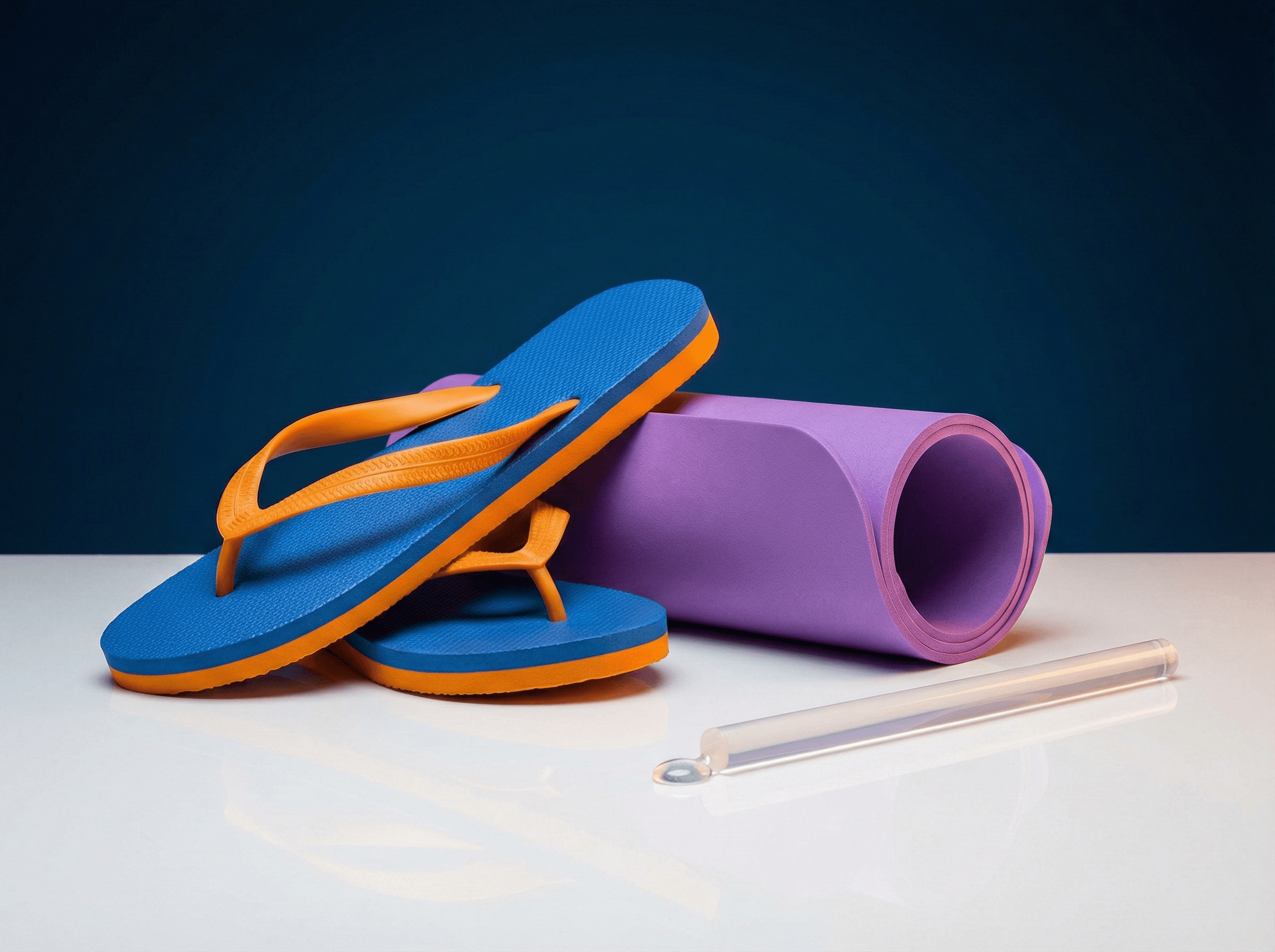
- Optimized flexibility and impact resistance for shoe soles and foaming
- Optical clarity in select grades for solar cell encapsulation
- Automated process control ensuring product homogeneity across batches
End Markets
Industries We Serve
- Packaging & Flexible Films
- Food & Beverage Packaging
- Construction & Pipe Systems
- Agriculture Applications
- Automotive Components
- Industrial Manufacturing
Frequently Asked Questions
EVA (Ethylene Vinyl Acetate) is a versatile copolymer of ethylene and vinyl acetate with global production exceeding 4 million tonnes annually. It combines the toughness and flexibility of polyethylene with the adhesive properties of vinyl acetate. EVA is characterized by excellent adhesion, flexibility, low-temperature toughness, and optical clarity, making it ideal for adhesives, foams, wire insulation, and solar cell encapsulation.
Syntex America supplies a comprehensive range of EVA grades from ExxonMobil's autoclave process including: VS series (VS410-VS440) for adhesive applications, VC series (VC500-VC710) for wire and cable applications, VA series (VA600-VA930) for general purpose applications, and VE/VL grades for specialized applications. Density ranges from 0.940 to 0.967 g/cm3 with melt flow rates from 0.04 to 20 g/10min.
EVA is used as an encapsulant film in over 95% of crystalline silicon photovoltaic modules globally. It provides excellent optical clarity for maximum light transmission, strong adhesion to glass and silicon cells, moisture barrier protection, electrical insulation, and UV stability. The EVA encapsulant film protects solar cells from environmental damage while maintaining long-term performance over the 25+ year lifespan of solar panels.
EVA is used across multiple industries: Footwear (approximately 40% of global consumption for midsoles and foam cushioning), Solar Energy (encapsulant films for photovoltaic modules), Adhesives (hot melt adhesives for packaging, labeling, and bookbinding), Wire and Cable (insulation and semiconductive shields), Sports Equipment (padding and protective gear), and Packaging (flexible films and laminations).
EVA offers several advantages over PVC for wire and cable insulation: better low-temperature flexibility without cracking, excellent electrical insulation properties, halogen-free formulation (no chlorine), lower smoke emission in fire conditions, easier recyclability, and superior resistance to environmental stress cracking. EVA is increasingly replacing PVC in applications where environmental and safety considerations are priorities.
Ready to spec a grade?
Specifications
| Method | Autoclave polymerization (ExxonMobil) |
|---|---|
| Density Range | 0.940 - 0.967g/cm³ |
| Melt Flow Range | 0.04 - 20g/10min |
| Available Grades | VS410, VS420, VS430, VS440, VC500, VC590, VC640, VC700, VC710, VA600, VA700, VA800, VA810, VA900, VA910, VA920, VA930, VE700, VE810, VL740 |
Industry Standards & Compliance
EVA complies with ASTM D3475 specifications for rubber properties in tension and meets UL94 flammability standards when formulated with appropriate additives, making it suitable for adhesive, foaming, and wire-and-cable applications.
ASTM D3475
Specification covering rubber properties in tension, with which EVA complies.
UL94
Flammability testing standard met by EVA when formulated with appropriate additives.
Applications
- Hot melt adhesive labels
- Wire and cable insulation
- Electric wire base resin (outer semiconductive shield)
- Electric wire base resin (inner semiconductive layer)
- Shoe soles and foaming applications
- Solar cell encapsulants
- Industrial foams
- Thermal lamination
- Packaging adhesives
- Binding adhesives
- Bead foaming products
- PVC replacement applications