Israel Destroys 85% of Iran's Petrochemical Capacity: Physical Oil Hits $141 and Global Resin Markets Reset
Israel struck Mahshahr and Asaluyeh, knocking out 85% of Iran's petrochemical output. Physical Brent hit $141 while futures trade at $109. Naphtha breached $1,000/MT. Every major resin category faces Q2 price increases. Region-by-region analysis and buyer strategy.

Pedro Zaccaria
Chief Technology Officer

Part 5 of the Hormuz Crisis series: Week 1 | Week 2 | Week 3 | Week 4 | Week 5 (this article)
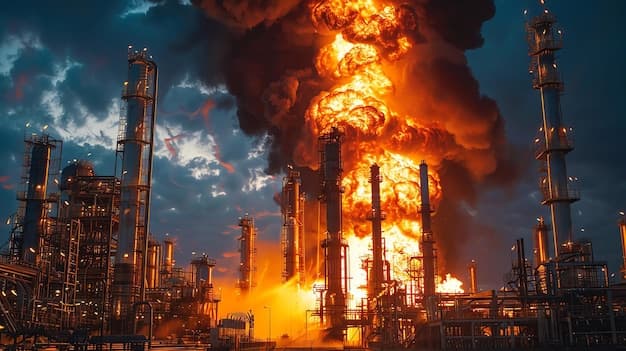
This week, the war crossed another line. Israel didn’t just disrupt Iran’s petrochemical supply chain — it destroyed it. On April 4, Israeli forces struck Iran’s largest petrochemical complex at Mahshahr, shutting down production at a site responsible for 35% of Iran’s petrochemical output. Two days later, on April 6, Israel struck the South Pars petrochemical complex at Asaluyeh, cutting electricity to every unit. According to the Wall Street Journal, Israel has now knocked out sites responsible for 85% of Iran’s petrochemical capacity.
Meanwhile, the spot price for physical Brent crude cargoes soared to $141.36 on April 2 — the highest level since the 2008 financial crisis — while futures trade at $109. Iran rejected a 45-day ceasefire proposal today, and Trump set a Tuesday deadline threatening “hell” if the Strait isn’t reopened. Naphtha breached $1,000 per metric ton in Singapore. And every single major resin category — PE, PP, PS, ABS, PC, PVC, PA6, PA66, PET — is entering Q2 under active producer price-increase pressure.
The crisis is no longer just about supply disruption. It’s about the permanent destruction of production capacity.
Key Takeaways — Week 5 (April 6, 2026)
- Israel destroyed 85% of Iran’s petrochemical capacity — strikes on Mahshahr (April 4) and Asaluyeh/South Pars (April 6) knocked out Iran’s two largest petrochemical complexes.
- Physical Brent crude hit $141.36, the highest since 2008, while futures trade at $109 — a $32 gap that reveals the true tightness of physical supply.
- Iran rejected a 45-day ceasefire; Trump set a Tuesday (April 8) deadline threatening “hell.” No diplomatic exit is in sight.
- Naphtha breached $1,000/MT in Singapore; Europe’s April ethylene contract surged €450/t to ~€1,595/t; benzene settled 30% above March.
- Every major resin category faces Q2 price increases: Dow’s $0.30/lb PE hike is in effect; LyondellBasell seeking $0.35/lb cumulative through May.
- India’s HDPE surged 75% from ⋅91,452/MT to ⋅1,60,000/MT in five weeks; 50%+ of India’s plastic MSMEs have shut down.
- US producers are the clear winners: Dow shares up 25% since the war started, LyondellBasell up 88% YTD, as ethane-based feedstock advantage widens.
The War Entered a New Phase: Infrastructure Destruction
In our Week 3 analysis, we reported that both sides had begun targeting energy production facilities. Week 5 made that look like a warm-up. Israel’s defence minister described the Asaluyeh strike as “a severe economic blow to Tehran,” and the data backs that claim.
Timeline of Petrochemical Infrastructure Strikes
| Date | Target | Share of Iran’s Petrochemical Output | Status |
|---|---|---|---|
| March 17 | South Pars gas field infrastructure | Supports ~40% of feedstock | Partially damaged; repairs underway |
| April 4 | Mahshahr petrochemical complex | ~35% of output | Production shut down |
| April 6 | Asaluyeh/South Pars petrochemical complex | ~50% of output | Electricity cut to all units |
The Asaluyeh attack didn’t just hit the petrochemical plant directly. According to Tasnim news agency via Reuters, Israel targeted the companies that supply electricity, water, and oxygen to the complex — the utilities without which no chemical processing plant can operate. Even if the Pars petrochemical units themselves weren’t directly damaged, production cannot resume until power is restored to the entire complex.
This matters beyond Iran. Before the war, Iran exported significant volumes of anhydrous ammonia, ethylene glycol, polyethylene, and methanol. According to ITP analysis, Iranian exports accounted for 16–69% of total Middle East exports across these categories in 2025. That capacity is now essentially offline.
“Combined with a strike last week on an Iranian petrochemical facility complex in Mahshahr, Israel has knocked out sites responsible for 85% of Iran’s petrochemical output.”
— Wall Street Journal, April 6, 2026
Why Physical Oil Hit $141 While Futures Say $109
The most revealing data point this week wasn’t a polymer price — it was the gap between physical and financial oil markets. On April 2, the spot price for current physical cargoes of Brent crude soared to $141.36 per barrel, according to S&P Global data reported by CNBC. That’s the highest level since the 2008 financial crisis. The Brent futures contract for June closed the same day at $109.03.
A $32 premium for physical delivery versus paper contracts.
“The futures price is almost giving a false sense of security that things are not that stressed,” said Amrita Sen, founder of Energy Aspects. “The financial market is almost masking the true tightness that everywhere else is showing up.” She noted that diesel in Europe is trading at nearly $200 per barrel.
Chevron CEO Mike Wirth reinforced this at the CERAWeek conference: “There are very real, physical manifestations of the closure of the Strait of Hormuz that are working their way around the world and through the system that I don’t think are fully priced into the futures curves on oil.”
Why does this matter for polymer buyers? Because polymer pricing is tied to physical feedstock costs, not futures. Your supplier’s naphtha cracker doesn’t run on futures contracts. It runs on physical naphtha that now costs over $1,000 per metric ton in Singapore — a psychological threshold breached this week, according to MarketMinute. The futures/physical divergence means the crisis is worse than headline oil prices suggest.
Oil Price Tracker — Week 5
| Metric | Week 4 (Mar 26) | Week 5 (Apr 6) | Change |
|---|---|---|---|
| Brent futures | $97/bbl | $109/bbl | +12.4% |
| Physical Brent (dated) | ~$105/bbl | $141.36/bbl (Apr 2 peak) | +34.6% |
| WTI crude | $93/bbl | $110.87/bbl | +19.2% |
| Naphtha (Singapore) | ~$850/MT | $1,000+/MT | +17.6% |
| European diesel | ~$140/bbl | ~$200/bbl | +42.9% |
Ceasefire Collapses: Trump’s Tuesday Deadline and What It Means

Diplomacy isn’t working. A draft proposal calling for a 45-day ceasefire and the reopening of the Strait of Hormuz was sent to both the United States and Iran, according to NBC News. Iran rejected it. Iran’s Supreme Leader went further, telling state media that the Strait of Hormuz “will never return to its former state.”
Trump responded by setting a Tuesday, April 8 deadline, threatening “hell” if Iran doesn’t cooperate. Whether that means expanded military action, further sanctions, or new tariff escalations remains unclear. What is clear: there is no diplomatic path to a quick resolution.
For polymer buyers, this means the supply disruption has no visible end date. Even the optimistic scenario — a ceasefire this month — wouldn’t restore supply for months. The Credendo analysis from April 1 states it plainly:
“Even if the conflict ends soon, supply chains could take months or even years to recover, particularly if infrastructure has been damaged. Time will be required to repair the infrastructure, to restart equipment that has been put on hold as a precautionary measure, and to clear bottlenecks in ports.”
— Credendo, April 1, 2026
And with 85% of Iran’s petrochemical capacity now physically destroyed, “months or even years” is optimistic.
Every Resin Category Is Under Pressure. Here’s the Q2 Map.

This is the most broadly synchronized upward pressure across resin categories that the industry has seen in several years. According to PlasticsToday’s April 6 Resin Price Report, “every major commodity and engineering resin — PE, PP, PS, ABS, PC, PVC, PA6, PA66, PET — is heading into Q2 under active producer increase pressure.”
The Feedstock Cost Reset
April feedstock contracts came in significantly higher across virtually every major plastic input:
| Feedstock | April Move | Affected Resins |
|---|---|---|
| Benzene | +30% vs March | Polystyrene, ABS, Polycarbonate, Nylon |
| Butadiene | Sharp increase | ABS, PA66 |
| Paraxylene | Highest April in years | PET |
| Ethylene (Europe) | +€450/t to ~€1,595/t | PE, PVC |
| Naphtha (Singapore) | Breached $1,000/MT | All naphtha-based petrochemicals |
| Propylene | Multiple PDH units offline | PP |
US Polyethylene and Polypropylene: April Increases in Effect
Dow’s $0.30/lb ($660/MT) April PE increase is now in effect for all HDPE, LLDPE, and LDPE grades in the US and Canada. LyondellBasell is seeking $0.35/lb cumulative increases through May — and is already floating May signals, according to PlasticsToday. Two major PET producers implemented immediate price increases last week, skipping standard contract timing, which signals genuine cost urgency.
Polypropylene prices have surged 28.8% globally after a stable 2025, with the March move representing the sharpest one-month PP increase since records began for many Asian markets.
Asia and Europe: The Naphtha-Dependent Markets
The story is starkest in regions that depend on naphtha as their primary petrochemical feedstock. Asian PE jumped 40–50% and production costs nearly doubled. Europe’s April ethylene contract surged another €450/t, reaching approximately €1,595/t — a level not seen since the 2022 energy crisis. According to ICIS, global chemical prices are spiking at the fastest pace in almost 20 years.
Brazil’s plastics industry is now split over supply shortage risk as resin prices there have surged 50%.
Region-by-Region Polymer Price Tracker
| Region | PE Price Change (since Feb 28) | PP Price Change | Key Development |
|---|---|---|---|
| United States | +$0.30/lb (Dow April); $0.35/lb cumulative (LYB through May) | +$0.10–$0.11/lb in March | Export demand pulling domestic supply; PDH units offline |
| India | HDPE: ⋅91,452 → ⋅1,60,000/MT (+75%); LLDPE: +77% | +⋅4,000/MT (IOCL, Apr 1) | 50%+ MSMEs halted; IOCL raised prices again April 1 |
| Europe | +40–46% | +36–45% | Ethylene +€450/t to €1,595/t; import supply crunch in Q2 |
| Asia (ex-India) | +40–50% | +48% | Naphtha >$1,000/MT; crackers at 70% capacity |
| Brazil | +50% | +50% | Industry split over supply shortage risk |
| Turkey | +42–60% | +56% | Highest PE/PP increases in any single market |
US Producers: The Unexpected Winners of the Hormuz Crisis

While most of the global petrochemical industry is struggling, US producers are thriving. Seeking Alpha reported on April 5 that the Iran conflict has “sparked a sudden boom for U.S. chemical makers, reversing years” of margin pressure.
The numbers are striking:
- Dow shares are up 25% since the war started.
- LyondellBasell surged 43.45% in one month and 88% year-to-date, as North American polyethylene inventories tightened to 40-day supply, according to 24/7 Wall Street.
- US exports of key chemical feedstocks are surging as international buyers seek supply security (Politico, April 3).
The reason is structural. US polyethylene producers run on ethane, a natural gas liquid that costs a fraction of naphtha. While naphtha-based competitors in Asia and Europe watch their feedstock costs double, US producers enjoy the widest cost advantage in over a decade. As we noted in our Week 4 analysis, Bloomberg reported that US producers are actively buying more ethylene feedstock to maximize export volumes.
And there’s more capacity coming. Golden Triangle Polymers, a joint venture between Chevron Phillips Chemical and QatarEnergy, is expected to start up 2 million metric tons per year of HDPE in late 2026/early 2027. According to Argus Media, this was supposed to be favorable for buyers by adding supply to an oversaturated market. Instead, this new capacity will enter a world that desperately needs it.
“The year was supposed to be one of surplus. Now completely reversed.”
— C&EN (American Chemical Society), April 2, 2026
For buyers sourcing from international polymer traders, the implication is clear: US-origin PE and PP have become the most sought-after grades in global markets. Companies with established North American supply relationships hold a structural advantage that could last through 2026.
Factories Are Shutting Down Worldwide

The human cost of this crisis is now visible on factory floors across Asia.
India: “Machines Are Idle, Mostly”
A devastating Business Standard ground report from Balasore, Odisha (April 4) captures the crisis at plant level. At Jagdamba Polymers, Odisha’s largest injection moulding operation, production has dropped 70%. Of 10 production lines under one shed, only two are running. At Hari Plast, a pipe manufacturer with 12 extrusion lines and installed monthly capacity of 650 tonnes, only two lines are operational. At Neo Tubes, output fell from 100 tonnes/month to less than 20.
“A month ago, we didn’t even get time to sit and relax. Now machines are idle, mostly,” a contractual worker told Business Standard. The number of workers at one industrial estate fell from 1,500 to less than 800.
The price data tells the full story: India’s HDPE rose from around ⋅91,452/MT on February 28 to ⋅1,60,000/MT by April 1 — a 75% increase. LLDPE surged 77%. PVC rose 30%. IOCL raised PP and PE prices again effective April 1. And 70% of India’s consumer packaging is made from flexible plastics, meaning these price shocks will hit food and medicine packaging directly.
China: Production Paused, Not Because of Demand
Michaël van der Jagt, a supply chain expert, reported on LinkedIn (March 27) that multiple contacts in China have paused production. Not because demand dropped. Not because of labor issues. “But because raw material prices increased so fast, they simply can’t produce with margin anymore.”
He notes that polypropylene, polyethylene, and synthetic rubber have increased over 30% in the past month alone. “Companies that understand this early will adapt. Others will be forced to react.”
Indonesia, Thailand, Vietnam: The Ripple Continues
Indonesia’s plastic sector faces shortages as Middle East supply tightens. Thailand is warning of consumer goods price hikes in April as packaging, plastics, and plastic bottles face shortages. Vietnam reports that HDPE prices have risen about 45% since the start of the year.
Beyond Polymers: The Supply Chains You Haven’t Thought About
The Credendo analysis (April 1) lays out a supply chain crisis that goes far beyond plastics. The IEA reported that 40 energy assets across 9 countries have been severely affected. The global oil market has lost about 8% of pre-crisis supply.
Fertilizers: The Next Price Shock
Gulf countries export 27% of global ammonia, 22% of phosphates, and 45% of the world’s sulfur. Fertilizer markets operate on just-in-time logistics with no strategic stockpiles. Prices react faster and more sharply than oil markets. Nitrogen fertilizer production has been further hit by gas shortages. This creates a fertilizer-led inflation shock that typically feeds into food prices with a lag of a few months — meaning the food price impact arrives in Q3 2026.
Aluminium: Panic Buying by Carmakers
Aluminium prices jumped over 5% to above $3,450/MT, hovering near four-year highs. Emirates Global Aluminium, the region’s largest producer, reported significant damage at its Abu Dhabi facility. The conflict has triggered panic buying by carmakers, who fear supplies could run out within months. European and Japanese automakers, heavily dependent on Gulf aluminium, could face production reductions starting mid-2026.
Helium: The Semiconductor Supply You Didn’t Know Was at Risk
Qatar is a leading global helium producer. Helium is essential for heat management during semiconductor manufacturing, with no viable alternatives. QatarEnergy has declared force majeure. If the disruption persists, this has direct implications for chip production and medical imaging equipment worldwide.
The Tariff Layer: Liberation Day Anniversary Adds Complexity
As if the supply shock weren’t enough, the tariff environment is shifting simultaneously. One year after “Liberation Day” (April 2, 2025), when Trump announced sweeping tariffs including a minimum 10% duty on all imports, the legal and trade landscape has changed dramatically.
The US Supreme Court struck down the IEEPA tariffs in February 2026, ruling 6–3 that Trump had illegally imposed tariffs under a law meant for national emergencies. The ruling forced refunds for more than 53 million customs entries. In response, the administration enacted a temporary 10% import duty under Section 122 of the Trade Act of 1974, effective for 150 days, and launched new Section 301 investigations.
For polymer imports specifically, Trump revised Section 232 tariffs this week (April 6), with direct impact on plastics industry imports. Meanwhile, Trump cut tariffs on Indian exports from 50% to 18% in February 2026 — a move that could help ease some of India’s polymer procurement costs.
The net effect: tariff uncertainty is adding lead-time variability and pushing manufacturers toward higher inventory levels. Buyers are accelerating automation investments and nearshoring strategies to reduce operational risk.
How the Crisis Has Evolved: Weeks 1–5
| Metric | Week 1 (Mar 4) | Week 2 (Mar 10) | Week 3 (Mar 20) | Week 4 (Mar 26) | Week 5 (Apr 6) |
|---|---|---|---|---|---|
| Brent crude (futures) | $81/bbl | $90–120/bbl | $108–110/bbl | $97/bbl | $109/bbl (physical: $141) |
| Hormuz status | Closure announced | ~90% traffic drop | ~95% traffic drop | “Friendly nations” access | Ceasefire rejected; deadline Tue |
| Iran petrochemical capacity | At risk | Feedstock disrupted | South Pars gas field hit | Partially damaged | 85% destroyed |
| US PE price increase (cumulative) | — | $0.05/lb | $0.20/lb | $0.30/lb (Dow) | $0.30/lb active; $0.35/lb (LYB through May) |
| India PE price (HDPE/MT) | ⋅91,452 | +⋅7,000 | +⋅20,000 | +⋅35,000 | ⋅1,60,000 (+75%) |
| Force majeures | QatarEnergy | Cascading Gulf | 34+ across 3 continents | 31 active | 31+ active; Iran’s capacity destroyed |
| Key new development | Hormuz closed | $30 oil swing | Infrastructure attacks | Oil-polymer divergence | Petrochemical capacity destroyed; physical oil $141 |
Buyer Action Plan: What to Do Before April Locks In
The window to influence Q2 outcomes is closing. Based on the data we’re tracking, here is what experienced buyers are doing right now.
1. Distinguish Cost Recovery from Margin Expansion
As PlasticsToday’s resin analyst Michael Workman writes: “Cost pressure and pricing power are not the same thing.” Some portion of every April nomination is warranted by feedstock costs. Some is margin expansion. Know which is which. In polystyrene, ABS, polycarbonate, and nylon, downstream demand is soft enough to contest full implementation. In PE and PET, the cost math is harder to argue — focus instead on structural contract terms.
2. Lock In US-Origin Supply
If you have access to North American PE or PP, secure Q2 volumes now. US ethane-based production is the cheapest feedstock in the world right now. Export demand from international buyers is pulling US supply offshore. Every ton that ships to Asia or Europe is one less ton available domestically.
3. Diversify Feedstock Exposure
Buyers concentrated on naphtha-dependent Asian or European supply chains face the steepest cost curve. Consider shifting a portion of procurement to ethane-based North American sources, or to producers with access to natural gas liquids feedstock. Syntex America’s trading services can help source from multiple origins.
4. Watch Physical Prices, Not Futures
Futures contracts give a misleading picture of supply tightness. The $32 gap between physical Brent and futures tells the real story. If your supplier quotes based on published index prices, ask which index — and whether it reflects physical or financial markets.
5. Prepare for Downstream Inflation
Fertilizer disruptions will hit food prices in Q3. Aluminium shortages will hit automotive production by mid-2026. Plastic packaging costs are already rising for food and beverage companies. These downstream effects create both risks and opportunities for polymer buyers who can anticipate demand shifts.
6. Build Strategic Inventory
This is not a moment for just-in-time procurement. Credendo’s analysis confirms that even a quick ceasefire wouldn’t normalize supply for months. The infrastructure damage at Mahshahr and Asaluyeh could take years to repair. Buyers who build 60–90 day inventory buffers now will have negotiating power that just-in-time operators won’t.
What to Watch in Week 6
- Trump’s Tuesday deadline (April 8) — Will the US escalate militarily if Iran doesn’t cooperate? Any new strikes could push physical oil above $150.
- Iran’s “friendly nations” shipping — Has any significant polymer volume actually moved through the two-tier blockade? Satellite tracking data will tell.
- May PE price nominations — LyondellBasell is already floating May signals. If Dow follows with another increase, Q2 could see cumulative US PE hikes of $0.40–$0.50/lb.
- European ethylene May contract — If the €1,595/t April settlement doesn’t attract additional supply, May could break €2,000/t.
- India’s MSME response — The Gujarat State Plastic Manufacturers Association has asked for government relief. If New Delhi intervenes with subsidies or duty cuts, it could set a precedent for other markets.
- Golden Triangle Polymers construction timeline — Any acceleration of the 2 million ton/year HDPE plant would be a critical supply signal.
Resin Supply Credit Program
With HDPE up 75% in India, PE up $0.30/lb in the US, and naphtha past $1,000/MT, tying up cash in raw materials before you’ve sold finished goods can shut your line down.
Our credit program is simple: we ship the resin (PE, PP, PVC, PET, engineering grades), you produce and sell, and you pay us after your customers have paid you. No upfront payment. Credit lines from $50K to $500K+, structured around your production cycle.
Trump’s deadline is Tuesday. The next price increase is already being drafted.
572 converters in 18 countries source through us. During the Red Sea disruption in 2024, our clients held 97% on-time delivery while competitors were scrambling for alternatives. This one is worse.
Frequently Asked Questions
Israel struck Iran's two largest petrochemical complexes in rapid succession: Mahshahr on April 4 (responsible for 35% of Iran's petrochemical output) and the South Pars/Asaluyeh complex on April 6 (responsible for 50% of output). According to the Wall Street Journal, these strikes have knocked out sites responsible for 85% of Iran's petrochemical capacity. At Asaluyeh, Israel targeted the utilities — electricity, water, and oxygen supply companies — rather than the chemical units directly, making restart dependent on full infrastructure repair.
The $32 gap between physical Brent ($141.36 on April 2, the highest since 2008) and Brent futures ($109) reflects the difference between actual supply tightness and market expectations. Futures traders are pricing in potential diplomatic outcomes — ceasefire talks, strategic reserve releases, demand destruction. Physical buyers are paying what it actually costs to get a barrel delivered in the next 10-30 days, and the Strait of Hormuz closure has made that extremely expensive. Energy Aspects founder Amrita Sen called futures pricing 'a false sense of security.'
Dow Chemical implemented a $0.30 per pound ($660/MT) price increase effective April 1, 2026, for all HDPE, LLDPE, and LDPE grades in the US and Canada — double the originally planned $0.15/lb increase. LyondellBasell is seeking cumulative increases of $0.35/lb through May 2026. Export demand from international buyers seeking supply security is pulling US resin into global markets, tightening domestic availability even where US end-use demand wouldn't otherwise justify price increases.
US polyethylene producers run on ethane, a natural gas liquid that costs a fraction of the naphtha used by Asian and European competitors. While naphtha breached $1,000/MT in Singapore, ethane-based US producers enjoy the widest cost advantage in over a decade. Dow shares rose 25% since the war started. LyondellBasell surged 88% year-to-date. US exports of chemical feedstocks are surging as international buyers seek supply security. The Golden Triangle Polymers plant (2 million MT/year HDPE) is expected to start up in late 2026, adding further US capacity.
The crisis is disrupting fertilizers (Gulf countries export 27% of global ammonia, 22% of phosphates, 45% of sulfur), aluminium (prices up 5%+ to $3,450/MT, with Emirates Global Aluminium reporting facility damage), helium for semiconductor manufacturing (Qatar is a leading producer with no alternatives), and airlines (South Asia-Europe rates up 70%). Credendo reports that 40 energy assets across 9 countries have been severely affected. The fertilizer disruption is expected to feed into food price inflation by Q3 2026.
Six key actions: (1) Distinguish genuine feedstock cost recovery from margin expansion — in PS, ABS, PC, and nylon, soft demand gives leverage to contest full increases. (2) Lock in US-origin PE and PP volumes before export demand absorbs availability. (3) Diversify away from naphtha-dependent supply chains toward ethane-based North American producers. (4) Track physical prices, not futures — the $32 Brent gap means the crisis is worse than headlines suggest. (5) Build 60-90 day inventory buffers as even a ceasefire won't normalize supply for months. (6) Prepare for downstream inflation in food, auto, and consumer goods sectors.


