Middle East Crisis Reshapes Global PE Trade: Strait of Hormuz Closure, Supply Shocks, and New Arbitrage Routes
US-Israeli strikes on Iran closed the Strait of Hormuz, threatening 1.125 million tons of PE supply to China and opening re-export arbitrage into Vietnam and Brazil.

Pedro Zaccaria
Chief Technology Officer

Military Escalation Reshapes Petrochemical Supply Lines
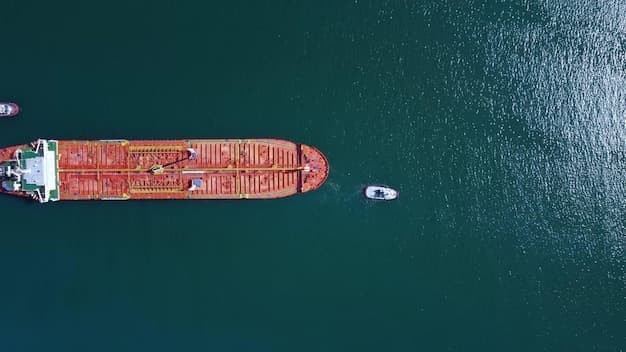
On February 28, 2026, US and Israeli forces launched military strikes on Iran—triggering the most significant disruption to petrochemical supply chains since the Red Sea crisis began in November 2023. Within hours, an IRGC senior official declared the Strait of Hormuz closed, container vessels made U-turns, and major carriers began suspending transits.
For polyethylene buyers, this is not a geopolitical abstraction. According to CCFGroup’s analysis of China Customs data, Iran is China’s fourth-largest PE supplier, accounting for 1.125 million tons in 2025—8.39% of total imports. With that supply now at risk, Brent crude surging past $80/bbl, and two major maritime chokepoints simultaneously disrupted, the global PE market has entered a period of acute dislocation.
But dislocation creates opportunity. Chinese traders sitting on record-high domestic inventory are already redirecting volumes to supply-starved markets in Southeast Asia and Brazil, where a convergence of anti-dumping duties and Middle Eastern supply disruptions has created some of the widest PE arbitrage windows in years.
This analysis covers the shipping disruption, PE supply impact, cost pressures, and re-export opportunities—with sourced data from ICIS, Argus Media, S&P Global, Reuters, CCFGroup, and official carrier advisories.
Dual Chokepoint Crisis: Strait of Hormuz and the Red Sea
The military escalation arrived more than 830 days into the Red Sea crisis, which began on November 19, 2023, when Houthi forces seized the Galaxy Leader. More than 100 merchant vessels have since been targeted. Any prospect of near-term normalization has evaporated: two senior Houthi officials told international media that the group has decided to restart missile and drone operations against maritime traffic, ending roughly three and a half months of relative calm.
The Strait of Hormuz then compounded the crisis. Iran’s Islamic Revolutionary Guard Corps issued an explicit threat:
“The strait is closed. If anyone tries to pass, the heroes of the Revolutionary Guard and the regular navy will set those ships ablaze.”
— Ebrahim Jabari, Senior Adviser to the IRGC Commander-in-Chief, Al Jazeera, March 2, 2026
The carrier response was immediate:
- Hapag-Lloyd became the first carrier to officially suspend all Strait of Hormuz transits until further notice.
- Maersk rerouted ME11 and MECL services around the Cape of Good Hope and issued an emergency freight increase for UAE, Qatar, Saudi Arabia, Bahrain, Kuwait, and Iraq effective March 3. ME11 is a Gemini Cooperation service shared with Hapag-Lloyd, which markets it as the IMX.
- CMA CGM suspended all Suez Canal passage until further notice, rerouting vessels via the Cape of Good Hope. Three of its services—MEDEX, BEX2, and INDAMEX—had been actively using the Red Sea–Suez corridor.
- All container vessels approaching the Strait of Hormuz made U-turns within hours of the closure announcement. AIS data captured dozens of vessels halting transits or reversing course.
- The UK Maritime Trade Operations (UKMTO) issued Advisory #3 warning of significant military activity in the Arabian Gulf, Gulf of Oman, North Arabian Sea, and Strait of Hormuz.
The scale of the disruption is stark. According to S&P Global, shipping activity through the Strait of Hormuz dropped 40–50%, with 240 ships clustering near the closed waterway. Bloomberg reported that traffic reached “a near standstill.”
Transhipment Hub Congestion and Freight Surge
With carriers diverting vessels away from both chokepoints, transhipment volumes are surging at regional hubs already handling overflow from years of Red Sea rerouting:
| Hub | Region | Risk Level | Role |
|---|---|---|---|
| Salalah | Oman | High | Major Middle East transhipment hub |
| Colombo | Sri Lanka | High | South Asia relay point |
| Tanjung Pelepas | Malaysia | High | SE Asia transhipment gateway |
| Singapore | Singapore | Moderate–High | Global mega-hub, already near capacity |
| Fujairah | UAE | Moderate | Gulf overflow port |
| Sohar / Duqm | Oman | Moderate | Alternative Gulf ports |
Carriers have introduced war risk premiums of $120/ton on affected routes, according to ICIS. Argus Media reports CMA CGM has imposed an emergency conflict surcharge of $3,000 per 40-foot container on Middle East–Atlantic corridors, with initial guidance near $1,500/TEU.
1.125 Million Tons of Iranian PE at Risk
Iran holds a position in China’s PE import portfolio that is difficult to replace quickly. According to CCFGroup’s analysis of China Customs data (March 2, 2026):
| Metric | Value | Source |
|---|---|---|
| Iran’s rank among China’s PE suppliers | 4th largest | CCFGroup |
| Volume shipped to China (2025) | 1.125 million tons | CCFGroup / China Customs |
| Share of China’s total PE imports | 8.39% | CCFGroup / China Customs |
| Volume shipped to China (2024) | 1.33 million tons | CCFGroup / China Customs |
| Share of China’s LDPE imports | 14.1% (407,450 mt) | S&P Global Platts |
Iran’s footprint is particularly dominant in the LDPE sector. According to S&P Global Commodity Insights, Iran supplied 407,450 metric tons of LDPE to China, making up 14.1% of total LDPE imports. CCFGroup identifies key mainstream Iranian grades with high market liquidity including 2420H, 2102TX00, and 2420E02 in the LDPE sector.
Finding replacements will not be straightforward:
“Even if products from other origins could potentially fill the supply gap, product specification differences, certification barriers, long-term customer relationships, and habitual preferences among factories will make it extremely difficult to find sources that can fully replace mainstream Iranian grades in the short term.”
— CCFGroup market analysis, March 2, 2026
The disruption extends beyond Iran. QatarEnergy has declared force majeure and halted downstream production including polymers. According to C&EN (Chemical & Engineering News), SABIC’s Yanbu plants on Saudi Arabia’s west coast may partially bypass the Strait of Hormuz by exporting via the Red Sea—but the Red Sea itself remains a risk zone due to Houthi threats.
Oil and Naphtha Surge Drives PE Production Costs Higher
The strikes sent energy markets into risk-premium mode. Brent crude was trading around $67–73/bbl in late February. After the strikes, it surged dramatically:
| Date | Brent Price | Source |
|---|---|---|
| Feb 27 (pre-strike) | $73/bbl | Reuters |
| March 1 (post-strike) | ~$80/bbl (+10%) | Reuters |
| March 2 | $79.45/bbl | CNBC |
| March 3 | $81.40/bbl settled; briefly past $85 | Reuters, ICIS |
The naphtha feedstock impact is even more direct for Asian PE producers. According to S&P Global, the Platts CFR Japan naphtha marker jumped $78.875/mt in a single session to $715.50/mt on March 3. ADI Analytics estimates that approximately 1.2 million barrels per day of naphtha transits the Strait of Hormuz, with 72% destined for Northeast Asia. ICIS notes that more than 60% of Asia’s seaborne naphtha demand was covered by Middle Eastern supply in 2025.
Mideast Gulf naphtha premiums have surged to $42.75/ton—a two-year high, according to Argus Media.
For PE production, the cost transmission is direct: a $10/bbl oil price increase typically lifts naphtha-route PE production costs by 300–500 RMB/ton, according to Chinese industry analysis citing Caixian Futures. With Brent having moved more than $10/bbl above pre-crisis levels, naphtha-based PE producers in China, South Korea, and Japan face a cost increase of at least 300–500 RMB/ton—at a time when domestic demand offers no pricing power to pass it through.
China’s Domestic Squeeze Creates a Re-Export Weapon
China’s PE market was already under pressure before the strikes. Post-Lunar New Year demand recovery has been sluggish, with downstream agricultural film, packaging, and pipe producers not yet fully resuming operations. Reuters reports that China’s factory activity shrank for the second consecutive month in February.
According to Oilchem (Longzhong Information), combined PE and PP inventories at Sinopec and PetroChina reached 940,000 tons as of February 24, 2026—up 480,000 tons from pre-holiday levels, a 104% increase. ICIS characterizes the margin environment as a “crisis”, with HDPE spreads far below historical norms.
Rising production costs colliding with record inventory and weak demand create a severe margin squeeze for Chinese producers. But for Chinese traders and exporters, this same dynamic creates a strategic opening.
With Middle Eastern supply tightening globally and becoming vastly more expensive due to freight and insurance costs, global buyers are scrambling for alternatives. Chinese traders with access to domestic inventories or bonded cargoes can redirect those volumes to supply-starved markets at margins attractive for seller and buyer alike.
This is not theoretical. The arbitrage is already playing out in real time.
Re-Export Arbitrage: Vietnam and Southeast Asia
Southeast Asian buyers returning from the Lunar New Year holidays are facing a supply pinch. Middle Eastern producers have retracted their March offers amid the crisis, and war risk premiums of $120/ton on shipping have made Gulf-origin cargoes significantly less competitive.
Chinese-origin material—already priced aggressively due to domestic oversupply—has a decisive cost advantage. Argus Media documented this re-export pattern as early as mid-2025, when higher SE Asian LLDPE prices attracted sporadic offers for Chinese-origin LLDPE into Vietnam.
The Middle East crisis has dramatically widened this arbitrage. Pre-crisis pricing estimates:
| Origin | Grade | Approx. CFR Vietnam (pre-crisis) | Competitive Position |
|---|---|---|---|
| Chinese bonded/domestic | LLDPE Butene | $810–$840/mt | Most competitive |
| SE Asian restarts | LLDPE Butene | $865–$895/mt | Competitive |
| Middle East (pre-crisis) | LLDPE Butene | $870–$910/mt | Under pressure |
Post-crisis, these prices have moved sharply higher. Polymerupdate reports LDPE film CFR SE Asia has surged +$110/mt since the strikes. But the relative advantage of Chinese-origin material has widened further, as Gulf-origin cargoes now carry additional war risk and surcharge costs that Chinese material does not.
Market sources indicate specific grades—including SABIC 218WJ (LLDPE), a butene grade with established import flows into Vietnam—are finding viable re-export windows at competitive price points.
This window is open now but will likely narrow as more traders recognize the opportunity and as Southeast Asian PE capacity restarts—nearly 1.9 million tons coming online in Q1 2026—add fresh regional supply.
Brazil: The Perfect Storm for Asian PE Cargoes
Brazil is currently the most compelling diversion market for PE globally. Two powerful forces are converging:
- The anti-dumping duty crisis: Brazil’s trade authority (Decom) has calculated a dumping margin of $734.32/mt on US PE imports—79.3% above the current provisional duty of $199.04/mt. A final decision by Gecex is expected by May 14, 2026. Brazilian buyers have responded by canceling annual contracts for US PE and suspending new orders to avoid retroactive liability.
- The Middle East supply squeeze: Gulf-origin cargoes that were beginning to fill the US void now face war risk premiums and surcharges. S&P Global reports that the war “paralyzed polymer transactions from Asia and Middle East to the Americas.” Meanwhile, Braskem raised all PE grades by R500/t (~$95/t) on March 2 in anticipation of tightening supply.
The result is a dual supply vacuum that Asian-origin PE is positioned to fill. Pre-crisis, LLDPE CFR Brazil was trading at $935–$948/mt—consistent with the $900–$960/mt range tracked in our February PE market analysis. Post-crisis, landed costs from all origins are rising, but Chinese-origin material retains a relative advantage as it avoids both the US anti-dumping risk and the Gulf freight/insurance surcharges.
According to Argus Media data from Comexstat, Brazil’s PE import origins in 2025 were: US at 66% (down from 71%), Argentina at 15% (up from 11%), Saudi Arabia at 4%, Canada at 3.4% (down 40% YoY), and Egypt at 3.3%. The shift away from US-origin PE is already underway—the Middle East crisis accelerates it.
For full context on Brazil’s anti-dumping investigation, origin diversification, and SE Asian capacity restarts, see: Global PE Trade Realignment 2026.
What PE Buyers Should Do Now
The convergence of the Strait of Hormuz closure, ongoing Red Sea crisis, Iranian supply disruption, and Brazil’s anti-dumping duties has created a multi-front supply shock. Here is what PE buyers and traders should be acting on immediately:
- Audit your Iranian PE exposure. If your supply chain includes Iranian-origin LDPE or other PE grades, identify the volume at risk and begin qualifying alternatives now. CCFGroup warns that specification differences and certification barriers make short-term substitution “extremely difficult.” Do not wait for the conflict to resolve—insurance repricing alone will keep Iranian PE structurally more expensive for months.
- Avoid single-chokepoint routes. Any supply chain that depends on the Strait of Hormuz or Red Sea–Suez is exposed to dual disruption. With Hormuz traffic down 40–50% and 240 ships clustering near the waterway, diversify routes and build schedule buffers.
- Act on the SE Asian re-export window. Chinese-origin LLDPE into Vietnam and broader SE Asia is the most cost-competitive option. But this window will narrow as 1.9 million tons of regional capacity restarts normalize supply.
- Lock in Brazil-bound cargoes. The dual US void (anti-dumping) and Middle East disruption have created a rare convergence. Margins for Asian PE into Brazil are wide, but they will compress as more traders redirect volumes.
- Price freight with crisis buffers. War risk premiums of $120/ton and emergency surcharges of $3,000/feu are already in effect. Expect longer transit times and hub congestion. Factor these into every deal.
- Monitor daily. This situation evolves hour by hour. Track carrier advisories from Hapag-Lloyd, Maersk, and CMA CGM, plus UKMTO advisories and insurance market signals.
How Syntex America Helps You Navigate the Crisis
When two major chokepoints close simultaneously, the trader who already sources from multiple origins does not scramble. Syntex America supplies PE—including HDPE, LLDPE, and LDPE—sourced from petrochemical producers across the Americas, Asia, and the Middle East.
When the Strait of Hormuz disrupts Gulf-origin supply, your Syntex shipments pivot to alternative origins without renegotiating contracts or qualifying new producers from scratch. When Red Sea rerouting extends lead times, our freight forwarding team adjusts logistics in real time.
Syntex also offers 30–90 day payment terms—critical during periods of market volatility when spot prices move daily and cash flow protection matters most.
Talk to our trading team today about securing PE supply from crisis-resilient origins. Or explore our full trading services, freight forwarding, customs clearance, and financing options.
Frequently Asked Questions
Following US-Israeli military strikes on February 28, 2026, Iran's IRGC declared the Strait of Hormuz closed and threatened to attack passing vessels (Al Jazeera, March 2). Hapag-Lloyd immediately suspended all transits, Maersk rerouted ME11 and MECL services around Africa, and CMA CGM suspended all Suez Canal passage. S&P Global reports Hormuz shipping activity dropped 40-50%, with 240 ships clustering near the waterway. War risk premiums of $120/ton (ICIS) and emergency surcharges of $3,000/feu (Argus Media) are now in effect. This compounds the Red Sea crisis (ongoing since November 2023), creating dual chokepoint risk for PE shipments.
According to CCFGroup's analysis of China Customs data (March 2, 2026), Iran is China's fourth-largest PE supplier, shipping 1.125 million tons in 2025 — 8.39% of total PE imports. This was down from 1.33 million tons in 2024. Iran has a particularly dominant position in the LDPE sector: S&P Global Commodity Insights reports Iran supplied 407,450 metric tons of LDPE to China, making up 14.1% of total LDPE imports. Key Iranian grades at risk include 2420H, 2102TX00, and 2420E02.
Two primary windows have opened. In Southeast Asia, Chinese-origin LLDPE Butene was trading at $810-$840/mt CFR Vietnam pre-crisis — well below Middle Eastern alternatives. Argus Media documented this re-export pattern from mid-2025. Post-crisis, LDPE film CFR SE Asia has surged +$110/mt (Polymerupdate), but Chinese material's relative advantage has widened as Gulf cargoes now carry $120/ton war risk premiums. In Brazil, a dual supply vacuum exists: US PE is halted due to a $734.32/mt dumping margin (ICIS, Argus, S&P Global), and Gulf supply faces freight/insurance surcharges. Braskem raised all PE grades by R500/t (~$95/t) on March 2 (Argus).
Brent crude surged from ~$73/bbl pre-strike to over $81/bbl by March 3, briefly touching $85/bbl (Reuters, CNBC, ICIS). The Platts CFR Japan naphtha marker jumped $78.875/mt in a single session to $715.50/mt (S&P Global). ADI Analytics notes 1.2 million barrels/day of naphtha transits Hormuz, with 72% destined for NE Asia. A $10/bbl oil increase lifts naphtha-route PE costs by 300-500 RMB/ton (Caixian Futures). Combined PE and PP inventories at Sinopec and PetroChina reached 940,000 tons as of February 24, up 104% from pre-holiday levels (Oilchem). QatarEnergy declared force majeure and halted polymer production (C&EN).
Immediate actions: (1) Audit Iranian PE exposure — CCFGroup warns substitution is 'extremely difficult' due to specification and certification barriers. (2) Diversify away from single-chokepoint routes through Hormuz or Red Sea-Suez. (3) Act on the SE Asian re-export window while Chinese-origin LLDPE remains most competitive. (4) Lock in Brazil-bound cargoes before arbitrage margins compress. (5) Factor $120/ton war risk premiums (ICIS) and $3,000/feu surcharges (Argus/CMA CGM) into freight budgets. (6) Monitor carrier advisories from Hapag-Lloyd, Maersk, CMA CGM, and UKMTO daily.
Brazil's Decom calculated a dumping margin of $734.32/mt on US PE — 79.3% above the current provisional duty of $199.04/mt (ICIS, Argus, S&P Global). A final decision by Gecex is expected by May 14, 2026. ChemOrbis reports Brazilian buyers have canceled annual US PE contracts. Gulf-origin cargoes were filling this void, but the Hormuz closure and war risk surcharges have disrupted that alternative. S&P Global reports the war 'paralyzed polymer transactions from Asia and Middle East to the Americas.' The result is a dual supply vacuum where Asian-origin PE is the most viable option.


