Global PE Trade Realignment 2026: Duties, Capacity, and New Routes
Brazil's $734/ton anti-dumping duty proposal, China's 29% PE export surge, and 1.9M tons of SE Asian restarts are redrawing the global polyethylene supply map.

Pedro Zaccaria
Chief Technology Officer
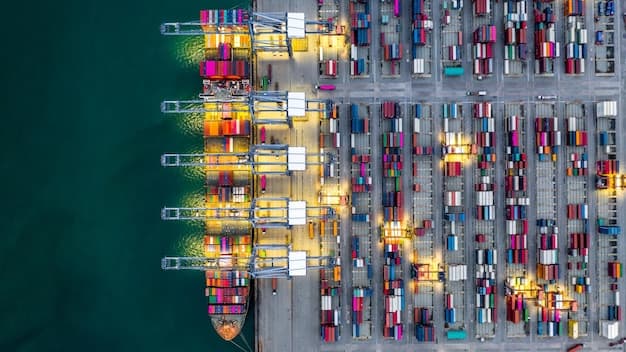

The Polyethylene Supply Map Is Being Redrawn
If you buy polyethylene, the trade routes you relied on twelve months ago may no longer work. Anti-dumping duties in Latin America are closing a major US export corridor. China is flooding global markets with record-low-priced resin. Southeast Asian plants are restarting nearly 1.9 million tons of capacity. And unfamiliar supply channels are introducing quality risks that did not exist when your sourcing was stable.
This analysis covers the key forces reshaping PE trade flows in early 2026—with pricing data, capacity numbers, and practical implications for converters and distributors managing procurement through the disruption.
Brazil’s Anti-Dumping Duties: A $734/Ton Wall Against US Resin
Brazil’s escalating anti-dumping (AD) action is the most immediate disruption to Western Hemisphere PE trade. In August 2025, Brazil imposed provisional duties of $199/ton on US polyethylene and $238/ton on Canadian resin after finding that North American imports were causing material injury to domestic producers.
That was just the beginning. In early 2026, Decom (Brazil’s trade authority) recommended increasing the duty to $734/ton—approximately 79% above previous levels. A final decision is expected by May 2026.
The stakes are high: Brazil is the third-largest export destination for US PE, absorbing roughly 10% of total US polyethylene exports. Buyers are already cutting inquiries for US-origin material to avoid future duty liability.
Current Brazil PE Prices (CFR, Early 2026)
| Grade | Price Range (CFR Brazil) | Trend |
|---|---|---|
| LLDPE Butene | $900–$960/mt | +$25/mt |
| LDPE Film | $1,050–$1,100/mt | +$15/mt |
| HDPE Film | $1,035/mt | +$100/mt (severe shortage) |
“Brazil has to be filled in with something, and that will starve other markets. I think you will see a shifting of trade routes, and the markets will still balance.”
— US PE exporter, as reported by Argus Media, February 2026
Where Brazilian Buyers Are Pivoting
With the US route closing, Brazilian converters are diversifying fast:
- Argentina: Dow Argentina benefits from Mercosur tax exemptions—the top replacement candidate for buyers who want to stay regional.
- Southeast Asia: Thailand and Vietnam are being evaluated as key substitutes. Duty-free LLDPE at $865–$895/mt CFR SE Asia, plus $69–$86/mt freight to Santos, yields a landed cost of roughly $934–$981/mt—competitive against rising domestic prices.
- Middle East: Egypt and Gulf producers are positioned as secondary alternatives.
- China: Record-low pricing makes Chinese PE attractive for price-sensitive buyers, though longer lead times and quality variability require extra diligence.
The pattern is clear: when policy disrupts an established trade route, buyers diversify immediately. If your supply chain touches Latin America, contingency sourcing from alternative origins is no longer optional.
China’s Export Surge: 11.1 Million Tons and Counting
While the US faces shrinking export windows, China’s petrochemical industry has reached a scale that makes it the dominant supply force in global PE markets.
The numbers are striking: in the first seven months of 2025 alone, China’s commodity polymer exports surged 29% year-over-year to 11.1 million tons. China’s total chemical industry revenue exceeded 14.5 trillion yuan in 2024—approximately 42% of global chemical output. Chinese polymer prices have dropped to five-year lows, often more than $1,000/ton below their 2021–2022 peaks.
“Few producers are willing to voluntarily cut production and hand market share to competitors—especially in segments dominated by thousands of small and medium-sized firms.”
— Qiu Dengke, Secretary General, Guangzhou Association of New Energy Industry, C&EN (Chemical & Engineering News), January 2026
What This Means for Your Procurement
China’s government targets raising chemical self-sufficiency from 85% to over 90% by 2026. As domestic production of HDPE, LLDPE, and specialty chemicals outpaces internal demand, the exportable surplus keeps growing. For PE buyers, this translates to a persistent downward pressure on global prices—especially for commodity grades.
The opportunity: lower input costs on standard PE grades. The risk: Chinese origin resin entering your market at prices that undercut domestic producers, potentially triggering AD actions similar to Brazil’s.
New Trade Corridors Accelerating
China now exports more goods to developing economies than to the EU, US, and Japan combined. Three developments are accelerating this shift:
- ASEAN: The ACFTA 3.0 Upgrade Protocol (signed October 28, 2025) adds specific “Supply Chain Connectivity” commitments to China’s already-dominant ASEAN trade partnership.
- Middle East: Saudi Aramco and Sinopec signed a $10+ billion framework for the Yanbu Refinery expansion, with 60% of high-end products destined for China—deepening a reciprocal industrial relationship beyond simple oil-for-goods trade.
- BRICS+: Expanded members are pursuing the “Strategy for BRICS Economic Partnership 2025,” focused on supply chain connectivity and bottleneck identification.
Southeast Asia: 1.9 Million Tons of Capacity Coming Back Online
After extended maintenance shutdowns, Southeast Asian PE producers are restarting at scale. This matters for buyers globally because it adds fresh supply to a market already navigating price volatility and trade route disruptions.
| Country | Facility | Capacity | Status (Feb 2026) |
|---|---|---|---|
| Malaysia | PRefChem LLDPE | 350 kt/yr | Restarted |
| Malaysia | PRefChem HDPE | 400 kt/yr | Coming online |
| Thailand | PTT No. 1 LLDPE | 400 kt/yr | Restarted (Feb 4) |
| Indonesia | Chandra Asri (2 HDPE + 2 LLDPE) | ~736 kt combined | Expected mid-Feb |
SE Asia PE Pricing (CFR, Early 2026)
| Grade | Duty-Free CFR SE Asia | Trend |
|---|---|---|
| LLDPE Butene | $865–$895/mt | Rising |
| HDPE Film | $865–$920/mt | Rising |
| Metallocene LLDPE | $1,050–$1,080/mt | Stable |
| LDPE Film (Dutiable) | $975–$1,000/mt | Slightly softer |
Current prices are being pushed up by strengthening naphtha markers in Asia-Pacific. But with nearly 1.9 million tons of capacity restarting in February, the bullish momentum may face resistance later in the month as fresh supply enters the market. For Vietnam specifically, LLDPE Butene is trading at $810–$840/mt CFR with steady restocking demand.
The buyer’s window: If you need to lock in SE Asian supply as a hedge against Latin American or US disruptions, the next 4–6 weeks offer a procurement opportunity before post-restart supply fully normalizes pricing.
2026–2030 Outlook: More Capacity, Shifting Export Maps
These trade disruptions are unfolding against a backdrop of substantial global capacity growth that will reshape sourcing economics for years. The global plastics market is expected to grow at a 2.6% CAGR from 2026 to 2030, with PE and PP accounting for more than 60% of total demand volume.
What this means for your sourcing strategy over the next five years:
- More options from Asia: China and India together account for more than half of upcoming global plastics capacity additions through 2030. Expect persistent downward price pressure on commodity PE grades.
- US and Middle East strengthen as exporters: New capacity in these regions will target markets where European and Latin American producers have historically dominated.
- Europe becomes more import-dependent: European converters who aren’t building alternative supply relationships now will face tighter competition for available imports.
- Africa and Southeast Asia drive demand growth: Rising domestic consumption in India, ASEAN, and Africa creates new markets—and new competitors for available global supply.
The top three plastics-producing countries in 2025 were China, the United States, and Saudi Arabia. Major capacity additions through 2030 include projects from Reliance Industries (India), Zhejiang Hengyi Group (China), and Oriental Energy Resources (China).
When Supply Routes Shift, Quality Risk Spikes
Here is an underappreciated risk that matters right now: when trade disruptions force you to source from unfamiliar origins, you are more likely to encounter resin that is not what the seller claims it is.
The “Prime Virgin in Plain Packaging” Problem
Once resin is removed from its original manufacturer packaging, all identifying information disappears—lot numbers, grade markings, producer identification. At that point, the material can be labeled as any grade from any manufacturer. Original certifications become meaningless because the lot numbers cannot be matched.
There are legitimate reasons for plain packaging: silo cleanouts, damaged boxes, warehouse transfers. But the risk is real: some operators buy off-grade material, repackage it in plain boxes, and sell it as “prime.”
Two Questions That Protect You
- “Why is this material in plain packaging?” There is always a reason. If the seller cannot give you a clear, verifiable one, walk away.
- “Do you have independent test data?” Test data reveals the actual polymer composition and properties regardless of what the packaging says. This is the only reliable way to verify what you are buying.
The general rule: if the price looks too good, there is a reason. In a market where established supply channels are breaking and buyers are exploring unfamiliar origins, this diligence is the difference between securing affordable resin and receiving off-grade material that shuts down your production line.
What to Do Now: A Sourcing Checklist for 2026
The convergence of anti-dumping duties, capacity restarts, and Chinese export surges creates both risk and opportunity. Here is what PE buyers should be acting on today:
- Diversify supply origins. If you depend on a single corridor—especially one touching the US-to-Latin America route—you are exposed. Build relationships with suppliers who source from multiple regions and can pivot when policy shifts.
- Prepare for the Brazil May decision. A $734/mt duty on US PE would reshape Latin American trade flows for years. Have contingency sourcing locked in before the ruling.
- Watch the SE Asian restart window. Nearly 1.9 million tons of PE capacity restarting in Q1 2026 could ease bullish pricing. Act in the next 4–6 weeks before the market absorbs the new supply.
- Verify every unfamiliar shipment. New origins mean new quality risks. Require independent test data and clear chain-of-custody documentation. Do not accept plain packaging without a verified explanation.
- Plan for structural overcapacity. With more than half of global new capacity coming from China and India through 2030, commodity PE pricing will trend lower. Factor this into long-term procurement contracts.
How Syntex America Helps You Navigate the Disruption
When trade routes break, the converter who already has a multi-origin supplier does not scramble. Syntex America supplies PE—including HDPE, LLDPE, and LDPE—sourced from petrochemical producers across the US, Middle East, Asia, and Latin America.
What makes this different from buying direct: Syntex handles the sourcing complexity so you do not have to. When Brazil’s AD duties shut down one route, your supply shifts to another origin without you renegotiating contracts or qualifying new producers from scratch.
Critically, Syntex offers 30–90 day payment terms—you receive the resin, use it in production, and pay afterward. When resin represents 75–85% of your final product cost, this financing flexibility directly protects your cash flow during periods of market volatility.
Talk to our trading team about securing PE supply from alternative origins before the Brazil ruling and SE Asian restarts reshape availability. Or explore our full trading services, freight forwarding, and financing options.
Frequently Asked Questions
Brazil imposed provisional anti-dumping duties of approximately $199/ton on US PE and $238/ton on Canadian resin in August 2025. In early 2026, Brazil's trade authority (Decom) recommended increasing the duty to $734/ton (approximately 79% above previous levels). A final decision is expected by May 2026. Brazil is the third-largest US PE export destination, absorbing roughly 10% of total US polyethylene exports.
In the first seven months of 2025, China's commodity polymer exports surged 29% year-over-year to 11.1 million tons, driven by record-low domestic prices. China's total chemical industry revenue exceeded 14.5 trillion yuan in 2024, accounting for approximately 42% of global chemical output. Chinese polymer prices have dropped to five-year lows, often more than $1,000/ton below 2021-2022 peaks.
Nearly 1.9 million tons of combined PE capacity is restarting across Southeast Asia in early 2026: PRefChem's 350 kt/yr LLDPE and 400 kt/yr HDPE units in Malaysia, PTT's 400 kt/yr LLDPE plant in Thailand (restarted February 4), and Chandra Asri's two HDPE and two LLDPE plants in Indonesia with approximately 736 kt combined capacity (expected mid-February).
The global plastics market is expected to grow at a 2.6% CAGR from 2026 to 2030. PE and PP account for more than 60% of total demand volume. China and India together represent more than half of upcoming global capacity additions. The Middle East and US are expected to strengthen as exporters, while Europe becomes more import-dependent.
Ask two key questions: (1) Why is the material in plain packaging? There must be a legitimate reason. (2) Do you have independent test data? Test data reveals actual polymer composition and properties regardless of packaging claims. If the price is unusually low, there is always a reason. Require chain-of-custody documentation and independent test results for every unfamiliar shipment.
Brazilian buyers are diversifying away from US-origin PE toward: Argentina (Dow Argentina benefits from Mercosur tax exemptions), Southeast Asia (Thailand and Vietnam with duty-free LLDPE at $865-$895/mt plus $69-$86/mt freight, yielding landed costs of $934-$981/mt), Middle Eastern producers including Egypt, and China at record-low prices. This shift has created arbitrage opportunities for Asian and Middle Eastern exporters.


