Virgin vs Recycled Resin Price Gap 2026: PE, PP and PET Buyer Guide
Food-grade recycled PET matched virgin PET's price in Southeast Asia in October 2026. Elsewhere the gap turns on grade, color and region. Find your break-even.

Pedro Zaccaria
Chief Technology Officer

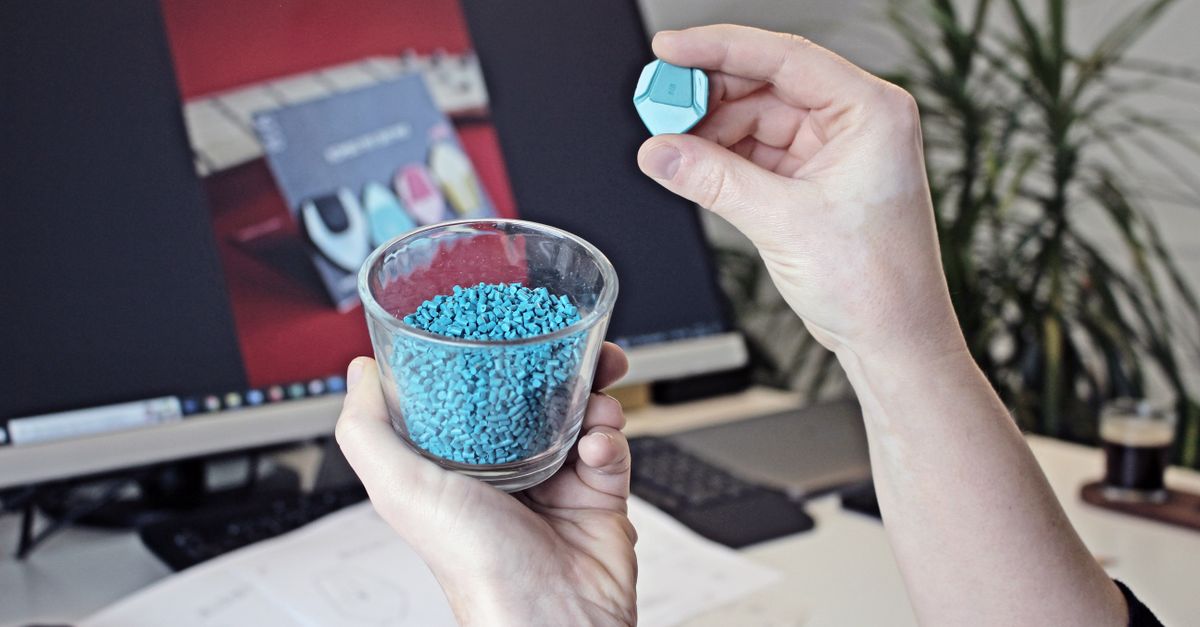
On Wednesday, October 7, 2026, Platts assessed a tonne of bottle-grade virgin PET loaded at a Southeast Asian port at $1,240. Then it assessed a tonne of food-grade recycled PET pellets on the same terms. Also $1,240. Virgin had climbed $75 since September 2 on crude and feedstock costs, with the Strait of Hormuz still restricted; recycled had added $10. For the first time since May, S&P Global reported, the spread was zero.
Parity, it turns out, has an address, a date and a grade. If you buy in São Paulo or Houston, that print is a thin slice: food-grade pellets against bottle grade, free on board in Southeast Asia, one Wednesday in October. What you pay for recycled resin (mechanically recycled flake or pellet) and PCR (plastic recovered after consumer use) depends on grade, color, duty and delivery terms.
In Brazil, the 20% import duty adds US$74 per US$1,000 of customs value to imported virgin resin compared with the 12.6% Common External Tariff, and US$200 compared with a 0% origin such as Mercosur, Colombia, Chile or Egypt. If you buy virgin from a 20% origin, the duty alone narrows any recycled premium.
So before you change your resin mix, you need four answers: what moves the gap, how it differs for PET, HDPE, PP and LDPE, what mandates and taxes make recycled content worth where you sell, and the break-even spread your line needs before recycled is cheaper per good part.
Key Takeaways — October 23, 2026
- Parity, with a basis. Food-grade rPET pellets and bottle-grade virgin PET both printed $1,240/mt FOB Southeast Asia on October 7, the first zero spread since May (Platts; Table 1).
- Oil sets the sign. European rPET carried a premium of EUR 600–700/t or more over virgin PET in October 2025 (BIR); by April 13, 2026, rPET flakes were EUR 300/t cheaper than virgin PET (Argus; timeline).
- Grade and color decide the rest. ICIS reports the US recycled-to-virgin PP ratio near its historical 1.8x, without saying which grade or index it tracks. At the April peak, Argus said buyers of LDPE and LLDPE for black or dark film could save more than 50% by using recycled pellets, before processing costs (grade by grade).
- Mandates pay only where they apply. Brazil’s manufacturers and importers of plastic packaging must reach 22% recycled content in 2026 and 24% in 2027 under Decree 12,688/2025. Food packaging is exempt; the decree does not name beverages, the environment ministry’s guidance on scope is still being clarified, and there are no tradable recycled-content credits (Brazil; rules table).
- Price per good part, not per tonne. Recycled resin pays when its discount to virgin, plus whatever recycled content earns your packaging, exceeds the extra cost of making a good part with it: yield and scrap, cycle time, additives and color, QC testing and certification, plus any freight, duty, payment-term and working-capital gap between the two purchases. Put both prices on the same incoterm first (break-even worksheet).
Is recycled resin cheaper than virgin resin in October 2026?
Only for some grades, and not everywhere. Food-grade rPET pellets matched bottle-grade virgin PET at $1,240/mt FOB Southeast Asia on October 7 (Platts). ICIS reports the US recycled-to-virgin PP ratio back near its historical 1.8x (August 26). At April’s peak, European rPET flakes ran EUR 300/t below virgin PET (Argus). Check your grade, color, form and delivery terms.
Table 1 computes a spread only where both legs share source, date and basis; every other row is shown as its publisher reported it.
| Market and basis | Comparison | Virgin leg | Recycled leg | Recycled minus virgin | Date | Source |
|---|---|---|---|---|---|---|
| Southeast Asia, FOB | Bottle-grade virgin PET vs food-grade rPET pellets | $1,240/mt | $1,240/mt | $0 (computed, same source, date and basis) | Oct 7, 2026 | S&P Global (Platts) |
| Southeast Asia, FOB | Same pair, five weeks earlier | $1,165/mt | $1,230/mt | +$65/mt (derived from S&P’s reported changes) | Sept 2, 2026 | S&P Global (Platts), same report |
| US | Recycled vs virgin PP | Not published | Not published | Ratio near 1.8x (as reported; grade and index not specified; rPP detail) | Aug 26, 2026 | ICIS via PlasticsToday |
| Europe, delivered NWE spot | rPET flake vs virgin PET resin | EUR 1,000–1,100/t | EUR 950–990/t | −EUR 80/t (as reported, converted to our sign) | Mar 6, 2026 | Argus |
| Europe, delivered NWE spot | Food-grade rPET pellets vs virgin PET resin | EUR 1,000–1,100/t | Not published | +EUR 340/t (as reported) | Mar 6, 2026 | Argus, same report |
| Europe, delivered NWE spot | rPET flakes vs virgin PET | Not published | Not published | −EUR 300/t (as reported; spring peak, not current; timeline) | Apr 13, 2026 | Argus |
| Europe, DDP NWE | Translucent rLDPE pellets vs virgin LDPE | Not published | Not published | −EUR 1,188/mt (Apr 15), then +EUR 8/mt (Jul 15) (as reported, Platts-calculated; film grades) | Apr 15 and Jul 15, 2026 | S&P Global (Platts) |
| Europe, DDP NWE | Natural vs grey rHDPE pellets | No virgin leg on this basis | Natural EUR 1,705–1,715/t; grey EUR 1,111–1,121/t | n/a, recyclate only (natural about EUR 600/t above grey) | End-June 2026 | OPIS |
| Brazil, domestic (form and tax basis not stated) | rPET vs virgin PET | No level published | No level published | Up to 25% above virgin (as reported, ratio only) | End-2025 (reported Apr 2, 2026) | Valor Econômico, citing ABIPET |
The Brazil row is thin because the data is: we found no tier-1 price series for virgin or recycled resin in Brazil, in reais or dollars. The same Valor report said that by early April virgin PET resin had risen more than 25% since January, and expected the gap to narrow; we found no figure for how far it has. ICIS’s Gustavo Kruger explains why Brazil needs its own series: “For virgin resin, Brazil represents barely 2% of global consumption, so international prices prevail. But the recycled market is completely connected to local factors,” he said at an ICIS event on April 16.
Why is there no single virgin–recycled price gap?
Because recycled resin is several products, each with its own market. Food-grade and non-food grades, natural and colored, bale, flake and pellet, FOB and delivered: each combination prices separately. A spread means something only when both legs share source, date, form, grade and incoterm; otherwise the difference measures freight and color, not recycled economics.
Argus’s March 6 numbers show the problem inside one market and one week. European rPET flake had slipped below virgin PET while food-grade rPET pellets still cost more than virgin (Table 1). A sheet maker and a bottle maker reading that report would reach opposite conclusions, and both would be right.
The October 7 report holds a second trap. A Malaysian recycler quoted by S&P Global said that “Good quality [R-PET] flakes about $900 can replace virgin $1300 resin” for some PET sheet producers. That $900 is one unnamed recycler’s flake price for sheet lines. Platts assessed pellets, a different product on a different basis, so the parity stands.
Color splits polyolefins the same way: on the OPIS Northwest Europe curve, natural rHDPE costs far more than grey (Table 1). Delivery terms finish the job. The OPIS curve is delivered duty paid and the Platts print is free on board, so the first already carries freight, duty and insurance that the second leaves to you.
Before you set a recycled offer against a virgin quote from your resin trader, put both on the same incoterm, grade and form. The grade-by-grade section takes HDPE, PP and LDPE one at a time. First, why the gap moves at all.
What makes the gap between virgin and recycled resin widen or close?
Virgin and recycled resin answer to different costs. Virgin follows crude, naphtha and ethane, so it moves with oil. Recycled follows bale supply, collection seasons, energy, labor, freight and mandate demand. In this guide the spread is recycled minus virgin, so a positive number is a recycled premium. When oil jumps and bales do not, that premium narrows.
The legs stay tethered all the same: converters who can run either grade walk away once the recycled premium gets too wide, and processing cost props recycled up. Inside that band, recycled prices are “all extremely correlated to what’s going on in virgin,” Andrea Bassetti, Americas team lead for plastics recycling at ICIS, told Resource Recycling in June.
How did the recycled vs virgin spread change from 2025 to October 2026?
It swung from a wide recycled premium to a record discount and back to zero. In October 2025, European rPET cost EUR 600–700/t or more above virgin PET (BIR). By April 13, 2026, European rPET flakes were EUR 300/t cheaper (Argus). By October 7, Southeast Asian food-grade pellets sat at parity. Read these as regimes, not one series.
- October 2025: a wide premium. With oil at $60–70, European converters kept shifting to virgin as the rPET–virgin PET gap exceeded EUR 600–700/t, Max Craipeau of Greencore Resources wrote in BIR’s October 2025 report. Platts put the European food-grade rPET pellet premium over virgin PET at $836/mt at its early-October peak. Two publishers, two bases, one sign.
- March–April 2026: virgin spikes. The Hormuz disruption lifted virgin far faster than recycled. European rPET flake dipped below virgin PET in early March (Table 1); by April 13 it was EUR 300/t cheaper, “the most skewed in favour of recyclates as a cheaper option since Argus began assessments” (Argus). Some European converters switched to recycled.
- May–August 2026: US bales collapse. Summer collection flooded the market: natural HDPE bales fell more than 50% and mixed-color PP bales about 60% from their May highs (ICIS via PlasticsToday, August 26). Those are bale prices. rHDPE natural pellets fell more slowly; rPET flake and pellet markets “remain relatively stable”.
- September–October 2026: oil back above $100. Virgin PET climbed until the Southeast Asian spread hit zero (October 7), US bales found a floor (below), and European rPET “weakened in September as seasonal demand faded and bale availability increased” (Craipeau, BIR, October 2026).
How do oil prices change the recycled vs virgin spread?
Oil moves the virgin leg first and the recycled leg barely at all. ICE Brent December futures settled at $113.17 on October 22, 2026. In Southeast Asia, virgin PET climbed on crude and feedstock costs through September while Thai PET bales held at $426–475/mt, which is how a recycled premium shrinks to zero.
Say which Brent you mean, because the two series disagree. The futures settlement comes from Xinhua’s exchange report; EIA’s spot series, Europe Brent FOB, read $115.22 on October 20 and ran about $20 above futures on October 13–15. EIA’s October outlook has spot Brent averaging $105 a barrel in the fourth quarter, $14 above its September forecast, and assumes Middle East oil flows “remain constrained through the fourth quarter of 2026”. Hormuz stays restricted: Lloyd’s List Intelligence counted at least 28 attacks or security incidents in the first half of October (what that does to PE offers).
US polyethylene is made from ethane, not naphtha, yet its price still follows oil. September US/Canada PE contracts “largely settled higher by 5¢/lb” (Argus); October’s 7¢/lb is only announced and November’s 5¢ is on the table.
Dow CEO Karen S. Carter gave the cost rule on the October 22 call: “Every $0.03 per gallon of ethane translates to about $0.01 per pound of polyethylene price needed to cover that cost.” Global PE prices are set by naphtha-based production, she said. A crude spike therefore lifts the global price faster than a US ethane cracker’s cost (ethane vs naphtha), and your virgin benchmark rises with oil anyway. Track the inputs with our weekly energy signals and feedstock-floor guide.
Why did recycled resin prices fall in summer 2026?
Mostly they did not; US bales did. Summer curbside collection swelled bale supply just as recyclers bought cautiously after the spring spike, so bale prices fell hard from their May highs. Recycled pellets followed more slowly, rPET flake and pellet held steady, and by September natural HDPE bales may have reached a floor (ICIS).
“Natural HDPE bale prices appear to be approaching a seasonal floor in August after falling more than 50% from May highs.”
“Demand remains relatively steady for higher-quality PCR tied to brand recycled-content commitments, while more discretionary applications remain vulnerable to substitution as lower virgin HDPE values improve the economics of virgin resin.”
— Craig Fisher, senior editor, ICIS, PlasticsToday, August 26, 2026
ICIS’s September 29 update, which spotted that possible floor, came with a catch: rHDPE natural pellets stayed under pressure “despite strength in spot virgin HDPE markets” (via PlasticsToday). Soft recycled pellets against firm virgin narrow any recycled premium from both ends. October’s US bale index confirmed the turn: natural HDPE bales averaged 40.25¢/lb, up from 36.50¢ in September (Resource Recycling). The lesson is timing: bale moves reach pellets late, so a summer bale collapse is a fall negotiating point, not a July invoice.
Are recyclers closing because virgin is cheap?
Largely, yes. BIR blamed cheap virgin resin on $60–70 oil for an estimated 1 million tonnes of recycling capacity lost in 2025 across Europe, Asia and the US. The spring 2026 spike brought relief, not recovery: by October, BIR’s reporters still described subdued demand and a processing-cost floor that recycled prices struggle to go below.
Other counts use different scopes and point the same way. Plastics Recyclers Europe counted a 50% rise in closures in preliminary 2025 data and nearly one million tonnes of European capacity lost over three years. In the US, seven PET reclaimers closed in 15 months, about a quarter of domestic PET recycling capacity (APR). In Brazil, Indorama’s Southeast Brazil R-PET unit has been offline since July 2025 (Platts).
Dearer virgin has not brought them back. “Higher feedstock costs are not evidence of a recovery in consumption,” Craipeau wrote in BIR’s October 2026 report. Henk Alssema, president of the BIR Plastics Division, reported that “Demand remains subdued” and that recyclers have little room to raise prices (BIR).
The floor is what reaches your price. “Sorting and processing costs continue to provide a floor below which recycled material prices are difficult to reduce,” Mahmoud Al Sharif wrote in BIR’s Middle East report. When virgin drops below that floor, recycled cannot follow, and each closure leaves one fewer qualified supplier for your RFQ.
| Driver | Moves virgin | Moves recycled | Signal to watch | Source |
|---|---|---|---|---|
| Crude oil and naphtha | Directly: naphtha-based production sets global PE prices (Dow); SE Asia virgin PET rose on crude and feedstock costs | Barely: SE Asia PET bales flat through September | ICE Brent settlement (daily); EIA outlook (monthly) | EIA; S&P Global |
| Ethane and natural gas | US PE cost: $0.03/gal of ethane needs about $0.01/lb of PE price | No direct link | US PE contract settlements (monthly) | Dow Q3 call; Argus |
| Collection season and bale supply | — | Summer curbside volumes swell bale supply; bales fall first, pellets lag | US bale index; ICIS monthly recycled pulse | ICIS via PlasticsToday; Resource Recycling |
| Energy, labor, logistics, processing | — | Set a cost floor under recycled prices | Recycler closures; diesel and energy | BIR (Al Sharif); BIR (October 2025) |
| Imports and duties | Brazil’s 20% duty raises the landed cost of imported virgin from origins without a tariff preference | Lower-cost imports squeezed European recyclers’ margins in June | Duty windows and origin rules; import flows | Brazil tariff guide; OPIS |
| Mandates and brand targets | Little direct effect | Create demand where they apply; food-contact exemptions shrink that demand | Regulatory calendar | Rules table in this guide |
Table 2 reads the same for every polymer. The prices it produces do not.
How does the recycled vs virgin spread differ for PET, HDPE, PP and LDPE?
By grade and color more than by region. Food-grade rPET sits closest to virgin, at parity in Southeast Asia. Recycled PP sits furthest: ICIS reports the US recycled-to-virgin PP ratio near its historical 1.8x. Natural rHDPE sat at a steep premium at the end of 2025, while dark film and pipe grades ran far below virgin in spring.

Color and food-contact status set your spread before the polymer does. In BIR’s October 2026 reports, Henk Alssema found high-quality natural and transparent LDPE and HDPE “holding up relatively better than mixed-colour industrial grades” (BIR). Kay Riksfjord called demand for ordinary recycled PE and PP “weak”, while “Food-grade rPET, natural rHDPE and certified post-consumer recycled (PCR) materials remained in demand” (BIR).
Table 3 maps each resin; for base properties, see our PE, PP, PVC, PET, PS and ABS comparison.
| Resin | Recycled form typically traded | Food-contact route | Where recycled is closest to virgin today | Main processing penalty | Source |
|---|---|---|---|---|---|
| PET (rPET) | Flake for sheet and fiber; food-grade pellets for bottles | EU: mechanical PET recycling is a recognized suitable technology. US: FDA no-objection letters cover one recycling process at a time. Brazil: PET-PCR is the only recycled polymer allowed in direct food contact | Food-grade pellets at parity, FOB Southeast Asia; flake below virgin in Europe in spring | Intrinsic viscosity (IV) loss when moisture enters extrusion; solid-state polycondensation restores it (vendor source, no figures) | European Commission; REACH24H; CETEA via Embanews; Starlinger viscotec |
| HDPE (rHDPE) | Natural, white and grey pellets | US: FDA letters, e.g. Coperion’s for rHDPE and rPP “in proportions up to 100%”. EU: polyolefin recycling is not yet an established suitable technology. Brazil: not allowed in direct food contact | Pipe grade at the spring peak; natural still near twice virgin at end-2025 (ratio) | Narrow MFI windows by end use; lot-to-lot swings in MFI, gels, color and odor | Packaging Insights; Argus; Platts; european-recycling.com; VLM Poliplast |
| PP (rPP) | Black and mixed-color pellets; food-contact-capable natural pellets are scarce | US: FDA letters (Coperion’s covers rPP). EU: not an established suitable technology. Brazil: not allowed in direct food contact | Not close in the US (ICIS ratio near 1.8x, grade not specified); one non-food high-MFI grade traded at a discount in Europe in early March | Thin supply from low curbside PP collection; color caps the PCR share | PlasticsToday (ICIS); Argus; Packaging Dive |
| LDPE/LLDPE film (rLDPE) | Grey and black pellets; natural film regranulate | Same polyolefin limits as HDPE | Dark film at the spring peak; translucent pellets near parity (a small premium) by July 15 | Gels, odor and color variation between lots | Argus; Platts; VLM Poliplast |
Is rPET cheaper than virgin PET?
In one market, one grade now costs the same. On October 7, 2026, Platts assessed food-grade rPET pellets at $1,240/mt FOB Southeast Asia, level with bottle-grade virgin PET on the same basis, after virgin rose on crude. In the US, rPET flake and pellet prices held while bales sank, and no public assessment shows parity there.
Europe crossed earlier: rPET flake carried a premium through 2025 and fell below virgin PET in early March (see the timeline), though Table 1 shows food-grade pellets lagged flake. Check which form you are being quoted.
The US splits feedstock from resin. In August, Corbin Olson of ICIS said flake pricing was “supported by import replacement costs, with elevated freight rates, limited domestic capacity, and tariff uncertainty” (PlasticsToday). A month later:
“Feedstock and resin markets remain disconnected, with seasonally oversupplied PET bale markets and low feedstock values contrasting against relatively resilient rPET flake and pellet pricing.”
— Corbin Olson, senior analyst, ICIS, quoted by PlasticsToday, September 29, 2026
How wide can the US premium get? NAPCOR told Argus the east-coast rPET pellet premium over virgin PET peaked at 38% in 2024 (published June 12, 2026). ICIS’s Andrea Bassetti expected the rPET premium to settle at 20% to 30% over virgin toward the end of 2026, a forecast rather than an assessment, as paraphrased by Resource Recycling.
Parity does not switch a line by itself. A Malaysian recycler told S&P Global that some PET sheet makers swap virgin pellets for rPET flake, but “only a few converters had machinery capable of switching”.
In Brazil, PET-PCR is the only recycled polymer cleared for direct food contact (CETEA via Embanews), and price decides the rest. Of buyers choosing between virgin and recycled of the same quality, ABIPET’s Auri Marçon said on April 28: “A escolha acaba sendo feita por aquela que apresenta o preço mais baixo no mercado” (our translation: the cheaper one wins) (ABIPET via PR Newswire).
Brazil’s food-packaging carve-out and the EU rule on imported rPET are in the mandates section; blending as a hedge is in the break-even section.
Is recycled HDPE cheaper than virgin HDPE?
Natural rHDPE is not: Platts called European natural rHDPE “nearly twice the price of virgin” at the end of 2025. Darker, lower-spec grades are a different market. At the spring 2026 peak, Argus said corrugated HDPE pipe makers could save 40% to 50% with recycled pellets, before extra processing costs.
Within rHDPE, the price ladder runs by color. On the OPIS curve for Northwest Europe, delivered duty paid, white rHDPE pellets sat at EUR 1,500–1,510/t at the end of June, between the grey and natural levels in Table 1 (OPIS). That curve is recyclate only; with no virgin price on the same basis, do not subtract one from it.
The pipe-grade discount opened early: by March 6 it was the widest “since Argus launched its recyclate assessment in October 2022” (Argus). In the US, natural HDPE bales and pellets moved out of step all summer; the bale section has the numbers.
A recycler selling into bottles “must hit a narrow MFI window”, says european-recycling.com: about MFI 0.3–0.6 for pressure pipe, 0.7–1.5 for bottle blow molding and 2–8 for injection. If your part runs at the tight end, check the MFI on every recycled lot certificate (here is what MFI controls) and keep a qualified virgin HDPE grade as your reference.
How much more does recycled PP cost than virgin PP?
In the US, about 1.8 times as much on the measure ICIS uses: it reports the recycled-to-virgin PP ratio back near its historical 1.8x, without saying which grade or index the ratio tracks. Food-grade rPP pellets eased slightly over the summer but stayed about 15% above year-ago levels, ICIS said on August 26, 2026 (PlasticsToday).
You will hear a rule of thumb that recycled plastics “command a 10 to 20 percent price premium over virgin resin” across most segments, as a Plastics Engineering article put it on May 12, 2026. It cites no index. The assessments in this post, from April’s discounts to the rPP ratio above, show how much a single percentage hides.
Supply keeps rPP expensive. Curbside PP collection volume “is quite low”, ICIS senior editor Craig Fisher said in August (PlasticsToday). By late September he described a split market: “Ample prime virgin PP availability, combined with competitively priced wide-spec and generic material, has reduced the incentive for compounders and converters to reach for mixed-color PCR, even as demand for higher-quality natural and food-contact-capable rPP remains comparatively resilient” (PlasticsToday).
In Europe, black rPP pellets were EUR 960–970/t at the end of June, delivered duty paid Northwest Europe, with no virgin leg on that basis (OPIS). One non-food, high-MFI rPP grade was back at a discount to virgin in early March (Argus); the break-even section explains why buyers watch that line.
Ahold Delhaize USA’s choice on a new ready-meal tray shows how color caps the PCR share: its supplier offered “a clear PP tray with no PCR or a black PP tray with 25% PCR”, and the retailer took the black one (Packaging Dive, June 26, 2026). If your part must be clear or natural, price it against food-contact-capable rPP, the resilient end of the market, and keep a qualified virgin PP grade on the same spec sheet.
What about recycled LDPE and LLDPE film?
Film moved the most. At the April peak, Argus said buyers of LDPE and LLDPE for black or dark film could save more than 50% by using recycled pellets, before processing costs. Three months later, Platts assessed translucent rLDPE pellets at a premium over virgin LDPE for the first time since 2023.
The sign flipped inside one source. Platts’s spread for translucent rLDPE pellets against virgin LDPE, delivered duty paid Northwest Europe, went from minus EUR 1,188/mt on April 15 to plus EUR 8/mt on July 15 (Platts-calculated; the price legs are not published). Argus and Platts cover different grades, so do not read the two figures as one trend.
OPIS had grey rLDPE pellets at EUR 849–859/t and black at EUR 803–813/t at end-June, recyclate only. In the US, Fisher reported in August that “Natural rLDPE pellet prices were unchanged, with recycled premiums returning to historical norms” (PlasticsToday).
Which recycled-content rules put a price on recycled resin in 2026?
The spread is half the math; the other half is what recycled content is worth where you sell. Brazil’s 22% target, EU bottle rules, UK and Spanish taxes, France’s premium and five US state laws set that value. Food contact splits them: Brazil exempts food packaging, New Jersey has delayed it, and the EU bottle target covers it.
If your packaging is covered, a recycled premium becomes a compliance cost you weigh against the penalty or the tax; if it is exempt, recycled competes on price alone. The money values in Table 4 come from different mechanisms, so never add or rank them; take the one line that applies to you into your break-even.
| Jurisdiction | Rule | 2026 requirement | Next step-up | Food-contact treatment | What non-compliance costs / what compliance earns | Source |
|---|---|---|---|---|---|---|
| Brazil | Decree 12,688/2025, Annex II; MMA Portaria 1.778 (Sept 2026) | 22% recycled content; manufacturers and importers; large firms since January, SMEs since July | 24% (2027); 30% (2030); 40% (2040) | Food packaging exempt; beverages not named; scope still being clarified. Only PET-PCR allowed in direct food contact | Penalties under Law 9.605/1998, no amount set; no tradable recycled-content credits; invoice-backed traceability, filed yearly by April 30 | Planalto; Lex; CETEA via Embanews |
| EU | PPWR, Regulation (EU) 2025/40, Art. 7 | In application since August 12, 2026; content minimums not yet binding | January 1, 2030 or three years after the implementing act (due December 31, 2026), whichever is later: 30% contact-sensitive PET, 10% contact-sensitive other plastics, 30% single-use beverage bottles, 35% other; 2040: 50/25/65/65% | In scope; exempt only where recycled content would threaten health under food-contact law | EPR fees may be modulated by recycled content; Member-State penalties not verified | EUR-Lex |
| EU | Single-Use Plastics Directive 2019/904, Art. 6(5) | 25% recycled plastic in PET beverage bottles (since 2025) | 30% in all beverage bottles (2030) | Applies to the bottle itself, so food-grade rPET | Member-State enforcement; Platts: no penalties announced for 2025 | EUR-Lex; Platts |
| EU | Decision (EU) 2026/1425; Regulation (EU) 2026/1455; plastic-waste export ban | Only EU-recycled material counts toward the 25% bottle target; 0% duty on US-origin plastics since July 1; plastic-waste exports to non-OECD countries banned from November 21 | November 21, 2027: OECD recyclate (e.g., US) may count; 0% duty to December 31, 2029, suspendable | PET beverage bottles (food contact) | Imported recyclate legal to sell but not countable before November 21, 2027; batch declarations kept 5 years | EUR-Lex; EUR-Lex; BIR |
| UK | Plastic Packaging Tax | GBP 228.82/t since April 1, 2026, on components with under 30% recycled plastic | April 2027 rate not found | Taxed; recycled plastic only where food-safety rules allow | Whole component weight taxed below 30%; reaching 30% removes the tax | gov.uk |
| Spain | Tax on non-reusable plastic packaging, Ley 7/2022 | EUR 0.45/kg of non-recycled plastic | None scheduled in the text | Ordinary food packaging taxed; narrow medical and infant exemptions | Each tonne of certified recycled plastic avoids EUR 450 (derived) | BOE |
| France | Recycled-plastic incorporation premium, Arrêté of September 5, 2025 | EUR 450 or EUR 550 per tonne of recycled plastic incorporated; EUR 1,000 tier capped at EUR 550 for 2026–27 | PET and HDPE bottle floors 30% from January 1, 2030 | Covers food-contact PET, PS, PP, HDPE, LDPE; PET bottles qualify only above 25%; 1,500 km proximity rule; mineral-filled compounds excluded | A premium funded by EPR contributions, not a penalty | Légifrance |
| Netherlands | Verpact EPR fee eco-modulation | Discounts capped at EUR 0.60/kg | 2027: up to EUR 0.78/kg for recyclate in packaging; combined discounts up to EUR 1.18/kg, uncapped | Conditions not read | A discount on the EPR fee | ICIS |
| US: California | AB 793; rigid plastic packaging container (RPPC) law; SB 54 | Beverage bottles 25%; RPPC 25%; SB 54 regulations in force since May 1 (no PCR percentage) | Beverage bottles 50% (2030) | Beverage bottles covered; RPPC exempts food and drug containers | CalRecycle enforcement | CalRecycle; CalRecycle RPPC; APR |
| US: Washington | SB 5022 | Beverage containers 25% | 50% (2031) | Beverage containers covered; medical, drug, supplement, aerosol and infant-formula packaging exempt | Ecology enforcement | Washington Ecology |
| US: Maine | LD 1467 | Deposit beverage containers 25% (since January 1, 2026) | 30% (January 1, 2031) | Deposit beverage containers only | Annual reporting to DEP | Maine DEP |
| US: New Jersey | Recycled-content law (S2515) | Rigid containers 10%; beverage containers 15%; carryout bags 20% | Rigid and beverage 20% (2027); bags 40% (2027); rigid 50% by 2036 | Food-contact packaging exempt through December 31, 2029; milk, medical food and infant formula also exempt | Compliance measured as a brand-wide aggregate average; penalties not found | NJDEP; Packaging Dive |
| US: Connecticut | HB 6664 | Reporting | Beverage containers 25% (2027); 30% (2032) | Deposit beverage containers | Not found | APR |
| India | Plastic Waste Management (Amendment) Rules 2026 | Notified target: rigid packaging 30% (2025–26) | 60% from 2028 | Food and pharma packaging exempt | Notified, not enforced: BIR reported enforcement of the earlier 30% was postponed | Packaging Insights; EUWID; BIR |
| Mexico, Colombia, Chile | Mexico circular-economy framework law; Colombia Law 2232/2022 and Res. 803/2024; Chile Law 21.368 | Mexico: no percentage yet. Colombia: recycled content certified by an accredited third party. Chile: 15% in disposable bottles from 2025 (per secondary source) | Mexico: PCR content mandate expected in 2027 (ICIS) | Not found | Colombia: certificate from an ISO/IEC 17065-accredited body against NTC 6632:2022 | ICIS; Alcaldía de Bogotá; BCN |
What does Brazil’s 22% recycled-content target mean for converters?
Manufacturers and importers of plastic packaging must reach 22% recycled content in 2026 and 24% in 2027 under Decree 12,688/2025, with large companies bound since January and smaller ones since July. Food packaging is exempt; the decree does not name beverages, and the environment ministry’s guidance on scope is still being clarified.
The path climbs to 30% in 2030 and 40% in 2040. Art. 33 §3 exempts packaging with “regulamentação específica, inclusive de alimentos” (our translation: specific regulation, including food). Baker McKenzie notes that “several exclusion criteria remain unclear”, and the ministry’s May communiqué calls itself “meramente orientativo”, guidance only (SINIR).
Combine that with ANVISA’s rule that PET-PCR is the only recycled polymer allowed in direct food contact (CETEA via Embanews), and the 22% pulls mostly non-food rHDPE, rPP and rLDPE, not food-grade rPET (our reading). Market participants told Platts the decree was “driving the still unstructured polyethylene and polypropylene recycled markets but discouraging the existing R-PET market.”
There is no certificate shortcut. MMA Portaria 1.778 (September 2026), Art. 23: “Não serão admitidos créditos ou certificados de créditos relacionados com índice de conteúdo reciclado” (our translation: no credits or credit certificates for the recycled-content index). Proof is invoice-backed (NF-e) traceability of post-consumer material, filed by April 30 each year, so the first report falls due April 30, 2027 (derived; Lex; Lefosse). Imported recycled waste does not count for domestic manufacturers, and importers need accredited certification, one more paper for your customs clearance file.
“The decree enters at an extremely depressed moment for the recycled market in Brazil and comes as an important boost for a growth market. In the medium term, the decree reduces volatility and creates a demand floor – in other words, it improves the economic viability of all projects and structures the supply chain for everyone.”
— Gustavo Kruger, pricing editor for rPET and virgin PET, ICIS, April 16, 2026
The other leg of a Brazilian spread is imported virgin, whose landed cost the import duty sets; our Brazil tariff guide prices it per tonne.
How do PPWR and plastic packaging taxes change the math for exporters to Europe?
PPWR changes it later; bottle rules and taxes change it now. PPWR’s recycled-content minimums start on January 1, 2030, or three years after its implementing act enters into force, whichever is later; the act is due by December 31, 2026. The 25% target for PET beverage bottles already applies, and UK and Spanish taxes already reward recycled content.
The 2030 minimums for each packaging class are in Table 4 (EUR-Lex), and what they do to virgin demand is in our PE outlook. Food contact is in scope, exempt only where recycled content would threaten health under Regulation (EC) No 1935/2004.
Today’s driver of food-grade rPET demand is the Single-Use Plastics Directive’s 25% for PET beverage bottles, in force since 2025 (EUR-Lex), and its pull has limits: when food-grade pellets ran dear, Platts found buyers “reducing recycled content toward minimum compliance levels” (S&P Global).
Two newer acts matter more to an exporter in the Americas. Decision (EU) 2026/1425, in force since July 23, 2026, counts only EU-recycled material toward the bottle target until November 21, 2027; after that, recyclate from OECD countries such as the US may count, subject to a Commission review, and recyclate from elsewhere needs an EU agreement (EUR-Lex; Keller and Heckman).
Regulation (EU) 2026/1455 cut the duty on US-origin plastics to 0% from July 1, 2026 to December 31, 2029 (EUR-Lex). Net effect: US virgin resin got cheaper to land in the EU, while US rPET cannot count toward a bottler’s 25% before late 2027.
The UK, Spanish and French rates and conditions are in Table 4. The French premium adds a geography test: the plastic must be collected, recycled and incorporated within 1,500 km of central France (Légifrance). Every one of these rules runs on paper, from batch declarations to custody records; our compliance-documents checklist lists what to request.
Which US states require recycled content?
Five, in the Association of Plastic Recyclers’ tracker: California, Washington, New Jersey, Maine and Connecticut. Most targets cover beverage bottles, which are food-contact packaging. New Jersey also covers rigid containers and bags, but a September 2026 state memorandum extended its food-contact exemption through December 31, 2029. California’s SB 54 packaging law is in force but sets no recycled-content percentage.
APR’s table is still captioned “As of August 2025”, but its rates match the Washington, Maine and New Jersey agency pages in October 2026. Washington and Maine both moved beverage containers to 25% this year.
New Jersey is the warning for anyone who builds capacity on a deadline. A September 2026 NJDEP memorandum moved the food-contact exemption from January 18, 2027 to December 31, 2029, because “the existing technologies available for creating food-safe PCR are not yet at a scale to warrant a mandatory adoption across the industry” (Waste Dive). Recyclers reported “canceled recycled resin contracts and a general pullback in buying intentions” (Resource Recycling). Beverage and non-food rigid containers stay on schedule.
SB 54 is a producer responsibility law: its regulations took effect May 1, 2026, and CalRecycle received the producer plan on October 13 (CalRecycle). Voluntary pledges have softened as well. PepsiCo moved its goal to “40% or more” recycled content by 2035, from 50% by 2030 (Packaging Dive). Build your mix on the mandates that bind your packaging; pledges have moved before.
How do you calculate the break-even spread between recycled and virgin resin?
Recycled resin pays when its discount to virgin, plus whatever recycled content earns your packaging, exceeds the extra cost of making a good part with it. That extra cost covers yield and scrap, cycle time, additives and color, QC testing and certification, plus any freight, duty, payment-term and working-capital gap between the two purchases.
As a test: (virgin price − recycled price) + value of recycled content > extra cost per good kilogram. The market and the regulator set the left side; only your line can tell you the right.
Published thresholds exist, but each belongs to one grade in one country. In Northwest Europe, Argus reported in the week to March 6, 2026 that the discount on high-MFI plant-pot rPP had “re-established at over EUR 200/t. This is seen as a threshold for converters to offset reduced production efficiency caused by using recycled material.” In Brazil, the PET association ABIPET says “sobrepreços acima de 10% ou 15% em relação à resina virgem levam ao desestímulo” (translation: recycled premiums above 10% or 15% over virgin discourage use). Neither is your break-even. Run your own:
- Put both prices on one basis. Same form, delivery point and currency: an FOB quote and a DDP quote cannot be subtracted (see why one number misleads). Build each leg as a full landed cost. Virgin imported into Brazil from an origin that pays the 20% import duty carries that duty on the virgin leg, which narrows any recycled premium.
- Match payment terms. Recycled prepaid against virgin on 60-day terms is not the same price. Charge the days of difference, times your cost of money, to the leg that ties up cash.
- Measure yield on your line. Plastics Engineering (SPE) reports that a post-consumer bale yields 60 to 75 percent usable polymer after sorting and washing. That loss is the recycler’s and already sits in the pellet price; your own scrap rate comes from your trial lots.
- Time the cycle. Convert any slowdown or extra rejects from melt variation into cost per tonne.
- Add additives, color and filler. Grey pellets may need color masterbatch; some blends need stabilizers. The filler economics of CaCO3 masterbatch still apply, but qualify any filled recycled compound with your compounder, and check the bonus rules where you sell: France’s premium, for one, excludes mineral-filled composites (Table 4).
- Add QC and certification. The Association of Plastic Recyclers says its PCR certification process starts “at approximately $5,000 USD”, plus an annual fee of USD 850 (members) or USD 1,700 (non-members) for one site. The custody model is a documentation question.
- Add the value of recycled content only where it applies to your packaging. The rules are in Table 4. Food-contact packaging in a jurisdiction that exempts it scores zero, and a customer’s recycled-content clause counts only if it is in the contract.
| Line item | What to measure | Example input (ILLUSTRATIVE, not market data) | Your number |
|---|---|---|---|
| Price basis / incoterm | Both legs as pellets, delivered, same currency | ILLUSTRATIVE: virgin US$1,000/t delivered; recycled US$930/t ex-works | |
| Freight | Cost to bring the ex-works quote to your gate | ILLUSTRATIVE: US$30/t; recycled lands at US$960/t, a US$40/t discount | |
| Import duty | Duty on the imported leg at your origin’s rate | ILLUSTRATIVE: US$0 extra (inside the delivered virgin price) | |
| Payment terms | Prepaid or open terms, each leg | ILLUSTRATIVE: recycled prepaid; virgin on 60-day terms | |
| Working-capital days | Days × cost of money × price | ILLUSTRATIVE: 60 days at 10% a year on US$960 ≈ US$16/t | |
| Yield / scrap | Extra rejects and purge, from trial lots | ILLUSTRATIVE: 2 extra points of scrap ≈ US$20/t | |
| Cycle time | Slower cycle or downtime, as machine cost | ILLUSTRATIVE: 3% slower ≈ US$10/t | |
| Additive / filler / color | Masterbatch or stabilizer for the recycled share | ILLUSTRATIVE: color correction ≈ US$8/t | |
| QC and certification | Lot tests plus certificate cost over annual tonnage | Sourced: APR fees (step 6). ILLUSTRATIVE: over 2,000 t a year ≈ US$3/t, plus US$5/t testing | |
| Value of recycled content | The Table 4 rule for your packaging, if any | ILLUSTRATIVE: US$0 (food-contact packaging, exempt jurisdiction) | |
| Result | Discount + value − extra cost | ILLUSTRATIVE: US$40 + 0 − US$62 = −US$22/t; virgin wins |
Blending also buys something the worksheet does not price: steadier costs. ICIS monthly data for Europe and the US, March 2015 to March 2026, show virgin–recycled blends had lower price volatility than either material alone, and a 20% rPET blend cut peak price exposure against 100% virgin in the top 5% of price months.
“With lower volatility you may not achieve better margins, because in many cases recycled resin is more expensive, but you can improve your predictability, capital efficiency and return on capital employed.”
— Gustavo Kruger, pricing editor for rPET and virgin PET, ICIS, April 16, 2026
Kruger’s point is predictability: a blend narrows the range your budget has to absorb, and in a month when recycled carries a premium it still raises your average resin cost. If a trial means paying for both legs up front, the Resin Supply Credit Program can carry the virgin share until your operational cycle closes (details below).
| Spread zone (recycled minus virgin, same basis) | Not mandated, including food-contact packaging in exempt jurisdictions | Mandated for your packaging |
|---|---|---|
| Recycled premium | Run virgin; keep one recycled grade qualified and recheck monthly | Buy the required share, no more, and price the premium into your quote |
| Parity | Virgin, unless your penalty is near zero; a small blend buys predictability | Contract compliance volume while parity lasts |
| Discount below your penalty | Run virgin: it is cheaper per good part | Run the required share; cut the penalty before raising it |
| Discount above your penalty | Raise the recycled share as far as quality allows, with a written switch-back trigger | Go above the floor and fix recycled volume forward while the discount lasts |
When is virgin resin cheaper per finished part?
Virgin resin is cheaper per finished part whenever the recycled discount, plus any mandate or bonus value for your packaging, is smaller than the extra cost recycled adds per good part. That covers every month recycled carries a premium and thin-discount months when no rule rewards your packaging, such as food-contact packaging in an exempt jurisdiction.
In the illustrative worksheet, a US$40/t discount loses to US$62/t of extra cost. Two more cases favor virgin: recycled bought prepaid against virgin on open terms, where working capital eats the discount, and recycled grades that vary lot to lot, where scrap and cycle time outgrow it. If your worksheet favors recycled, the contract comes next.
What should a resin RFQ say when you buy a virgin–recycled blend?
A blend RFQ has to make two materials run as one. Ask for a formulation qualified on both grades, separate price references for the virgin and recycled legs, lot-level spec ranges for the recycled leg, food-contact evidence for the exact use, a named custody model, and a written trigger for changing the recycled share.
Generic clauses already exist in the resin RFQ field block, the delivery sheet and the backup-grade qualification. The list below adds only what a blend changes; a film converter’s sustainability page explains why: “PCR is not a specification; it is an origin. Two batches of post-consumer rPE can differ meaningfully in melt flow index, gel and impurity content, colour, odour and batch-to-batch consistency” (VLM Poliplast).
- Qualify a range of recycled shares. State the recycled share your line has run, from 0% to your tested ceiling, and have both suppliers quote across it, so you can move the share without requalifying.
- Price each leg against its own reference. Tie virgin to a named contract or index and recycled to an assessment on the same form and delivery basis. The legs move on different drivers; one blended price hides which one moved.
- Put numeric ranges on every recycled lot. Specify MFI with test condition (what MFI controls), density, contamination and gel limits, odor, a color reference, moisture, and intrinsic viscosity for rPET. Brand tolerance can be zero: “My sensory team will not be happy with any changes in color, odor, flavor,” said Molly Campbell, manager of packaging sustainability at The Campbell’s Co. (Packaging Dive).
- Approve on several lots. Brazilian certifier eureciclo advises validating at least three different lots on your own machine; one good sample proves one good lot.
- Ask for food-contact evidence for the exact process and use. Clearance for one process, use or market does not carry to another (compliance documents).
- Name the custody model and the records you need. Brazil, where food packaging is exempt from the target, and the EU, for recycled PET in beverage bottles (a food-contact use), each set their own proof rules (Brazil, EU). Documents ship with the lot.
- Write the switch trigger. State the same-basis spread at which you raise or cut the recycled share (your break-even), with notice and minimum volumes. Table 6 becomes a contract term instead of a meeting.
- Agree the virgin fallback. If a recycled lot fails incoming QC, the virgin supplier covers it at the clause 2 reference within an agreed lead time.
Which signals should you watch weekly to time the switch?
Watch Brent and your virgin contract every week, the recycled assessments for your grade and region every month, and the regulatory calendar every quarter. Act when the same-basis spread crosses the break-even from your own worksheet; a headline about another region, form or grade is not a trigger.
“The competitive position of recycled polymers therefore remains highly dependent on the price differential to virgin.”
— Mahmoud Al Sharif, Middle East report, BIR Plastics Quarterly Report, October 2026
The triggers below are our suggestions, not published thresholds; set the numbers from your Table 5 and pair the sheet with the weekly energy signals. If freight moves your delivered spread, our freight forwarding desk can quote the same basis.
| Signal | Where published | Cadence | What it tells you | Suggested trigger |
|---|---|---|---|---|
| Brent, two series (levels in the oil section) | ICE futures settlement; EIA spot; EIA STEO | Daily (EIA spot lags); STEO monthly, next November 10 | Cost push on virgin; a wide spot–futures gap signals physical tightness | Brent leaves your budget band, or spot runs about $10 over futures |
| rPET vs virgin PET, FOB Southeast Asia | S&P Global Platts news | As published; none since October 7 | Sign of the PET spread | Any sign change |
| Europe PET and rPET | Argus delivered NWE spot; ICIS rPET outlook | Weekly assessments; monthly outlook | Flake and pellet spreads, which can differ in sign | Your form’s spread crosses your break-even |
| Europe recyclate curve | OPIS DDP NWE; Plasteurope standard recyclate | Monthly (Plasteurope mid-month) | Recycled levels by color; no virgin leg | Natural-to-grey gap moves against your color spec |
| US recycled and virgin pulse | ICIS via PlasticsToday; Resource Recycling bale prices; Argus PE contracts (latest moves) | Monthly; next ICIS column around October 27–29 | Whether bale moves reach pellets; virgin contract direction | Bales and pellets move together two months running |
| Recycler outlook | BIR Plastics Quarterly | February, May, July, October | Regional demand and capacity | None; context |
| Regulatory calendar | EU export ban (BIR); PPWR; Brazil Portaria 1.778; Decision 2026/1425; Brazil duty; NJDEP; ICIS on Mexico | November 21, 2026: EU plastic-waste exports to non-OECD banned. December 31, 2026: PPWR implementing act due (targets cover contact-sensitive packaging). April 30, 2027: Brazil’s first recycled-content report (derived; food packaging exempt). 2027: Mexico PCR rules expected (food scope unknown). October 16, 2027: Brazil 20% duty window ends. November 21, 2027: non-EU OECD recyclate may start counting toward the EU PET-bottle target. December 31, 2029: New Jersey food-contact exemption ends | When recycled content starts or stops paying (rules: Brazil, EU, US) | Review your share a quarter ahead |
How Syntex supplies the virgin side of your blend
Syntex America supplies virgin PE, PP and PET, with the trading, freight, customs and logistics work around each cargo. We do not sell recycled resin or certified PCR: your recycled leg comes from the recycler you qualify. Our job is to keep the virgin leg on time, on a delivery basis you can compare.
That last point decides whether your break-even worksheet works, so each service below exists to put your virgin leg on the same footing as your recycled one.
| Your problem | Syntex service | What it does for your blend |
|---|---|---|
| You need a virgin grade quoted on the same basis as your recycled offer | Trading | Multi-origin offers on PE, PP and PET grades, delivered to the point you name |
| Freight swings your delivered spread | Freight forwarding | Routing, and a freight cost you can enter on the Table 5 freight line |
| Duty depends on the origin you choose | Customs clearance | Classification support and the origin documents your broker needs; see origins below 20% in Brazil |
| A recycled lot fails QC and the line still has to run | Integrated logistics centers | Virgin buffer stock behind the fallback clause in your RFQ |
| The last leg decides your delivered price | Transportation | Tracked delivery to your gate |
| A blend trial ties up cash in both legs | Financing lines | The Resin Supply Credit Program, below |
A recycled-grade trial costs cash before it earns any: test lots, scrap, lab time, and the virgin you keep running alongside. The Resin Supply Credit Program lets you run that trial without prepaying the virgin share, in three steps:
- We supply. Syntex delivers the virgin PE, PP or PET grade your blend calls for.
- You produce and sell. You run the blend, check your lots against the worksheet, and sell the parts that pass.
- You pay after your operational cycle. The virgin invoice falls due once the cycle closes, so your customers’ payments can cover it.
Credit lines run from USD 50K to 500K+ for qualified manufacturers. Each line is sized after a credit analysis of your operation, and approval depends on that analysis. Fill in Table 5 with your own numbers, then bring it and your monthly tonnage to a credit application.
We do not certify recycled content or rule on food-contact compliance, and we give no legal advice; those files belong to your recycler, your compliance team and your customer. To get a virgin quote on the basis your recycled offer uses, talk to our trading team.
Buy recycled when your own same-basis spread pays for it, and run virgin everywhere else. Write the switch into the contract, so the next sign flip arrives as a clause you have already signed.
Frequently Asked Questions
Only for some grades and regions. Food-grade rPET pellets matched bottle-grade virgin PET at $1,240/mt FOB Southeast Asia on October 7, 2026 (Platts). In the US, ICIS reports the recycled-to-virgin PP ratio back near its historical 1.8x. At the spring peak, by April 13, 2026, European rPET flakes were EUR 300/t cheaper than virgin PET (Argus).
Virgin PET rose faster. Food-grade rPET pellets matched bottle-grade virgin PET at $1,240/mt FOB Southeast Asia on October 7, 2026 (Platts), the first time since May. Virgin was up $75 since September 2 on crude and feedstock costs, recycled only $10, erasing a +$65/mt recycled premium (derived from S&P's reported changes). The parity covers only that grade and basis.
ICIS reports the US recycled-to-virgin PP ratio back near its historical 1.8x (August 26, 2026), without saying which grade or index it tracks. Separately, food-grade rPP pellets eased slightly over the summer but stayed about 15% above year-ago levels. Treat 1.8x as a US reference point, not your quote; your grade, color and delivery terms set your own ratio.
Manufacturers and importers of plastic packaging must reach 22% recycled content in 2026 and 24% in 2027 under Decree 12,688/2025, with large companies bound since January and smaller ones since July. Food packaging is exempt; the decree does not name beverages, and the environment ministry's guidance on scope is still being clarified. Recycled-content credits are banned (Portaria 1.778, Art. 23).
First put both prices on the same form, delivery point, currency and payment terms. Recycled is cheaper for your product when the virgin price minus the recycled price, plus any mandate or bonus value for your packaging, exceeds the extra cost per good kilogram: yield and scrap, cycle time, additives and color, QC, certification and working capital.
Qualified manufacturers can. Under Syntex America's Resin Supply Credit Program, we supply the virgin PE, PP or PET, you produce and sell, and you pay after your operational cycle, so a recycled-grade trial does not mean prepaying the virgin share. Credit lines run from USD 50K to 500K+ after a credit analysis; approval is not guaranteed.


