BOPET vs BOPP vs CPP: How to Choose Film and the Resin Behind It
BOPET, BOPP or CPP? Compare gas and moisture barrier, seal strength and heat limits, then put the film and the PP or PET resin behind it in one RFQ.

Pedro Zaccaria
Chief Technology Officer

Two quotes for clear packaging film land on your desk: same gauge, same width, same end use. One is cheaper per kilo, so the decision looks made. Then you read the datasheets behind them. One film carries a heat-seal layer and the other does not. One supplier tested water vapor at a different humidity. One prices by the kilo, the other by the square meter.
Film decisions tend to reach purchasing like this, late and on paper, and they stop one step short of what you pay for: every BOPP or CPP roll started as a polypropylene grade somebody had to buy, every BOPET roll as a PET resin.
BOPET vs BOPP vs CPP: Which Film Does Which Job?
Biaxially oriented PET (BOPET), biaxially oriented PP (BOPP) and cast PP (CPP) usually share one pack, each with its own job. BOPET takes the outside of a laminate when stiffness, heat resistance or oxygen barrier matter. BOPP is the lower-density printed or metallized web with better moisture barrier. CPP, cast instead of stretched, sits inside and makes the seal.
Key Takeaways
- Stretched or cast is the first split. BOPP and BOPET are stretched in two directions on a tenter-frame line; CPP is cast on a chill roll (the two routes).
- Seats in a laminate are fairly fixed. BOPET usually goes outside, CPP inside as the sealant, BOPP printed, metallized or alone (structures).
- Moisture and oxygen rank the films differently. BOPP beats BOPET on water vapor; BOPET beats BOPP on oxygen (property tables).
- Price film by the square meter. A kilo of 12 μm BOPET covers 8.3% more area than a kilo of 20 μm BOPP (yield math).
- The film fixes the resin order. BOPP and CPP run on specific grades in Syntex America’s PP film-grade catalog; BOPET film resin goes through an RFQ (resin by film).
- Prices did not move as one. Film and feedstock prices moved differently by film and region in 2026; the current readings are in the prices section.
PMMI’s ProSource calls BOPP and BOPET “workhorse flexible packaging films, principally in laminations,” and Toray sells its non-oriented PP film as one “that can be used as packaging sealant.” So you choose by layer: what it must do, and which polypropylene or PET resin it is made from. Still choosing the polymer family? Start with our plastic resin selection guide.
What is the difference between BOPP and CPP film?
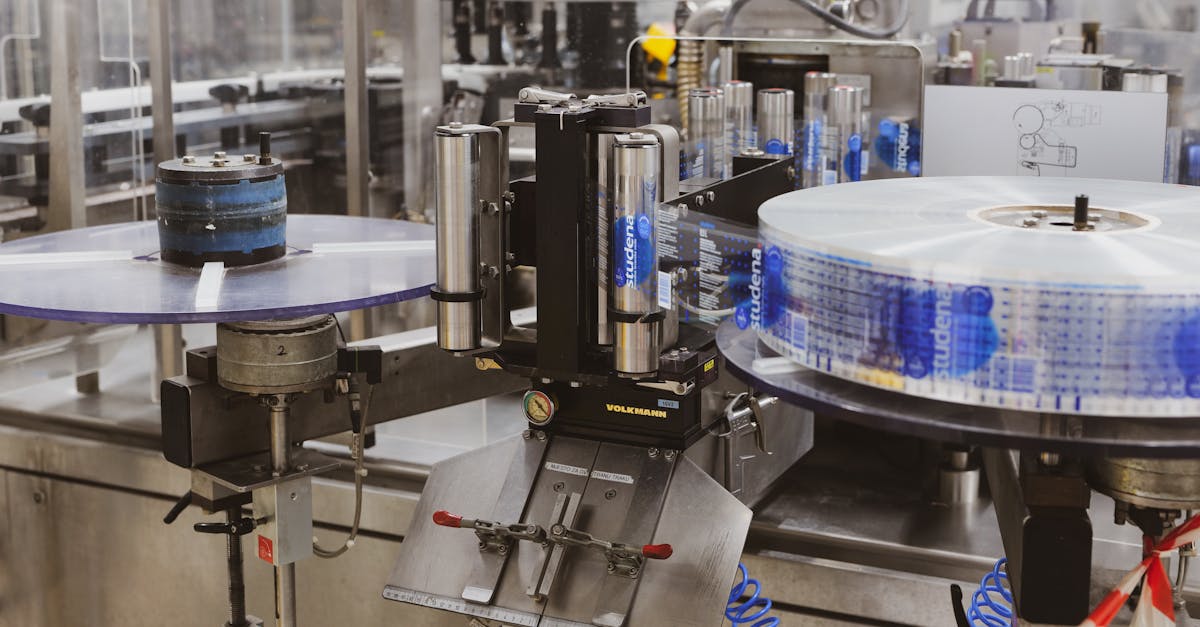
BOPP is stretched and CPP is not. Both start as molten polypropylene pushed through a slit die onto chill rolls. A BOPP line then reheats that sheet and stretches it lengthwise and crosswise into a thin, tough film. A CPP line quenches the melt on the chill roll and winds it up without deliberate stretching.
On the oriented line the sheet is stretched in the machine direction (MD) first, then in the transverse direction (TD); sequential lines predominate, simultaneous lines exist. The last tenter-oven zones give “annealing or stress relaxation for dimensional stability” (PMMI), and BOPET is “biaxially oriented and heat-set” (Mitsubishi Polyester Film). Cast film is drawn off by nip rolls; Hilliou and Covas call the result “a mono-oriented extrudate,” so non-oriented means nobody stretched it on purpose. The two routes also take PP grades of different melt flow (resin section).
| Film | Made by | Base resin | Strongest at | Weakest at | Usual role in a laminate |
|---|---|---|---|---|---|
| BOPET | Cast sheet stretched MD, then TD, then heat-set | Polyethylene terephthalate (PET; film-grade resin by RFQ) | Stiffness, oxygen barrier, heat resistance; stays stable through printing and laminating | Moisture barrier next to BOPP; standard grades do not heat-seal | Outer (surface) film, including the outer web of retort structures |
| BOPP | Same tenter-frame route, sequential stretch | PP homopolymer; sealable grades add a lower-melting heat-seal layer | Moisture barrier; lowest density of the common oriented films; tough in both directions | Oxygen barrier and heat resistance next to BOPET | Printed outer or middle web; metallized barrier web |
| CPP | Cast: slit die and chill roll, no deliberate stretching | PP, usually co-extruded with a copolymer heat-seal layer | Heat seal and seal strength; high elongation; retort sealant grades | Tensile strength and oxygen barrier next to the oriented films | Inside sealant layer; single-ply for dry foods |
Sources: Hilliou and Covas (Elsevier, 2018), Crawford and Martin (Elsevier, 2020) and PMMI ProSource (May 25, 2020) for the process; PMMI, Toray TORAYFAN and Mitsubishi Polyester Film for roles and strengths.
How Do BOPET, BOPP and CPP Compare on Barrier, Heat and Stiffness?
On the producer datasheets compared here, BOPET has the lowest oxygen transmission, the highest melting point and the stiffest, most balanced tensile profile. BOPP has the lowest water vapor transmission. CPP trails both oriented films on oxygen barrier and tensile strength and earns its place as the sealant layer. Gauges differ between columns, so read each test condition first.
Table 2 tags producer technical data sheet (TDS) values with grade and gauge and keeps other test conditions out of the shared columns, as our guide to comparing datasheet values under the same test conditions explains.
| Property (unit; test method and condition) | BOPET | BOPP (heat-sealable grade) | CPP (one-side-treated, sealable) |
|---|---|---|---|
| WVTR (g/m²/day; ASTM F1249, 38 °C / 90% RH) | 45 at 12 μm (Cosmo CF-B0-PAF) | 6.5 at 20 μm (Flex B-TSL) | 12 at 25 μm (Flex C-CPL); < 13 at 25 μm (Cosmo HST-1) |
| OTR (cc/m²/day; ASTM D3985, 23 °C / 0% RH) | 130 at 12 μm (Cosmo CF-B0-PAF); 110 max at 12 μm (BOPET GTA TDS, IBF Graphica) | 1,800 at 20 μm (Flex B-TSL) | 3,650 at 25 μm (Flex C-CPL); < 3,700 at 25 μm (Cosmo HST-1) |
| Tensile strength at break, MD / TD (MPa; ASTM D882) | 206 / 216 minimum at 12 μm (calc. from 2,100 / 2,200 kg/cm²; Cosmo CF-B0-PAF) | 118 / 245 at 20 μm (calc. from 1,200 / 2,500 kg/cm²; Flex B-TSL) | 49 / 21 at 25 μm (calc. from 500 / 210 kg/cm²; Flex C-CPL) |
| Young’s modulus, MD / TD (GPa; ASTM D882-64T) | 4.8 / 4.7 at 12 μm (Toray Lumirror P60) | — (see note) | — (not published on the sheets read) |
| Heat shrinkage, MD / TD (%; ASTM D1204, condition in cell) | ≤ 2.8 / ≤ 0.8 at 150 °C, 30 min; 12 μm, spec maximum (Cosmo CF-B0-PAF) | ≤ 6.0 / ≤ 3.0 at 130 °C, 5 min; 20 μm, spec maximum (Flex B-TSL) | — (no packaging-CPP value at a defined condition) |
| Melting point (°C; DSC, 3 K/min; independent of gauge) | 260 (Mitsubishi side-by-side table) | 166 (same table, BOPP film) | — (see note) |
| Metallized grade: WVTR / OTR (same ASTM conditions as above) | 1.1 / 1.2 at OD 2.2; 0.8 / 1.0 at OD 2.5; 0.6 / 0.8 at OD 2.8; grade made in 8–23 μm (Cosmo CF-CPF (MO)) | 0.1 / 8 at OD 2.5; 18–20 μm heat-sealable grade (Flex B-AVS-IB-M) | 1.5 / 150 at OD 2.2; 25 μm, same values printed for 20–50 μm (Flex C-CPM-M) |
| Seal-initiation temperature / seal strength (each producer’s own method; indicative only) | Standard grades do not heat-seal. Heat-sealable Flex F-HSP: seal range 110–200 °C (12–15 μm); 400 g/25 mm at 120 °C, 1 s, 2.8 bar (12 μm) | 105 °C / 350 g/25 mm, 20 μm (Flex B-TSL, in-house method); 91 °C, 430 g/25 mm at 121 °C, 0.5 s, 20 psi, 20 μm (Toray Torayfan CBH) | 118 °C / 1,800 g/25 mm, 25 μm (Flex C-CPL, in-house method); 110 °C, 2,000 g/25 mm minimum, 25 μm (Cosmo HST-1, TDS of Mar 5, 2026) |
OD = optical density of the metal layer; RH = relative humidity. MPa calculated from printed kg/cm² (× 0.0981). Toray prints a Young’s modulus of 2.4 / 4.3 GPa (MD / TD) for 20 μm Torayfan CBH without a method, and ZOi Films a 167 °C melting point for general-purpose cast PP without one, so both stay out. Mitsubishi’s DIN-condition BOPET barrier figures (Hostaphan RN, 12 μm: water vapor 16 g/m²/day at 23 °C / 85% RH; oxygen 110 cm³/m²/day/bar at 50% RH) cannot share the ASTM columns.
Which has the better moisture barrier, BOPP or BOPET?
BOPP. Under ASTM F1249 at 38 °C / 90% RH, Flex Films’ heat-sealable 20 μm BOPP passes 6.5 g/m²/day of water vapor, against 45 for Cosmo Films’ plain 12 μm BOPET. The gauges differ, but Toray’s own tests on films of similar thickness, under an older method, still put BOPP five to six times ahead.
Those Toray figures are 6.9 g/m²/24 h for 25 μm PET against 1.2 for 22 μm TORAYFAN BO (JIS Z 0208, 40 °C / 90% RH). On water vapor transmission rate (WVTR), CPP sits between the oriented films, at 12 for Flex’s 25 μm grade.
Metallizing matters more than gauge: Flex’s metallized BOPP prints 0.1, 65 times below its non-metallized B-TSL (calc.). It also flips one pairing: plain BOPET passes more water vapor than plain CPP, yet Cosmo’s metallized BOPET (0.6–1.1) edges Flex’s standard metallized CPP (1.5). For coated or metallized films, notes the converter Poly Print, “the total film thickness is unimportant, because the barrier is primarily coming from the additional layer.”
Which has the better oxygen barrier?
BOPET, by a wide margin. Under ASTM D3985 at 23 °C / 0% RH, Cosmo’s 12 μm BOPET transmits 130 cc/m²/day of oxygen, against 1,800 for Flex’s 20 μm heat-sealable BOPP and 3,650 for its 25 μm CPP. BOPET posts that oxygen transmission rate (OTR) at the thinnest gauge of the three, so the like-for-like gap is wider.
Toray’s equal-thickness data, per 0.1 mm under ASTM D1434-72 at 25 °C, list 19 cc/m²/24 h/atm for Lumirror PET, 400 for TORAYFAN BO and 860 for unstretched TORAYFAN NO, roughly 21 and 45 times the PET figure (calc.). Metallizing does not change the order: Flex’s metallized BOPP drops 225-fold to 8 (calc.), still above Cosmo’s metallized BOPET at 0.8–1.2.
How much heat can each film take on a press or sealing jaw?
BOPET takes the most heat. In Mitsubishi’s side-by-side DSC table it melts at 260 °C against 166 °C for BOPP, and on the producer sheets it shrinks less in a hotter, longer shrinkage test. At the sealing jaw the question changes, because what counts there is the temperature at which the seal layer starts to bond.
On the press, Toray lists a usable range of −70 °C to +150 °C for its packaging Lumirror and says it “is more heat resistant than OPP etc., so can be dried at higher temperatures,” which counts in coating and laminating ovens.
At the jaw, standard BOPET does not heat-seal at all. Across the sheets read, seal-initiation temperature (SIT) runs 91–115 °C for heat-sealable BOPP and 90–130 °C for CPP, each by the producer’s own method, so treat both as indicative. Hot tack is covered in the sealing section, the PP random-copolymer and terpolymer seal grades in the resin section.
Should you compare film quotes per kilo or per square meter?
Per square meter. You buy film by weight but use it by area, and the three films differ in density and in usual gauge. A kilo of 12 μm BOPET covers 8.3% more area than a kilo of 20 μm BOPP, so equal prices per kilo do not mean equal cost per square meter of pack.
Cost per square meter is price per kilo divided by area per kilo. Table 3 works out the area from producer densities, with the formula in its note.
| Film | Density (g/cm³; ASTM D1505) | Gauge | Mass (g/m²) | Yield (m²/kg, calc.) | Producer-published check |
|---|---|---|---|---|---|
| BOPET | 1.40 (Cosmo CF-B0-PAF; Mitsubishi Hostaphan RN) | 12 μm (typical) | 16.80 | 59.52 | Cosmo 59.52; GTA TDS 59.5; Hostaphan RN 60 (17 g/m²) |
| BOPET | 1.40 | 20 μm (common comparison gauge) | 28.00 | 35.71 | None published at 20 μm; Cosmo prints 37.59 at 19 μm and 31.06 at 23 μm |
| BOPP | 0.91 (Flex B-TSL; Mitsubishi prints 0.9) | 20 μm (typical) | 18.20 | 54.95 | Flex 54.9; Akes CX2K 54.95; Jindal 55.0 (coated MB666); Toray CBH 54 |
| CPP | 0.91 (Flex C-CPL) | 20 μm | 18.20 | 54.95 (55.25 at 0.905) | Flex 54.9; Cosmo HST-1 55.25 at 0.905 |
| CPP | 0.91 | 25 μm (typical) | 22.75 | 43.96 (44.20 at 0.905) | Flex 44.0; Cosmo HST-1 44.20 at 0.905 |
Formula: area per kg (m²) = 1 ÷ (density in kg/m³ × thickness in m), or 1,000 ÷ (g/cm³ × μm). The 0.91 g/cm³ figure applies to clear and metallizable BOPP and CPP only; voided white BOPP is far lighter (Jindal’s OPPalyte MW647 works out to 0.64 g/cm³, calc.). The PP homopolymer resin class sits at about 0.905 g/cm³ on Syntex America’s PP homopolymer grade table; finished-film density is the datasheet value.
At an equal 20 μm, BOPP and CPP cover 53.8% more area per kilo than BOPET (calc.); PET is about 1.54 times as dense. Usual gauges reverse it: BOPP would have to drop to 18.46 μm to match 12 μm BOPET per kilo, and per square meter 12 μm BOPET weighs 7.7% less than 20 μm BOPP.
So if both gauges do the same job, 12 μm BOPET can cost up to 8.3% more per kilo and still break even per square meter. The same logic for resin is in our guide to total converted cost instead of price per kilogram.
Which Film Specs Make a Pouch Seal and Run Cleanly on a VFFS or HFFS Line?
The inside layer has to be built to heat-seal, and the web has to slide, track and hold its shape through the forming collar. On a vertical or horizontal form-fill-seal (VFFS or HFFS) machine, the specs that govern both are seal strength, hot tack, seal-initiation temperature (SIT), coefficient of friction (COF), slip behavior and heat shrinkage.
Datasheet numbers get a film onto the shortlist; the packing line decides whether it stays there. Table 4 pairs each spec with its test method and its failure mode, and the values sit in the properties section.
Can plain BOPP or BOPET film seal to itself?
Standard BOPET does not, by Mitsubishi Polyester Film’s account, and for BOPP it depends on the family you buy: producers sell heat-sealable and non-heat-sealable BOPP as separate product lines. Both films come in heat-sealable versions built with a co-extruded seal layer, so the answer sits on the datasheet of the grade you are quoted.
Mitsubishi writes that “standard boPET films are not heat-sealable” and that co-extrusion “allows a top layer to be made sealable.” Those grades seal to themselves and to A-PET and C-PET but “do not seal against polyolefins,” and Polyplex and Flex Films say the same of theirs.
BOPP is sold by family: Polyplex lists “Transparent-Non Heat Sealable” and “Transparent-Heat Sealable” grades side by side. Borealis builds sealable BOPP from a homopolymer core layer plus sealing-layer terpolymers; Syntex America’s catalog lists one such resin, the Sinopec F5005 ternary heat-seal grade.
What makes CPP the sealant layer?
Its construction and its intended job. Packaging CPP is usually a co-extruded cast film with a heat-seal layer on one face and a treated face on the other, and producers design it to go on the inside of the pack: Toray describes its non-oriented film as a packaging sealant, including for the inside surface of retort pouches.
Cosmo Films sells its HST-1 as “coextruded, one side heat-sealable, one side corona-treated”; Flex Films stacks a treated layer, inter layers and a CPP core under a heat-sealable layer. ZOi Films sells a simpler single-layer homopolymer/copolymer blend.
Borealis sells the seal layer in line terms: “A broad sealing window on packaging lines allows for fast changeovers,” and “Very low seal initiation temperature and high hot tack force enable high packaging line speeds.” Syntex’s catalog carries resins for these layers, such as the Sinopec F800E CPP binary heat-seal grade and the Sinopec C5608 heat-seal terpolymer (melt flow in the resin section).
Which film specs control how it runs on a form-fill-seal machine?
Friction comes first. Rovema, a VFFS machine builder, ties a COF that runs too high to wrinkling and, in the worse cases, tearing at the forming collar, along with excess tension and misalignment; too low, and the film goes slack and tracks poorly. Slip behavior, the seal window, hot tack and shrinkage under heat follow.
Innoform’s seminar write-up warns that a film-to-film COF “cannot simply be transferred” to a metal forming shoulder, and that mono-material structures must be re-qualified for each FFS machine. Validate a film change the way you would a substitute grade before a production order. SIT is a producer-defined test; read it like any datasheet value measured under different test conditions.
On hot tack, the same summary is blunt:
“The product often falls onto a still-warm heat seal. Therefore, hot tack strength, also known as hot tack, is of great importance for process reliability.”
— Innoform Coaching GmbH, seminar write-up (author’s summary), INNO-Talk, September 2026
| Spec | Test method | What goes wrong on the line when it drifts |
|---|---|---|
| Coefficient of friction (film-to-film and film-to-metal) | ASTM D1894 or ISO 8295 (see note) | Too high: wrinkling or tearing at the forming collar, excess tension, misalignment, film stretching, film sticking to the sealing jaws. Too low: slack film and poor tracking (Rovema). Lab film-to-film values do not transfer directly to metal formers (Innoform). |
| Slip and antiblock behavior | — (no method in the sources read) | Slip migrates to the surface after extrusion, depending on formulation, storage time, temperature, corona treatment and laminating adhesive; in mono-PE or mono-PP it can reach the outer surface and change friction there. Antiblock roughens the surface, and “both additive types must be matched” (Innoform). |
| Seal-initiation temperature and seal window | Producer-defined method (see the RFQ section) | With mono-PP “the sealing window is narrower” and heat contact sealing can be harder (Innoform); a broad window allows fast changeovers (Borealis). |
| Seal strength | ASTM F88/F88M: maximum force to separate the two sealed layers (Intertek) | One line of the pouch seal checklist, next to SIT, seal window, hot tack, contamination tolerance and hermeticity after retort (TOPPAN). |
| Hot tack (hot seal strength) | ASTM F1921/F1921M: strength “immediately after a seal has been made and before it cools” | Product lands on a still-warm seal. Dust, fat, liquid or product in the seal zone, and the junction of longitudinal and cross seals, where “a channel can form” (notably with thin sealants), are the other weak points; serrated or waffle jaws can help (Innoform). |
| Heat shrinkage and dimensional stability | ASTM D1204 (condition printed on each datasheet) | In PET/PE laminates the stable PET outer layer carries the draw-down force; in mono-material the outer layer softens too and the material “can stretch more during draw-down and thus distort” (Innoform). BOPET “is more stable through printing and laminating processes than BOPP” (PMMI). |
| Gauge variation (thickness tolerance) | — | — (see note) |
ASTM’s D1894-14 page shows “Withdrawn 2023”; ISO 8295 was last reviewed and confirmed in 2026. No source we read gives a numeric COF window or a hot-tack value, or ties gauge variation to a specific winding or registration defect, so the table gives none.
Verdict: seal strength, tolerance for product or contamination in the seal zone and, on retort packs, hermeticity set seal quality; COF, slip, draw-down stability and shrinkage set how the web runs. Low SIT and hot tack touch both, so both belong on every film RFQ.

Which Laminate Structure Fits Which Application?
Work from the inside out: the inner web has to close the pack under your filling conditions, and the outer web has to carry the print and survive the process. In the sourced examples, a snack pouch runs printed BOPP over metallized BOPP and PE; the classic retort pouch runs BOPET over aluminum foil and CPP.
| Application | Typical structure (as sourced) | Why each layer is there |
|---|---|---|
| Snack stand-up pouch | 20 μm printed matte BOPP / 18 μm metallized BOPP / 60 μm LDPE, with laser scoring and a front zipper (a 2026 FPA award entry) | BOPP for moisture protection; the metallized web where the films alone do not protect enough (PMMI); the LDPE layer typically as the sealant web (ExxonMobil Chemical, 2007). The entry itself assigns no roles. |
| Dry food, direct pack | Single-ply CPP (pasta, dried beans, bakery) or CPP inside a laminate | One face heat-sealable, the other corona-treated (Cosmo Films); resin for the film, e.g. Sinopec F08 CPP film homopolymer |
| Conventional retort pouch | PET / Alu / CPP or PET / Alu / PA / CPP | BOPET outer for dimensional stability through retort (PMMI); foil inside it; retort-grade CPP sealant at 50–75 μm (Flex C-CPR) or 50–125 μm (Toray TF-DR72). Mixed polymer families plus foil: “virtually unrecyclable” (Innoform). |
| Mono-PP retort pouch | BOPP 20 μm / SiOx-coated BOPP 20 μm / CPP 80 μm (Toppan, as reported by Innoform) | PP outer for strength, heat resistance and print; SiOx coating in place of foil, with comparable protection per Toppan; a retort-grade PP sealant, “one of the most critical parts of a retort pouch” (TOPPAN) |
| PE film web / extrusion-lamination layer | PE web bonded to an oriented film or foil; ExxonMobil’s typical drawing shows a 12–20 μm outer of oriented PET, PP or polyamide, 6–12 μm aluminum (or a metallized film) and a 40–120 μm PE sealant (2007) | Laminates bond “polyamide, polyester or polypropylene films, aluminum foils, paper” to “a polyolefin film (most often polyethylene)” (ExxonMobil Chemical). Catalog grades, in catalog wording: POLYMER-E C7100 (LDPE) for “lamination on BOPP, BOPET, aluminum foil”; Westlake LF9120CC (LLDPE) for “high-clarity packaging, frozen-food bags, and lamination”; ZPC 7047 (LLDPE) for “lamination film” |
| Lidding on PET trays | Polyester film co-extruded with a peelable polyester sealant: an all-PET structure (FPA 2026 entry) | Heat-sealable BOPET seals to PET, A-PET and C-PET, not to polyolefins (Mitsubishi Polyester Film) |
Gauges are each source’s own, not a recommendation. We found no sourced structure for coffee, biscuit or confectionery packs.
What structure is used for snacks and dry foods?
For salty, dry snacks, a BOPP-based laminate. PMMI notes that “BOPP is widely used in salty, dry snack packaging, as it offers better moisture vapor barrier than BOPET.” One 2026 Flexible Packaging Association award entry printed its full stand-up pouch: 20 μm printed matte BOPP, 18 μm metallized BOPP and 60 μm LDPE.
Dry foods can skip the laminate: the Cosmo HST-1 and Flex C-CBP datasheets list single-ply CPP for pasta, dried beans and bakery. Our Brazil food-packaging profile covers the demand side.
What structure survives retort and hot-fill?
The conventional retort pouch: BOPET outside, aluminum foil in the middle, a retort-grade CPP sealant inside, written PET/Alu/CPP or PET/Alu/PA/CPP. PMMI calls BOPET “the surface film of choice for retort pouches because of its dimensional stability through retort sterilization.” Hot-fill is a milder thermal class, though it still rules some films out.
How hot? Innoform, summarizing a KIN GmbH classification, puts hot or aseptic filling at about 75–85 °C and sterilization, “in practice 105 to 130 °C at approx. 1.5 to 3 bar”; its takeaway box says retort “typically means 121 to 135 °C.” Treat 121 °C as the common cycle; anything near 135 °C is a grade and pouch-size question for your supplier.
Flex Films rates its C-CPR retort CPP “Good heat stabilized at >135 °C for 30 min,” with an SIT of 150 °C and a minimum seal strength of 3,500–4,000 g/25 mm. For hot-fill, Borealis cites “low shrinkage rates under thermal stress” for its homopolymers. Check metallized BOPET too: Cosmo Films flags one of its grades “not suitable for hot fill, sterilization or pasteurization.”
Suppliers are rebuilding the stack in PP for recyclability. Toppan’s version, as Innoform reports it, is validated at 130 °C for 30 minutes only for small three-side-seal pouches with 85–100 g of fill, runs a narrower sealing window and costs about 30% more than a conventional laminate, per Toppan’s Sebastian Ritter. Mondi says its PP-based pouch runs “up to 400 pouches per minute, without machine adjustments.” Different formats, both vendor claims.
Can an all-PP structure replace PET/PE under the EU PPWR?
Yes, if it earns a recyclability grade, and nothing obliges you to switch today. The EU Packaging and Packaging Waste Regulation, Regulation (EU) 2025/40, requires all packaging to be recyclable, graded A to C from 2030 or 24 months after the design-for-recycling delegated act, whichever is later. It does not mandate mono-material or ban PET/PE laminates.
That matters for any pack sold into the EU. The regulation entered into force on Feb. 11, 2025 and has applied since Aug. 12, 2026 (EUR-Lex). Grade C starts at 70% recyclability and grade A at 95%; from 2038 only grades A and B may be sold. The design-for-recycling annex calls mono-materials “preferable.”
The criteria for grading an all-PP pouch are not written yet. The delegated acts are due by Jan. 1, 2028; we could not confirm that the design-for-recycling act had been adopted by Nov. 18, and Flexible Packaging Europe’s Roberta Colotta told Packaging World that more than 20 pieces of secondary legislation are “still being drafted.”
Suppliers are moving anyway, not all toward PP. Profol’s Udo Steinhauer told Packaging Insights:
“It doesn’t really matter which type of polymer it is, but it has to be one polymer in one packaging, which then allows the sorting units to sort per polymer.”
— Udo Steinhauer, Director of Business Development, Marketing, and Sustainability, Profol, Packaging Insights, May 15, 2026
The same Interpack 2026 coverage reports suppliers positioning BOPP to replace PET/foil laminates, and Toppan Speciality Films says European demand requires a switch from PET to BOPP and BOPE (biaxially oriented PE) films. Read both as sales positions; a mono-PE path runs on polyethylene film and lamination grades.
Recycled content runs on its own clock: food-contact mono-PP film counts as contact-sensitive non-PET plastic, with a 10% target from 2030 at the earliest (EUR-Lex). Our virgin vs recycled price-gap guide runs the cost side.
For US-bound packs, the reference is the APR Design Guide, which California’s SB 343 and SB 54 refer to (FPA). APR says a PET layer makes a PP flexible pack non-recyclable, defines mono-material PP flexible as more than 90% PP by weight, and rates SiOx or AlOx coatings applied directly to PP film as design-preferred. As of September 2024, North American collection of PP flexible film was limited to Canada.
What Resin Grade Sits Behind Each Film?
Each film fixes its resin. BOPP from a tenter-frame line runs on a PP homopolymer with a melt flow index near 3, cast CPP on homopolymers listed at 8, heat-seal layers on random copolymers and terpolymers, and BOPET on a PET specified by intrinsic viscosity. Syntex America lists the PP and PE grades; film-grade PET goes through an RFQ.
Every web in the structure you settle on traces back to a resin order: pick BOPP over CPP, or add a terpolymer skin, and that order changes grade and melt flow. Table 6 maps each film layer to its resin type, its melt flow index (MFI, 230 °C / 2.16 kg, printed as MFR on many datasheets) and the matching Syntex catalog grade.
| Film / layer | Resin type | MFI or IV | Syntex catalog grade |
|---|---|---|---|
| BOPP film | PP homopolymer | 2.8 (F03D) · 3 (FH03) | Sinopec F03D · Sinopec FH03 |
| CPP film (cast) | PP homopolymer (cast) | 8 | Sinopec F08 · Sinopec F08MX · Sinopec FH08 |
| Aluminized CPP (cast film) | PP homopolymer (cast) | 8 | Sinopec FC801MX |
| BOPP ternary heat-seal layer | ternary heat-seal grade | 6 | Sinopec F5005 · Sinopec F5006 |
| CPP binary heat-seal layer | PP binary copolymer | 8 | Sinopec F800E · Sinopec F08E |
| CPP heat-seal layer (terpolymer) · aluminized CPP heat-seal layer | PP terpolymer | 8 | Sinopec C5608 (CPP) · Sinopec C5908 (aluminized CPP) |
| PE film / lamination web | LDPE / LLDPE / HDPE (catalog) | — (see each grade’s catalog row) | POLYMER-E C7100 (lamination on BOPP, BOPET and aluminum foil) · ZPC 7047 (lamination film) · Westlake LF9120CC (lamination) · Chevron Phillips HF49007 (lamination substrates) · ExxonMobil Exceed Flow m 1020 (cast-film extrusion) |
| BOPET film | PET | Specified by IV (dl/g); no film-grade figure published here | Not in the online catalog — send the spec through an RFQ |
MFI figures are the Syntex catalog’s own. The catalog also lists Sinopec FC03, a BOPP capacitor-membrane grade, left out here as non-packaging.
What PP grade is used for BOPP film?
BOPP film made on a tenter-frame line uses a PP homopolymer with an MFI close to 3 g/10 min. Syntex lists two: the Sinopec F03D BOPP homopolymer at 2.8 and the Sinopec FH03 BOPP homopolymer at 3. Both sit inside the range SABIC, Formosa and ExxonMobil publish for the same job.
SABIC lists an MFR of 3.0 g/10 min (ASTM D1238) for PP 521P, a grade “specially developed for bi-axially oriented PP (BOPP) film extrusion,” and MFR 3 (ISO 1133) for PP 5233P. Formosa rates Formolene 1202K at MFR 3 and says it is “designed for improved processability in the orientation process.” ExxonMobil’s PP4712E1 shows 2.8 in a trader’s reproduction of its datasheet. Matching melt flow says nothing about crystallinity or additives.
INEOS sorts by orientation route: its ELTEX P film range lists tenter homopolymers at MFR 2 and 3 and double-bubble homopolymers at MFR 8. The tenter and cast routes are compared at the top of this guide; for what the number can and cannot promise, see why melt flow is not a stand-alone specification and our PP impact-copolymer MFI guide.
In a Prime Polymer/Idemitsu study of resins all between MFR 2.7 and 3.2, a standard resin stretched without breaking across an 8 °C window and a high-crystallinity resin across 6 °C. The authors found lower crystallinity and a wider molecular weight distribution improved production rate and allowed thinner films. Ask for a trial lot before you switch.
What PP grade is used for CPP film and heat-seal layers?
Cast CPP film uses PP homopolymer or random copolymer, usually at a higher melt flow than BOPP: Syntex’s cast grades Sinopec F08, F08MX and FH08 are listed at MFI 8, as is Sinopec FC801MX for aluminized cast film. Heat-seal layers move to copolymers and terpolymers that melt lower.
SABIC lists PP 520P at MFR 10.5 dg/min (ISO 1133), “typically used by our customers for extrusion of cast film, both mono layer films and co extruded films.” Borealis offers RE239CF, a random copolymer “for the manufacturing of unoriented films on chill roll processes,” at MFR 11. Treat “cast means higher MFI” as a tendency: the same INEOS brochure carries blown-and-cast homopolymers at MFR 2 and 3.
For BOPP skins, Syntex lists Sinopec F5005 and Sinopec F5006 as ternary heat-seal grades at MFI 6; for CPP, the binary copolymers Sinopec F800E and Sinopec F08E, the terpolymer Sinopec C5608 for CPP heat-seal layers and Sinopec C5908 for aluminized CPP, all at MFI 8.
SIT separates these resins, by each producer’s own method. INEOS, testing skins on co-extruded 20 μm BOPP, reports SITs “from 115 °C to as low as 80 °C whilst retaining high melting temperatures”; its high-speed terpolymers sit at MFR 6 and SIT 105 °C. Borealis’s terpolymer sealing-layer grades list MFR 6, SIT 105 °C and 131 °C melting. F5005 and F5006 share that melt flow and, by the catalog’s “ternary” label, the three-monomer family: a fair yardstick, nothing more.
For CPP resins, no producer we read prints a numeric SIT; Borealis says only “Low seal initiation temperature” for RE239CF. Do not borrow BOPP-skin figures for a cast sealant: put the SIT you need, with its test method, on your resin RFQ.
What PET resin is used for BOPET film?
BOPET film is made from a film-grade PET resin, and PET is specified by intrinsic viscosity (IV, in dl/g) where PP is specified by melt flow. Syntex lists no film-grade PET online, so the BOPET row in Table 6 reads: not in the online catalog — send the spec through an RFQ.
The Syntex PET resin page lists bottle-type grades, which are not BOPET grades, and states that PET for rigid packaging carries a higher IV than fiber and film grades. We print no film-grade IV: the figures in circulation disagree and none comes from a producer datasheet.
For US food contact, 21 CFR 177.1630(a) defines which polyester base sheets qualify for PET film, as 21 CFR 177.1520 does for PP.
Your film spec is a resin spec in disguise; the RFQ checklist below puts both on one sheet.

What Are BOPP and PET Film Prices Doing in Late 2026?
In the last closed quarter (Q3 2026, European FPE index, 20 μm BOPP), BOPP film was −24% quarter on quarter and +41% year on year; 12 μm PET film held stable. In East China, Oilchem put thick-gloss BOPP at CNY 11,600–12,000/t on Nov. 16, down 5.6% from end-October. Two markets, two windows.
The European numbers come from the Flexible Packaging Europe (FPE) raw-material price index, released on Oct. 28 and reprinted by M2N Converting. Read the BOPP pair together: the quarterly drop measures the Q3 average against the Q2 spike after the Strait of Hormuz closed in early March; the annual rise shows film still far dearer than a year ago.
Call it a closed-quarter easing from the Q2 peak, with prices still above pre-war levels. PET film (12 μm) did not move on the quarter and sat 16% above a year earlier; HDPE and LDPE fell 14% and 15% on the quarter yet stood 25% and 23% above Q3 2025.
“BOPET prices remained stable this quarter, despite initial hopes of a decline following the spike caused by the US–Iran conflict. PTA and MEG prices were unchanged throughout the quarter. BOPP prices have fallen significantly from the sharp peak seen in Q2, as the supply constraints behind the initial surge have eased considerably. However, prices remain above pre-war levels.”
— Alexander Tkachenko, Research Analyst, Films and Flexibles, Wood Mackenzie, Flexible Packaging Europe, October 28, 2026
Do not splice the two into one trend. The FPE reading is a quarterly average that closed on Sep. 30; the Chinese readings are point prices from a different market, running about seven weeks past it. In that stretch Chinese BOPP hit a year high of CNY 11,700/t on Oct. 13 (Oilchem), set another in late October, then slid into mid-November, per its weekly reviews.
PP accounts for 88% to 90% of Chinese BOPP production cost, and East China BOPP production profit stood at CNY −169/t on Nov. 16, Oilchem reports; it blames ample general-purpose capacity, a fading seasonal peak and weaker export diversion. A converter selling below cost can reprice either way, so treat any Chinese film offer as a dated snapshot.
Hormuz was still restricted on Nov. 2, as our Formosa PE force majeure playbook recorded; the background is in our Hormuz reopening analysis, and resin timing in our guide on when to buy PE, PP and PET.
And the Americas? We found no tier-1 film price for Latin America, and the only US film prices come from market-research aggregators that disagree on the same product and quarter, so we print neither. The fix sits on your side of the desk: get a dated, gauge-specific quote in writing, convert it to cost per square meter with the yield logic in the properties section, then add freight and duty as in our landed-cost guide.
| Price signal | Region | Index / publisher | Window | Latest reading | What it means for your next film or resin order |
|---|---|---|---|---|---|
| BOPP film, 20 μm | Europe | FPE index | Q3 2026 vs Q2 2026 (q/q) · vs Q3 2025 (y/y) | −24% q/q · +41% y/y | Negotiate from the closed-quarter level; the Q2 peak is history, pre-war prices are not back |
| PET film, 12 μm | Europe | FPE index (M2N reprint) | Q3 2026 vs Q2 2026 · vs Q3 2025 | stable q/q · +16% y/y | BOPET did not unwind with BOPP; with PTA and MEG unchanged, expect little room on price |
| HDPE / LDPE | Europe | FPE index | Q3 2026 vs Q2 2026 · vs Q3 2025 | −14% / −15% q/q · +25% / +23% y/y | PE webs eased on the quarter but cost more than last year; see the PE lamination grades |
| Aluminum foil 7 μm / BOPA (nylon) 15 μm | Europe | FPE index | Q3 2026 vs Q2 2026 · vs Q3 2025 | −3% / +2% q/q · +11% / +18% y/y | Foil and nylon layers in a laminate gave back little or nothing |
| Thick-gloss BOPP | East China | Oilchem/Longzhong | Nov 16, 2026 (point) | CNY 11,600–12,000/t, −5.6% vs end-October | Different market and window from the FPE rows; never blend the two |
| BOPP production profit | East China | Oilchem/Longzhong | Nov 16, 2026 (point) | CNY −169/t | Film makers are selling below cost; offers can move either way |
| PP homopolymer (resin) | Central Europe | PlasticPortal (aggregator, Plastech.pl data) | November 2026 monthly average | EUR 1.60/kg, −1.2% vs October | Track the PP homopolymer behind BOPP alongside film quotes |
| Price per kilo vs per m² | Any | — | — | See the yield logic in the properties section | Convert every film quote to cost per m² before comparing films |
| PET film trade remedies | US · India · Indonesia | Federal Register · DGTR · Reg. 14/2026 | 2026 | US orders continued · India recommended, not notified · Indonesia renewed | Check origin and scope before you accept a landed price |
| BOPP and PET film prices | US · Latin America | No tier-1 source found | — | Not printed (US aggregators disagree; no Latin American tier-1 price) | Ask for a dated, gauge-specific quote in writing |
Never chain Q2 and Q3 percentages into a net change: FPE’s Q2 substrate figures were quarterly minimum prices, and Q3’s basis is unstated.
Why did BOPP film swing harder than PET film in 2026?
BOPP swung harder than PET film in 2026 because the two price shocks had different roots. BOPP followed a shortage of PP resin in Europe; PET film followed oil prices and fears over PTA and MEG supply. When European PP supply loosened in Q3, BOPP gave back part of that gain; PET film, its feedstocks unchanged, held.
Wood Mackenzie explained it in FPE’s Q2 2026 release: “BOPP prices have nearly doubled over the same period, primarily due to a very tight PP resin supply in Europe, as inventories were already low before the onset of the conflict.” BOPET rose by an average of EUR 0.55/kg over that quarter, “driven by rising oil prices and concerns over potential PTA and MEG supply shortages.”
Resin agrees: the Central European PP homopolymer behind BOPP film hit its 12-month high of EUR 2.40/kg in May, per aggregator PlasticPortal.
Which trade remedies touch PET film right now?
Three trade remedies touch PET film in late 2026. The United States continued its existing antidumping and countervailing duty orders in March. India’s trade-remedies authority has recommended new anti-dumping duties that are not yet notified. Indonesia renewed its duties on BOPET film in April. Each depends on the film’s origin, so check yours.
United States. A Federal Register notice of Mar. 27, 2026 continues the antidumping duty orders on polyethylene terephthalate film, sheet and strip from India, Taiwan, China and the United Arab Emirates, and the countervailing duty order on India, effective Mar. 24, after the US International Trade Commission found revocation would likely lead to a recurrence of injury. The orders date from July 2002 (India, Taiwan) and November 2008 (China, the UAE); this sunset-review notice extends them, and cash deposits continue at current rates.
Metallized and other finished films with a performance-enhancing resin or inorganic layer thicker than 0.00001 inch fall outside the scope.
India. The DGTR issued final findings on Sep. 29, 2026 recommending five-year anti-dumping duties on PET film of 8–100 μm (solar-panel and thermal-lamination film excluded) from Bangladesh, China and Thailand. The duties run from $54/t to $366/t depending on the exporter, per TPM, The Daily Star and TBS. It remains a recommendation: the duties apply only if India’s finance ministry notifies them, and we found no notification up to Nov. 18.
Indonesia. Finance Ministry Regulation 14/2026, in force since Apr. 4, renews anti-dumping duties of 2.2% to 10.6% on BOPET film from India, China and Thailand until Apr. 4, 2031, according to Veritask.
The working rule for late 2026: price a BOPP order off the PP resin, a BOPET order off its feedstocks and the duty map, and put a date on every number anyone gives you. The RFQ is where those dated numbers get written down.
What Should a BOPP, CPP or BOPET Film RFQ Specify?
A film RFQ should name every value your receiving lab can check: gauge with its tolerance, friction by named method and surface pair, seal-initiation temperature under stated seal conditions, surface treatment, roll format and yield. Put the resin lines on the same sheet, with MFI or IV and their test conditions, so every quote answers one question.
“The geopolitical situation remains very fragile, so that disrupted exports, longer lead times and higher freight, insurance and raw material costs are permanent risks for the procurement of European converters. Reliable planning of material supply and costs therefore remains a challenge for flexible packaging manufacturers.”
— Guido Aufdemkamp, Executive Director, Flexible Packaging Europe, Q3 2026 price index release, October 28, 2026
Aufdemkamp meant European converters, but the arithmetic travels: when lead times run long, every email clarifying a loose spec burns days you do not have.
- Name the film and its job. State BOPET, BOPP or CPP, its place in the structure and which side faces the print, the adhesive or the product. The structure table shows the usual roles.
- Write the gauge with a tolerance. CPP datasheets from Cosmo Films and Flex Films both print a ±5% thickness variation. Put your own figure in the RFQ so the tolerance becomes a contract term you can reject a roll against.
- Specify friction by method and surface. Ask for static and kinetic COF by ASTM D1894 or ISO 8295, and name the pair your form-fill-seal line sees most: film to film, or film to metal.
- Fix the seal test before the seal temperature. SIT depends on how it is measured. Flex prints an internal method; Toray uses a Sentinel sealer at 0.5 s and 20 psi, SIT defined as above 200 g/25 mm; Celplast seals at 0.5 s and 200 kPa. Cross-sheet SITs are indicative only, so write dwell, pressure and threshold into the RFQ and ask for seal strength by ASTM F88/F88M.
- Pair treatment level with storage terms. Name the treated side and the wetting tension by ASTM D2578, measured at dispatch. Treatment fades in the warehouse: Cosmo gives 25 ± 5 °C and 55 ± 5% RH as the storage condition that keeps corona treatment, Flex says use within about three months of dispatch, and both advise conditioning rolls 24 hours at operating conditions.
- Give the roll format. Slit width, core inner diameter, maximum roll diameter and splices allowed per roll belong in the RFQ: only you know what your unwind stand accepts.
- Ask for yield and a price per square meter. Cosmo Films prints yield in m²/kg by ASTM D4321. Compare offers per square meter using the yield logic in the properties section.
- Put the resin on the same sheet. For PP: MFI with its condition (230 °C / 2.16 kg, by ASTM D1238 or ISO 1133), the process the grade is designed for and its additive package. For PET: IV with its test method, plus moisture control in delivery. Grades by layer: see the resin table.
- Close with documents and delivery. Ask for the food-contact declaration for your market (in the US, 21 CFR 177.1520 for polyolefins and 177.1630 for PET; in the EU, the written declaration of compliance under Article 15 of Regulation (EU) No 10/2011), and check the rest of the pack against the resin compliance documents list. Then qualify the supplier with the guide’s RFQ and supplier-qualification steps.
| RFQ line | Film RFQ wording | Resin RFQ wording |
|---|---|---|
| Gauge and tolerance | “Gauge ___ μm ± ___%, measured across the web; rolls conditioned ___ h at line conditions before running.” | “Grade designed for ___ (tenter BOPP / cast film / heat-seal layer); MFI ___ g/10 min at 230 °C / 2.16 kg, ASTM D1238 or ISO 1133, tolerance ± ___.” See the PP homopolymer film grades. For PET: “IV ___ dl/g, test method ___; moisture control on delivery ___.” (PET resin page; film-grade PET by RFQ) |
| Coefficient of friction | “Static and kinetic COF by ASTM D1894 or ISO 8295; pairs: treated/treated ___, sealing side/metal ___.” | “Additive package declared: slip ___, antiblock ___, residual ash ___.” Datasheets differ here: Formolene 1202K contains neither slip nor antiblock, SABIC PP 521P is non-formulated with low residual ash, Borealis RE239CF carries both |
| Seal-initiation temperature and seal strength | “SIT ___ °C at ___ s dwell, ___ pressure, threshold ___ g/25 mm; seal strength by ASTM F88/F88M at ___ °C.” | “Seal-layer resin: random copolymer / terpolymer ___; MFI ___ g/10 min at 230 °C / 2.16 kg.” See the PP random copolymer and terpolymer heat-seal grades |
| Corona treatment / dyne level | “Treated side ___; wetting tension ___ dyn/cm by ASTM D2578 at dispatch; storage ___ °C / ___% RH; use within ___ months.” | — (specified on the film) |
| Width and core diameter | “Slit width ___ mm; core ID ___ mm; maximum roll OD ___ mm; splices per roll ≤ ___, flagged.” | “Packaging ___ (bags / bulk); lot size ___ t; delivery point ___.” |
| Yield | “Yield ___ m²/kg by ASTM D4321; price per kg and per m².” | “Density ___ g/cm³ and MFI on each lot’s certificate of analysis.” |
No value here is a recommendation. Datasheets still print the withdrawn ASTM D1894-14, so name the revision you accept or use ISO 8295 (see the Table 4 note).
Run bids through the supplier reliability scorecard and turn the winner into a delivery sheet with a landed cost before you sign. A spec your lab can test on arrival keeps the argument on paper and off your production floor.
How Does Syntex America Supply the PP and PE Resin Behind Your Film?
What Syntex America supplies is the resin behind your film; it sells no finished film. The online catalog lists PP grades for BOPP film, CPP film and heat-seal layers, plus PE grades for lamination and blown film. Film-grade PET is not in the online catalog, so send that spec by RFQ. The Resin Supply Credit Program can fund the order.
Each resin line on the RFQ sheet above has an owner on our side:
- Quote the grade. Trading prices PP film resin and PE film and lamination grades against your MFI, process and additive lines, and takes film-grade PET specifications by RFQ.
- Ship it at a visible cost. Freight forwarding books the cargo, so freight shows up as its own line when you compare landed offers.
- Clear it on the right papers. Customs clearance handles classification and origin documents for each shipment.
- Hold it near your line. Integrated logistics centers keep resin close to your plant, so a long lead time does not become a line stop.
- Deliver to your schedule. Transportation runs the last leg to your gate.
Film resin gets paid for long before your converted rolls do. The Resin Supply Credit Program moves that bill to the end of your cycle in three steps:
- We supply. Syntex supplies the resin your demand calls for.
- You produce and sell. You receive it, run it into film and sell the finished product.
- You pay after your operational cycle. Payment falls due once that cycle closes.
One flexible-packaging manufacturer quoted on the program page made BOPP film resin its first structured order. Credit limits run from $50K–$150K for initial operations to $500K+ for recurring clients, and every line starts with a prior credit analysis of your operation.
For a useful answer in one round, send us:
- The film you make and the layer the resin goes into.
- The resin lines from your RFQ, including the test conditions.
- Monthly tonnage and your delivery point.
- Your operational cycle, from resin receipt to customer payment.
Bring that to a credit application, or talk to our trading team first. Your film choice fixes the resin; the RFQ decides whether the resin arrives on time.
Frequently Asked Questions
BOPET is the stiffer of the two and the more heat-resistant: PMMI ProSource credits it with superior stiffness, heat resistance and oxygen barrier compared with BOPP. Strength is less clear-cut, because BOPP is strongly oriented in the transverse direction. Compare machine-direction and transverse-direction values on datasheets measured at the same gauge and by the same test method.
Yes, and by a wide margin on the producer datasheets compared. The deposited metal layer does most of the work, so the gain tracks the coating's optical density more than film gauge. Metallizing has limits: Cosmo Films warns that one of its metallized BOPET grades should not go into hot-fill, sterilized or pasteurized packs.
Often, yes. An ExxonMobil Chemical paper notes the sealing web of adhesive laminates is usually polyethylene, while CPP takes that role in retort pouches and all-PP structures. We have not seen head-to-head seal data comparing the two, so ask suppliers for seal curves. Syntex America lists PE film grades such as Westlake LF9120CC for lamination.
The resin. Syntex America does not sell finished BOPP, CPP or BOPET film. Its online catalog lists polypropylene grades for BOPP film, CPP film and heat-seal layers, plus polyethylene grades for blown film and lamination. Film-grade PET resin is not in the online catalog, so send your specification through an RFQ instead.
In producer literature, yes on both counts. Toray describes its biaxially oriented polypropylene film as OPP, and CPP means cast polypropylene, a film that is not deliberately stretched. Producers also use PET film and BOPET for the same oriented packaging film. When a datasheet drops the B, ask the supplier to confirm the grade and process before ordering.
Yes. Film grades are designed around the film process: datasheets for BOPP grades describe behavior in orientation, low residual ash and a deliberate choice about slip and antiblock additives. A reference injection-molding homopolymer is specified instead for heat stabilization, antistatic performance and flow. Name the film process in your RFQ rather than matching melt flow alone.


