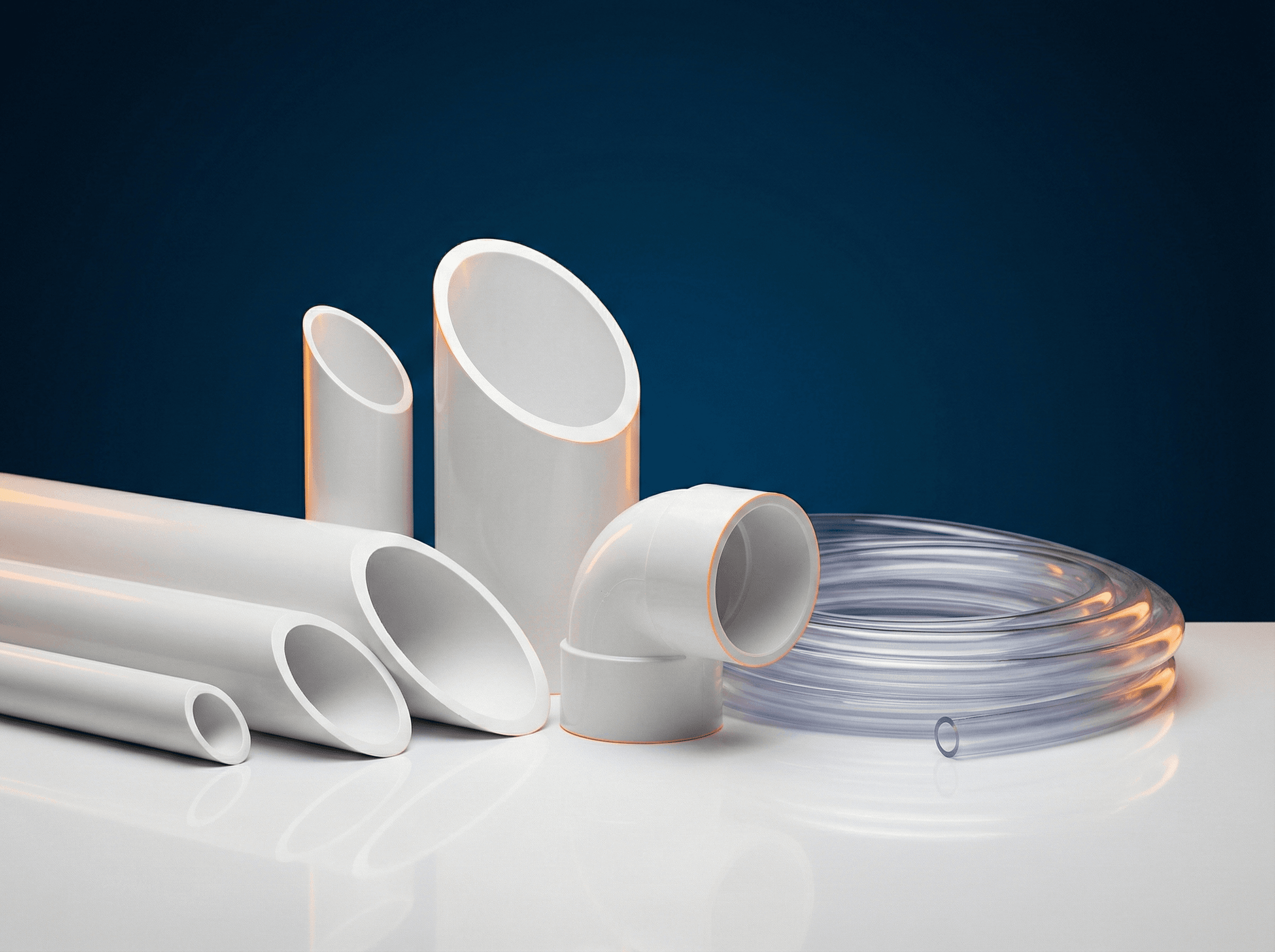
Hauptvorteile
- Keine Flammenausbreitung: ist selbstloeschend
- Lebensdauer in Gebaeuden von ueber 50 Jahren
- Bestaendigkeit gegen die meisten chemischen Reagenzien
- Bestaendigkeit gegen Witterung (Sonne, Regen, Wind und Meer)
- Gute thermische, elektrische und akustische Isolierung
- Vollstaendig recycelbares Material
Harz-Portfolio
Syntex America liefert das gesamte PVC-Spektrum — Suspension (S-PVC) für Hartrohr, Profil und Formstücke sowie Weichfolie, Draht und Kabel; Masse (M-PVC) für hochklare Hart-Extrusion; Copolymer für Vinyl-Bodenbeläge, Beschichtungen und Folien; und Paste (E-PVC), Emulsionsharze für Beschichtung, Tauchen, Rotationsformen und Schaum — von EPC und TCI Sanmar in Ägypten und Formosa Plastics (FPC) in Taiwan, über den Viskositätsbereich K48–81 für Bau-, Verpackungs-, Draht- und Kabel-, Bodenbelags- und Schuhanwendungen.
Suspensions-PVC (S-PVC)
Die Allrounder-Familie — von hart bis weich über den gesamten K-Wert-Bereich.
Anwendungen: Druck- & Wasserrohre, Fenster- & Türprofile, Hartplatten, Draht & Kabel, Weichfolie & Schläuche, Schuhe.
| Sorte | Hersteller | K-Wert | Schüttdichte | Anwendung | Aktionen |
|---|---|---|---|---|---|
| S-58 | Formosa Plastics (FPC) | 56.6–58.3 | 0.57 ± 0.02 g/cm³ | Fittings und dünnwandige Hartteile. | |
| S-60 | Formosa Plastics (FPC) | 59.2–60.6 | 0.55 ± 0.02 g/cm³ | Fittings und dünnwandige Hartteile. | |
| S-65 | Formosa Plastics (FPC) | 64.6–66.0 | 0.50 ± 0.02 g/cm³ | Rohre, Profile, Platten und Fittings. | |
| S-65S | Formosa Plastics (FPC) | 64.6–66.0 | 0.48 ± 0.02 g/cm³ | Rohre, Profile, Platten und Fittings. | |
| S-65D | Formosa Plastics (FPC) | 65.7–67.1 | 0.55 ± 0.02 g/cm³ | Rohre, Profile, Platten und Fittings. | |
| K67 | Egyptian Petrochemicals (EPC) | 67 (IV 0.90–0.94) | 0.49–0.56 g/cm³ | Fenster- und Türprofile, Druck- und Wellrohre sowie Marmorersatz-Compounds. | |
| K6701+ | TCI Sanmar | 67 ± 1 | 0.54–0.59 g/ml | Rohre (Trinkwasser, SWR, Abwasser), Fensterprofile, Hartplatten, Kabelkanäle, Draht & Kabel sowie Schuh-Compounds. | |
| S-70 | Formosa Plastics (FPC) | 69.6–71.5 | 0.47 ± 0.02 g/cm³ | Weichfolie, Draht & Kabel, Schläuche und Kalanderfolie. | |
| S-70R | Formosa Plastics (FPC) | 69.6–71.5 | 0.47 ± 0.02 g/cm³ | Weichfolie, Draht & Kabel, Schläuche und Kalanderfolie. | |
| S-73R | Formosa Plastics (FPC) | 72.5–74.3 | 0.46 ± 0.02 g/cm³ | Weichfolie, Draht & Kabel, Schläuche und Kalanderfolie. | |
| S-75 | Formosa Plastics (FPC) | 73.4–75.2 | 0.45 ± 0.02 g/cm³ | Hochweichmacherhaltige Compounds, Beschichtungen und Weichfolie. | |
| S-80 | Formosa Plastics (FPC) | 79.4–81.1 | 0.45 ± 0.02 g/cm³ | Hochweichmacherhaltige Compounds, Beschichtungen und Weichfolie. |
K67-class rows: EPC K67 (IV 0.90–0.94 dp/gm, residual VCM ≤ 1 ppm) and TCI Sanmar K6701+ (low porosity, in 25 kg & 1250 kg bags). Formosa applications are typical uses by K-value (the FPC leaflet lists no per-grade applications). Test methods: K-value DIN 53726; bulk density JIS K6721.
Masse-PVC (M-PVC)
Hochreines, klarsichtiges Hart-PVC (ohne Suspensionshilfsmittel).
Anwendungen: Transparente Hartplatten, Profile, Rohre & Fittings.
| Sorte | Hersteller | K-Wert | Schüttdichte | Anwendung | Aktionen |
|---|---|---|---|---|---|
| B-57 | Formosa Plastics (FPC) | 54.1–56.0 | 0.60 ± 0.02 g/cm³ | Fittings und dünnwandige Hartteile. | |
| B-57C | Formosa Plastics (FPC) | 54.1–56.0 | 0.60 ± 0.02 g/cm³ | Fittings und dünnwandige Hartteile. | |
| B-60 | Formosa Plastics (FPC) | 57.8–59.4 | 0.60 ± 0.02 g/cm³ | Fittings und dünnwandige Hartteile. | |
| B-60S | Formosa Plastics (FPC) | 57.8–59.4 | 0.60 ± 0.02 g/cm³ | Fittings und dünnwandige Hartteile. | |
| B-62S | Formosa Plastics (FPC) | 59.4–60.8 | 0.60 ± 0.02 g/cm³ | Fittings und dünnwandige Hartteile. | |
| B-65 | Formosa Plastics (FPC) | 64.6–66.0 | 0.57 ± 0.02 g/cm³ | Rohre, Profile, Platten und Fittings. | |
| B-65C | Formosa Plastics (FPC) | 64.6–66.0 | 0.57 ± 0.02 g/cm³ | Rohre, Profile, Platten und Fittings. |
Formosa Plastics (FPC), Taiwan. Applications are typical uses by K-value. Test methods: K-value DIN 53726; bulk density JIS K6721.
Copolymer-PVC
Vinylchlorid-Vinylacetat-Copolymere für Böden und Beschichtungen.
Anwendungen: Vinylböden, Beschichtungen, Siegelfähige Folien, Schallplatten.
| Sorte | Hersteller | K-Wert | Schüttdichte | Anwendung | Aktionen |
|---|---|---|---|---|---|
| C-8 | Formosa Plastics (FPC) | 58.9–61.6 | 0.50 ± 0.03 g/cm³ | Vinylböden, Beschichtungen und siegelfähige Folien. | |
| C-15 | Formosa Plastics (FPC) | 47.8–51.2 | 0.50 ± 0.03 g/cm³ | Vinylböden, Beschichtungen und siegelfähige Folien. | |
| C-15C | Formosa Plastics (FPC) | 59.0–60.8 | 0.58 ± 0.03 g/cm³ | Vinylböden, Beschichtungen und siegelfähige Folien. | |
| C-1250M | Formosa Plastics (FPC) | ~70 | 0.40 ± 0.03 g/cm³ | Vinylböden, Beschichtungen und siegelfähige Folien. |
Vinyl acetate (VAC) content: C-8 8.0 ± 1.0%, C-15 & C-15C 12.5 ± 1.0%. Formosa Plastics (FPC), Taiwan. Applications are typical uses.
Pasten-PVC (E-PVC)
Emulsionsharze für Beschichtung, Tauchen und Schaum.
Anwendungen: Tauch- & Streichbeschichtung, Dichtstoffe, Handschuhe, Böden, Schaum.
| Sorte | Hersteller | K-Wert | Schüttdichte | Anwendung | Aktionen |
|---|---|---|---|---|---|
| PR-L | Formosa Plastics (FPC) | 65 | 0.30 ± 0.05 g/cm³ | Tauch- & Streichbeschichtung, Dichtstoffe, Handschuhe, Böden und Schaum. | |
| PR-M | Formosa Plastics (FPC) | 72 | 0.30 ± 0.05 g/cm³ | Tauch- & Streichbeschichtung, Dichtstoffe, Handschuhe, Böden und Schaum. | |
| PR-F | Formosa Plastics (FPC) | 75.5 | 0.30 ± 0.05 g/cm³ | Tauch- & Streichbeschichtung, Dichtstoffe, Handschuhe, Böden und Schaum. | |
| PR-G | Formosa Plastics (FPC) | 76.5 | 0.30 ± 0.05 g/cm³ | Tauch- & Streichbeschichtung, Dichtstoffe, Handschuhe, Böden und Schaum. |
Paste (emulsion) PVC supplied as fine powder. Formosa Plastics (FPC), Taiwan. Applications are typical uses.
Endmärkte
Branchen, die wir bedienen
- Verpackung & Flexfolien
- Lebensmittel- & Getränkeverpackung
- Bau & Rohrsysteme
- Landwirtschaftliche Anwendungen
- Automobilkomponenten
- Industrielle Fertigung
Häufig gestellte Fragen
Hart-PVC (PVC-U) enthält keine Weichmacher – fest und langlebig für Rohr, Profil, Formstücke und Fassadenverkleidung. Weich-PVC fügt Weichmacher hinzu und wird weich und biegsam für Draht- und Kabelisolierung, Bodenbeläge, medizinische Schläuche und Folie. Dasselbe Basisharz ergibt je nach Formulierung beide Formen. Syntex America liefert die gesamte K-Wert-Bandbreite – Suspension, Masse, Paste und Copolymer – von EPC, TCI Sanmar und Formosa.
Ja, je nach Typ und Additivsystem – lebensmittelechtes PVC ist konform mit FDA 21 CFR 177.1975 und der EU-Verordnung 10/2011 dokumentiert. Dokumentation kann auf Anfrage bereitgestellt werden.
Die MOQ hängt vom Typ und der Verfügbarkeit ab. Kontaktieren Sie uns für Details.
Ja. Wir können Exporte unterstützen und Logistikdokumentation bereitstellen.
Bereit, einen Typ zu spezifizieren?
Marktanalyse & Versorgungslage
Bleiben Sie informiert mit aktuellen Perspektiven zu:
- PVC-Markttrends
- Dynamik des Frachtmarktes
- Regionale Verfügbarkeit
- Globale Versorgungslage
- Additiv- & Füllstoffökonomie

Syntex America verbindet kommerzielle Reaktionsfähigkeit mit Marktanalyse, um Kunden zu besseren Beschaffungsentscheidungen zu verhelfen.
Suspension vs Masse vs Paste vs Copolymer — auf einen Blick
| Eigenschaft | Suspension (S-PVC) | Masse (M-PVC) | Paste (E-PVC) | Copolymer |
|---|---|---|---|---|
| Polymerisationsweg | Wasser + Suspensionsmittel | Masse – nur Monomer, kein Wasser | Emulsion → sprühgetrocknet zu Feinpulver | Suspension aus Vinylchlorid + Vinylacetat |
| K-Wert-Bereich (ISO 1628-2) | K57–81 | K54–66 | K65–77 | K48–70 |
| Partikelform | Poröse Körner ~100–180 µm | Saubere poröse Körner, geringer Rückstand | Feine Primärpartikel ~1–2 µm (bildet Plastisol) | Rieselfähiges Pulver, niedrigerer Erweichungspunkt |
| Reinheit & Klarheit | Gut — Allzweck | Am höchsten — keine Suspensionshilfsmittel, hohe Klarheit | Geringer — Tensidrückstände | Gut — leichte Fusion, niedrige Tg |
| Verarbeitungsform | Trockenmischung → Extrusion, Kalandrieren | Trockenmischung → hochklare Extrusion | Plastisol → Beschichtung, Tauchen, Rotationsformen, Schaum | Trockenmischung → Kalandrieren, Beschichtung, Folien |
| Typische Anwendungen | Rohr, Profil, Formstücke, Folie, Draht & Kabel | Klare Flaschen, transparente Profile & Formstücke | Bodenbelag-Nutzschicht, beschichtete Textilien, Handschuhe, Schaum | Vinyl-Bodenfliesen, Beschichtungen, Folien, Klebstoffe |
Spezifikationen
| Materialklassifikation | ASTM D1784 (Standardspezifikation für steife PVC- und CPVC-Compounds); ISO 1163-1 / ISO 1163-2 (weichmacherfreie PVC-Form- und Extrusionsmassen) |
|---|---|
| Prüfverfahren | ISO 1628-2 / ASTM D1243 (K-Wert & Lösungsviskosität), ASTM D792 (Dichte), ASTM D1895 (Schütt- / Rohdichte), ASTM D638 (Zugfestigkeit), ASTM D790 (Biegemodul) |
| Recyclingcode | 3 (PVC / V), ASTM D7611 |
| Lebensmittelkontakt-Konformität | FDA 21 CFR 177.1975 (Vinylchlorid-Polymere) und EU Regulation (EU) No 10/2011 — abhängig vom Additiv- und Stabilisatorsystem; schriftliche Konformitätserklärung je Produktionscharge bei Auftrag geliefert |
| NCM-Zolltarifierung | 3904.10 (PVC, nicht mit anderen Stoffen gemischt — Suspensions- & Masseharz); 3904.21 (weichmacherfreie Compounds); 3904.22 (weichmacherhaltige Compounds); 3904.30 (Vinylchlorid-Vinylacetat-Copolymere) |
Industrienormen & Konformität
PVC entspricht den ASTM-D1784-Spezifikationen fuer steife PVC-Compounds und den ISO-1163-Standards fuer weichmacherfreie PVC-Druckrohre. Fuer Lebensmittelkontaktanwendungen erfuellt PVC die FDA-21-CFR-177.1975-Vorschriften und die Anforderungen der EU-Verordnung 10/2011.
ASTM D1784
Standardspezifikation fuer steife PVC-Compounds.
ISO 1163
Standard fuer weichmacherfreie PVC-Druckrohre.
FDA 21 CFR 177.1975
US-Vorschrift fuer Lebensmittelkontakt bei PVC-Anwendungen.
EU Regulation 10/2011
Anforderungen der Europaeischen Union fuer Kunststoffe im Lebensmittelkontakt.
Verwandte Produkte
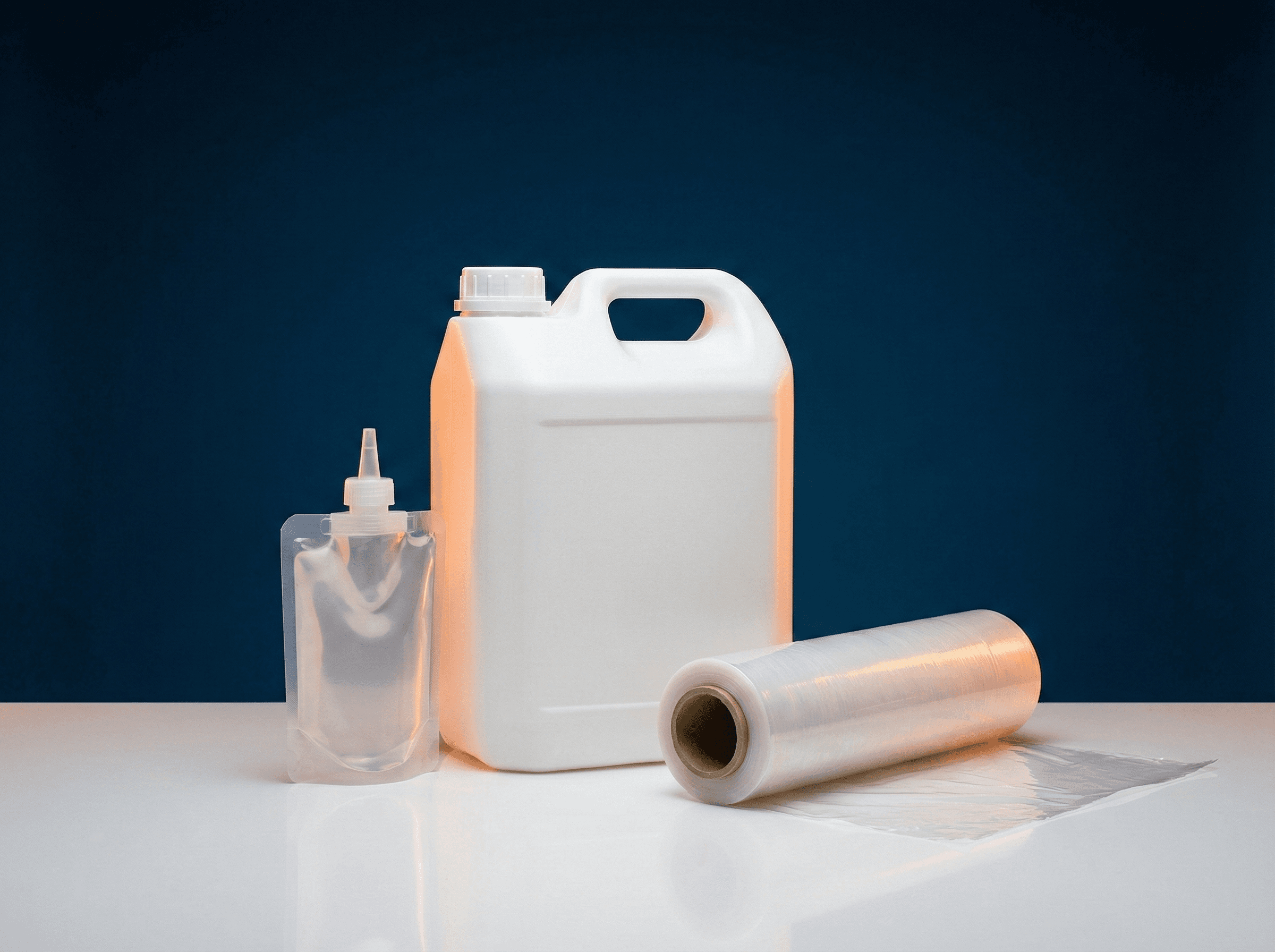
Polyethylen (PE)-Harze
Polyethylen-Granulat-Katalog — HDPE, mLLDPE, LLDPE und LDPE für Blas- und Gießfolie, Blasformen, Spritzguss, PE100/PE80-Rohr, Filament, Rotationsformen und Extrusionsbeschichtung. Typen von ExxonMobil, SABIC, Dow, NOVA, SCGC, Chevron Phillips, BASF, SIDPEC, Sinopec, Hengli, ZPC und Wanhua, mit schnellen Angeboten und Datenblättern.
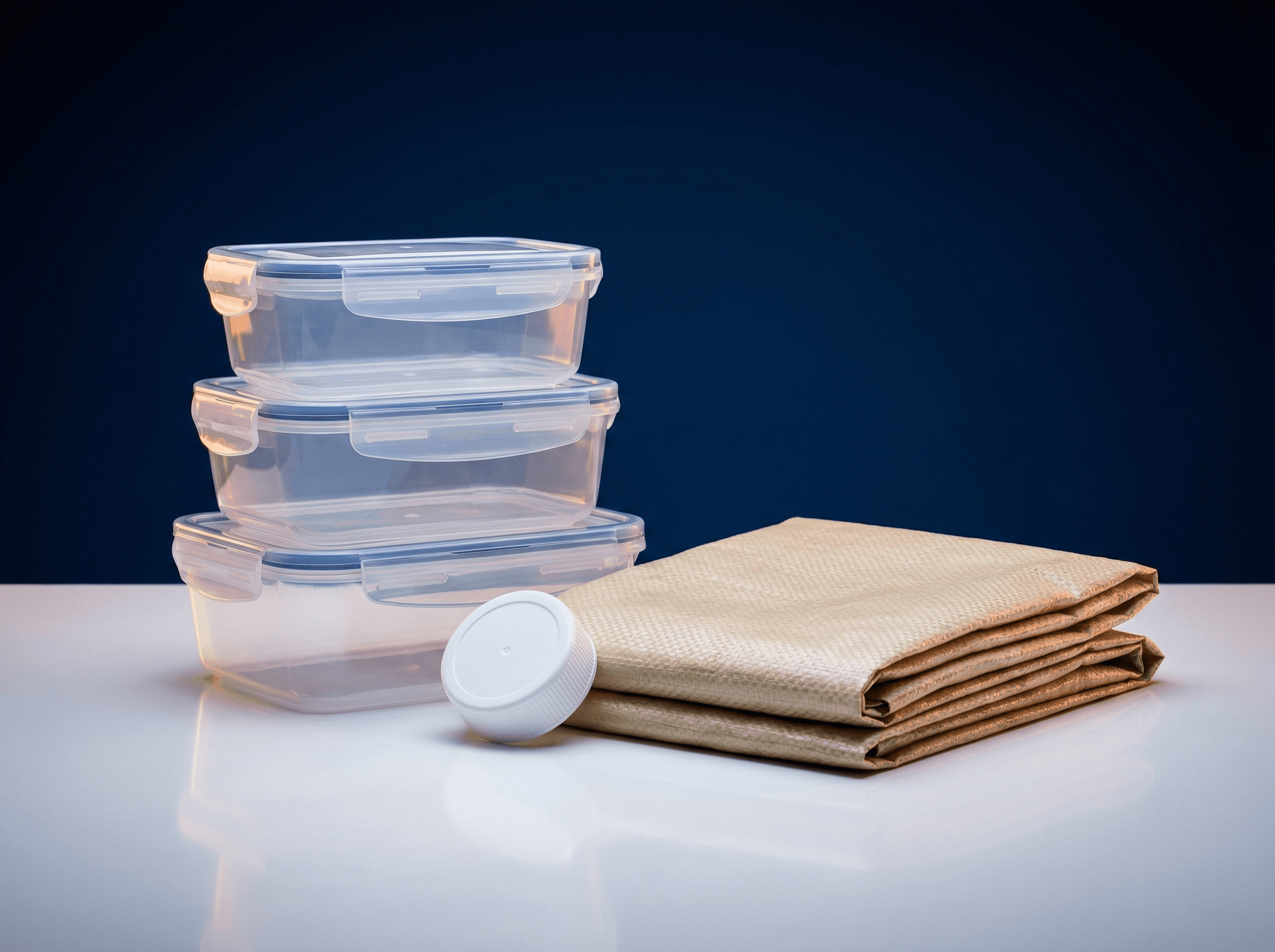
Polypropylen-Granulat (PP)
Polypropylen-Granulat — Homopolymer für BOPP, CPP, Raffia, Faser und Spritzguss; Random-Copolymer und PP-R-Rohr; sowie Schlagzäh-(Block-)Copolymer. Typen von SCGC™, Oriental Energy, Sinopec und Hengli, mit Datenblättern und schnellen Angeboten.
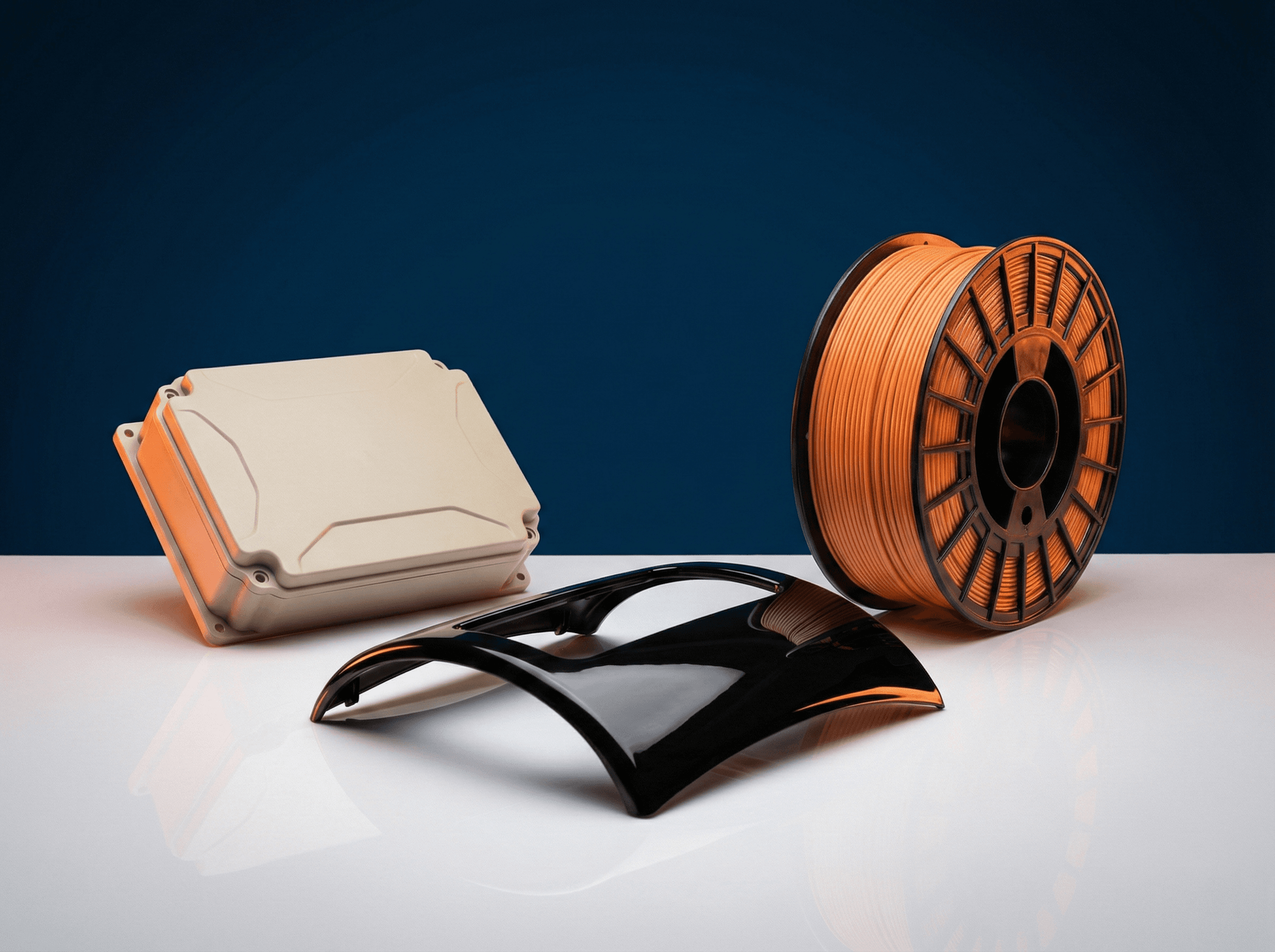
ABS - Acrylnitril-Butadien-Styrol
ABS-Harz ist ein zaehes, steifes amorphes Thermoplast, das Schlagfestigkeit, Waermebestaendigkeit und einfache Verarbeitbarkeit vereint. Erhaeltlich in Universalsorten, hochschlagfesten, waermebestaendigen und Galvaniksorten fuer Automobil-, Elektronik- und Konsumgueteranwendungen.